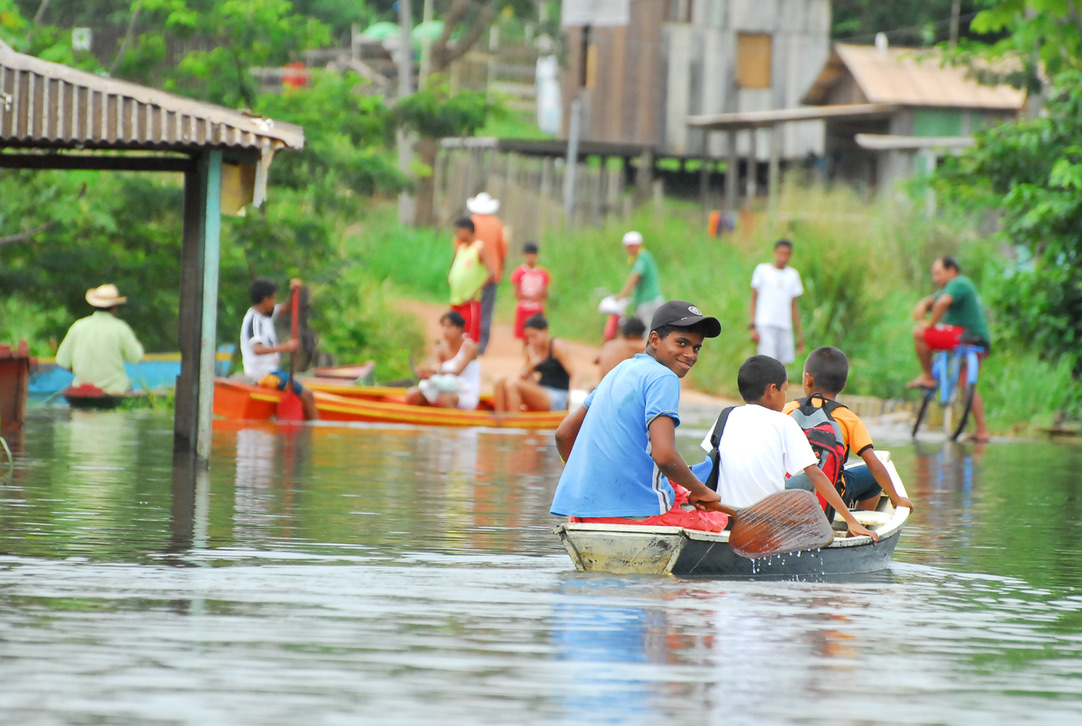
Strategic partnerships help states and provinces advance their climate and forest work at both local and global scales.
Alianza MX

Alianza MX is a systemwide initiative of the University of California (UC) that seeks to support the UC’s role as Mexico’s primary institutional research and scientific partner; mobilize talent and funding for U.S.-Mexico research teams, who explore new ideas and create new knowledge across diverse areas, from Science, Technology, Engineering, and Math to social science, the arts and humanities; contribute to UC’s efforts to train a future generation of researchers, who understand the reality on both sides of the border; and through binational, action-research programs, provide innovative solutions to challenges facing the United States and Mexico in issues such as: climate change, energy transition, and biodiversity conservation.
The GCF Task Force and Alianza MX entered into this Partnership to advance partnerships between subnational governments and academic institutions, in particular through research universities in California and Mexico. One of our top priorities is to develop knowledge exchanges between universities, faculty, and students, so that together we can construct measurable metrics and applied research agendas and evaluate the results of our actions on the ground – especially in a way that bolsters and advances transparent and effective subnational climate action.
Amazonia+
Amazonia+ is a program that was launched in July 2023 and funded by the European Union. The program is implemented by the Italian (Agenzia Italiana per la Cooperazione allo Sviluppo, AICS), French (Expertise France), and Spanish (Fundación para la Internacionalización de las Administraciones Públicas, FIAP) cooperation agencies, as well as by the European Union’s Joint Research Center.
Strategic partners at the regional level include the Amazon Cooperation Treaty Organization (OTCA) and the Coordinating Body of Indigenous Organizations of the Amazon Basin (COICA). The program aims to strengthen the capacities of Amazonian governments and communities to reduce and prevent deforestation through enhanced regional cooperation.
During our 15th Annual Meeting (2025), we announced a partnership initiative with Amazonia+ called Mechanism for the Exchange of Subnational Public Policies for the Sustainable Environmental Management of the Amazon (Mecanismo de Intercambio de Políticas Públicas Subnacionales para la Gestión Ambiental Sostenible de la Amazonía, MIPA).
The technical exchange mechanism involves the exchange of innovative experiences, knowledge, and practices among Amazonian states, departments, and provinces through the GCF Task Force platform. Special attention will be given to local capacity building, participatory governance, and nature-based solutions. The partnership also focuses on combating deforestation, particularly in the prevention, monitoring, control, and fighting of forest fires. To achieve this, it works to develop and implement environmental and forest governance policies and mechanisms, with the active participation of local communities and indigenous peoples of the Amazon basin.
CDP
CDP is an international non-profit that drives cities, states and regions to reduce their greenhouse gas emissions, safeguard water resources and protect forests by providing a global disclosure system for investors, companies, cities, states and regions to manage their environmental impacts. Our partnership with CDP allows us to collaborate on opportunities to enhance reporting, disclosure, and assessment of state and regional action on climate and forest. We are also exploring opportunities for mobilizing investments towards zero deforestation commodity production.
CIFOR-ICRAF
The Center for International Forestry Research and World Agroforestry (CIFOR-ICRAF) works at the nexus of five interconnected areas where trees can make a difference: Biodiversity, Climate, Value Chains, Food, and Equity. Trees connect land and climate, farms and forests, economies and resilience, and people and planet. CIFOR-ICRAF connects science with action, creating solutions from the ground up through inclusive partnerships, transdisciplinary research, and demand-driven innovation.
In June 2024, GCF Task Force and CIFOR-ICRAF have entered into a Memorandum of Understanding (updating an earlier MOU between the GCF Task Force and CIFOR) to work together to increase knowledge about the functioning, achievements, and challenges of subnational jurisdictional climate change and land-use governance platforms and how they can be used to promote effective climate change policies and programs and build new, more sustainable economic systems in forest landscapes; (b) support the monitoring and achievement of ambitious commitments made by subnational jurisdictions to implement equitable governance schemes and policies such as on gender and on Indigenous Peoples and Local Communities; and (c) provide knowledge, data, applied research and technical support to subnational jurisdictions to support their implementation of REDD+ and low emissions development strategies.
CTrees
CTrees is a nonprofit organization that delivers science-driven data on emissions and removals of forest carbon to governments, companies, and organizations seeking to reduce carbon emissions from deforestation and degradation and to restore forests. The CTrees team includes scientists and engineers with more than 20 years of experience in building carbon monitoring systems for global forests and solutions that have informed climate change policies. CTrees has produced a data pipeline and digital measuring, reporting, and verification (MRV) system to quantify changes in carbon in forests from land use activities.
The GCF Task Force and CTrees have entered into a Memorandum of Understanding to work together to promote increased transparency and accuracy of data, including on tropical deforestation and degradation, in order to provide interested members of the GCF Task Force with additional remote sensing and data tools to assist in their environmental management and governance decisions.
KPTL
KPTL is a Brazilian venture capital firm that invests in climate tech, forestry, and the bioeconomy, notably structuring funds aimed at sustainable development in the Amazon region.
Masters of the Environment at the University of Colorado

The Masters of the Environment (MENV) program is an interdisciplinary graduate degree at the University of Colorado Boulder that transforms students into leaders equipped to address our most pressing environmental challenges. In 2020, a team of MENV graduate students produced an investment strategy report and toolkit for creating a corporate pitch book in the pilot region of San Martín, Peru. The team’s project and associated resources was published on their own domain at gcftaskforceimpactinvesting.org but has been incorporated to this curret site and are available at:
Rainforest XPRIZE
The Rainforest XPRIZE is a 5-year competition that works to enhance our understanding of the rainforest ecosystem. Competing teams are developing novel technologies to rapidly and comprehensively survey rainforest biodiversity. USD 10 million will be awarded to the team with the winning strategy. Our partnership with the XPRIZE Foundation draws upon our long-standing relationships with governments, civil society, Indigenous Peoples and local communities to strengthen the competition. We are working with Rainforest X-Prize leaders to increase visibility and attract global participation, facilitate engagement at the highest levels of government, and promote the involvement of and support to Indigenous Peoples and local communities within our network over the course of the competition.
Regions4
Regions4 is a global network of subnational governments founded in 2002. Regions4 represents states, regions and provinces at UN negotiations, European Union initiatives and global discussions on biodiversity, climate change and sustainable development.
Tropical Forest Alliance
The Tropical Forest Alliance (TFA) is a multi-stakeholder partnership platform hosted at the World Economic Forum. TFA was initiated to support the implementation of private sector commitments to remove deforestation from the supply chains of palm oil, beef, soy, and pulp and paper. Our partnership with TFA leverages and mobilizes our respective networks to support jurisdictional efforts to tackle commodity-driven deforestation. We do this by enhancing dialogue between governments and the private sector, increasing the flow of finance and investment towards jurisdictional programs, and working to secure jurisdictional sourcing agreements.
UNAMAZ

UNAMAZ is a Pan-Amazonian network that establishes ongoing dialogue between universities and institutes of higher education in science, technology, education, innovation, and research.