
Amazonas, Brazil
Brazil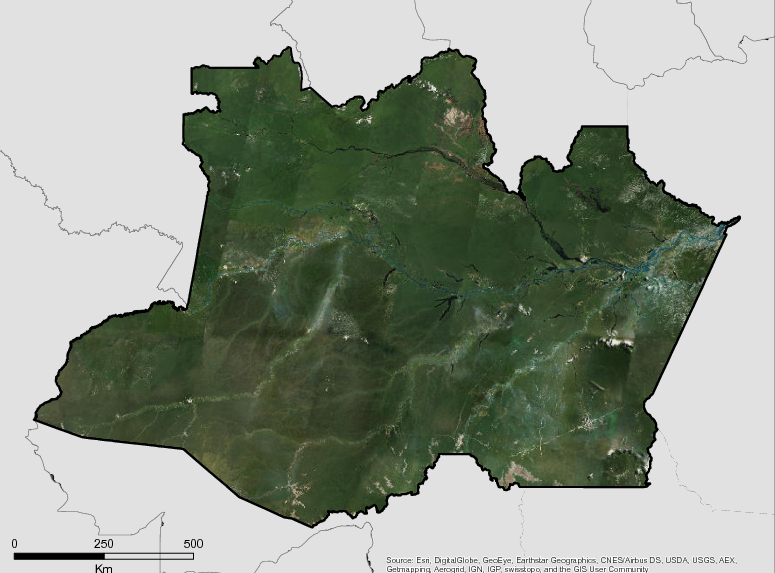
Description
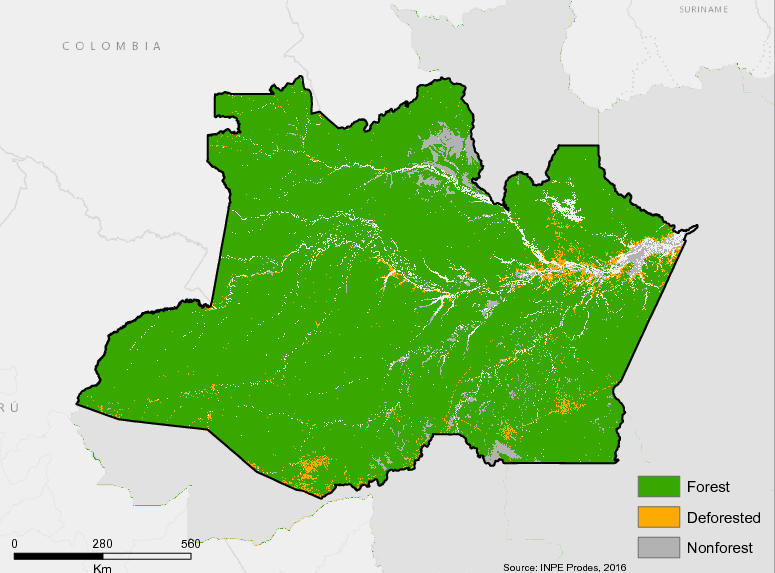
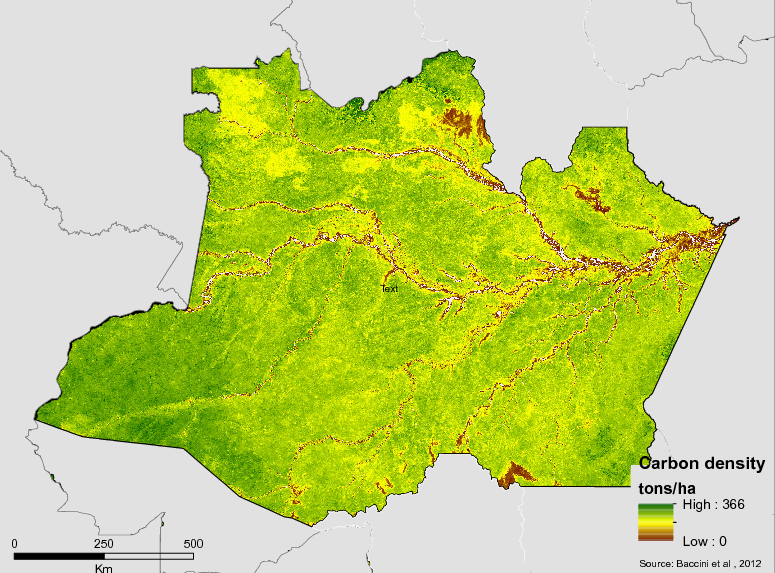
The State of Amazonas has an area of 1,559,159,148 km² and is made up of 62 municipalities.With 96% of its original forest cover, the State is home to the largest stock of tropical forest carbon of any subnational jurisdiction on the planet.
With 85% of its surface is below one hundred meters of altitude, the region has a low lying topographical relief. The várzea and igapós forests are among the unique ecosystems in the State, which have a rich and complex diversity in the composition. A total of 66 indigenous peoples groups live throughout the forests of Amazonas.
The state of Amazonas is comprised mainly of dense and open forests, though you will also find seasonal forests, igapó forests, flooded fields, floodplains, savannahs, mountain refuges, campinaranas and pioneer formations. This biome harbors vast stocks of commercial wood and forest carbon and produces a wide variety of non-timber forest products that support the livelihoods of various local communities.
Amazonas is home to the Amazon river which runs 6,570 kilometers long with a volume of 100,000 cubic meters. This river is born in the Andes Mountains in Peru, and in the State of Amazonas forms from the junction of two great rivers, the Solimões and Rio Negro.The Amazon Basin accounts for approximately 20% of all the world’s freshwater reserves.
Protected areas in the state represent 56.15% of their territory with 266 conservation units (CU) in 2016. 151 Indigenous Territories are established in Amazonas representing 27.7% of the territory.
Amazonas is a pioneer in establishing state-wide public policies related to climate change and designing positive incentives for forest conservation. In 2007, Amazonas established its State Policy on Climate Change (PEMC) (law 3.135/2007) and a complementary law (53/2007), which establishes the State System for Protected Areas (SEUC). These were followed by the development of the State’s Deforestation Prevention and Control Plan (PPCDAM), involving a broad range of state secretariats in an integrated effort to develop ways of reducing deforestation while creating new economic alternatives.
However, it is important to emphasize that, despite the legislation of Amazonas and the experience in conducting projects to reduce forest emissions, the current environmental legal framework of Amazonas has gaps for the adequate establishment of carbon asset market elements. Some of these shortcomings are partially fulfilled by the Environmental Services Law (Law No. 4,266 of 2015). To fill remaining gaps, the Government of the State of Amazonasis committed to building legal instruments that consolidate a legislative package capable of providing environmental, social, economic and legal security and integrity. This includes the creation and expansion of programs, subprograms and projects aimed at encouraging the maintenance and provision of environmental services and for the Reduction of Emissions from Deforestation and Forest Degradation (REDD +), protection of natural resources, projects aimed at Traditional Communities and Indigenous Peoples. Regulations within the framework of the Environmental Services Law are needed to achieved these goals.
Another effort to contain deforestation is through State Decree 37.421 / 2016 which aims to boost the local economy on a sustainable basis, promoting environmental recovery and conservation of natural resources, promoting mulit-level governance, and allowing for a more effective participation of civil society and the productive sector.
Another strategy adopted by the Government of the State of Amazonas was the creation of a public-private foundation, the Sustainable Foundation of Amazonas (FAS), to manage the Bolsa Floresta Program (PBF). The PBF is a pioneering pilot program for payments for ecosystem services that supports 15 State Protected Areas.
Additional information can be found on the GCF Impact Platform.
Summary
Demographics
Urban vs. Rural Population
| Category | % | |
|---|---|---|
| Urban | 79.00 | |
| Rural | 21.00 |
Ethnic Groups
| Group | % | |
|---|---|---|
| Multi-ethnic | 69.00 | |
| White | 21.00 | |
| Indigenous | 5.00 | |
| Black | 4.00 | |
| Other | 1.00 |
Economy
GDP Breakdown
| Category | % | |
|---|---|---|
| Services | 42.60 | |
| 36.30 | ||
| Agriculture, Forestry | 4.20 |
Forest Status
Major Vegetation Types
| Category | km² | |
|---|---|---|
| Forest | 1.42 M | |
| Other Land Uses | 110,120 | |
| Secondary Vegetation | 15,797 | |
| Pastureland | 9,127 | |
| Agriculture | 125 |
Forest Management
| Category | km² | |
|---|---|---|
| Unprotected | 1.04 M | |
| Protected | 412,668 |
Drivers of Deforestation
Expansion of ranching, agriculture and illegal land occupation has increased pressure on forests, particularly in southern Amazonas. In the southreastern counties of Apuí, Manicoré, and Novo Aripuanã, small family agriculture is increasingly being replaced by cattle ranching in large INCRA settlement projects. At the border with Acre and Rondônia, in the counties of Canutama, Lábrea and Boca do Acre, immigration from the neighboring states via the BR-364 and BR-317 highways is accompanied by the expansion of cattle ranching and logging. Forests in other counties, such as Manicoré, Humaitá, Canutama, and Lábrea, are under pressure from expanding industrial crop production, driven by increased access to financial resources and improved technology.
The expansion of deforestation in Amazonas is concentrated in two geopolitical regions: the Metropolitan Region of Manaus (RMM) and the South region, which present different dynamics of land use and occupation. In the metropolitan region of Manaus, comprising 13 municipalities, including the capital Manaus, a total of 471.8 km² of deforestation increment was recorded in the temporal analysis from 2008 to 2013, corresponding to 16% of total deforestation in the Amazonas of the analyzed period (3,015.3 Km²) (PPCD-AM, 2015).
According to the results of environmental control actions of the IPAAM, some activities that lead to deforestation in this region include land speculation (particularly near highways) and agricultural production and to a lesser extent mineral extraction an illegal timber and wood fuel extraction.
Located along the arc of deforestation, the south of the State of Amazonas contains the areas with the highest concentration of deforestation in this state. In order to contain the progress of deforestation, both the federal and state governments have increased the creation and recognition of protected areas. Environmental protection areas play an important role for the environment, such as reducing carbon emissions protecting biological diversity and maintaining the functions of water cycling in the forest. However, protected areas can not be considered as the only solution to contain deforestation.
The expansion of the agricultural frontier in southern Amazonas is a consequence of large settlement projects that were cattle-raising due to a long process of abandonment of family production. It demonstrates that the way it is acted out and the intensity of deforestation varies over time, but in general, the main actors are large and medium-sized farmers, and small farmers, when concentrated, can act expressively.
The southern region of the State, made up of 7 municipalities, has a total of 1,786.2 km² of deforestation increment (2008 to 2013), corresponding to 59% of the deforestation recorded in Amazonas in the analyzed period. There are several factors in the south of the state of Amazonas that can be attributed as causes of deforestation, such as the conversion of forest to pasture, the cutting and burning of forest for crops, the opening of illegal roads, logging predatory and land grabbing.
In summary, the main drivers of deforestation in Amazonas are land grabbing associated with illegal logging for conversion to pasture and agrarian conflicts. The main locations with deforestation concentration are in settlement projects and in some federal protected areas and expansion of deforestation in areas close to borders with other states.
Deforestation Rates
Notes
| a. | Due to different methodological approaches and base years, Forest Status data fields may differ slightly. Data sources for each field are listed below. |
Sources
| 1. | IBGE link |
| 2. | Instituto Brasileiro de Geografia e Estatística – IBGE. IBGE |
| 3. | GOVERNO (SEPLAN) Anuário Estatístico do Amazonas (2009-2010). Manaus, volume 23, 2011. |
| 4. | GOVERNO (SEPLAN) Anuário Estatístico do Amazonas (2009-2010). Manaus, volume 23, 2011 |
| 5. | PNUD 2003, Atlas de Desenvolvimento Humano 2003 link |
| 6. | MMA, 2004. Uso e Cobertura da Terra na Floresta Amazônica, São José dos Campos link |
| 7. | PRODES 2015 |
| 8. | Prodes link |
| 9. | Terraclass 2014 |
| 10. | https://uc.socioambiental.org/uc/pesquisa/uf/RR |
Overview of Forest Monitoring and Measurement Systems
Since 1998, the PRODES project has been conducting satellite monitoring of deforestation in the Legal Amazon region and has produced annual deforestation rates which are used by the Brazilian government to establish public policies. The annual rates are estimated from the deforestation increments identified in each satellite image that covers the Legal Amazon. Preliminary estimates are presented in December of each year with refined data presented in the first half of the following year.
PRODES estimates are considered reliable by national and international scientists (Kintish, 2007). This system has been shown to be of great importance for the actions and planning of public policies in the Amazon. The PRODES project has the collaboration of the Ministry of the Environment (MMA) and the Brazilian Institute of Environment and Natural Renewable Resources (IBAMA) and is part of the Ministry of Science, Technology and Innovation (MCTI) in the Permanent Group of Interministerial work to reduce deforestation rates in the legal Amazon created by presidential decree of July 3, 2005. The WGIP is part of the Action Plan for the Prevention and Control of Deforestation in the Legal Amazon, launched on March 15, 2004.
MapBiomas is another initiative of the Climate Observatory Greenhouse Gas Emissions Estimation System, which monitors the transformations of the Brazilian territory from the mapping of land cover and use in Brazil, with several institutional partnerships.
Reference Levels and Targets
Deforestation Rates
Sources
| 1. | Based on Conservative Technical Committee of the Amazon Fund Emission Factors |
| 2. | Rio Branco Declaration based on national FREL 2010-2015 |
| 3. | Prodes link |
Laws, Policies & Strategies
Policies and Strategies
Plan for Deforestation Prevention and Control (PPCD)– In 2009, the State of Amazonas prepared the State Plan for the Prevention and Control of Deforestation in Amazonas (PPCD-AM), with the objective of “strengthening environmental governance in the state of Amazonas, controlling illegal deforestation and encouraging the sustainable use of natural resources with an emphasis on critical areas of deforestation.”
The Plan was organized around four strategic axes: I) Territorial Planning; 2) Environmental Control; 3) Promotion of Sustainable Productive Activities and 4) Institutional Strengthening / Transversal Actions, each associated to a set of macro-actions, subdivided into activities. Regarding the temporal organization, it was established that its first phase of execution would be three years, these occurred between the years 2009 to 2011, and the second phase of 2012-2015.
In 2012, the second phase of the PPCD-AM was conducted by the State Center for Climate Change (CECLIMA). The methodology was based on an internal analysis of the main actions carried out in Phase I, which culminated in more than 64 actions, organized in 03 Strategic Axes: Axis 1: Territorial Planning: Axis 2: Monitoring and Control; and Axis 3: Promotion of Sustainable Productive Activities.
Now the process of elaboration of the third phase of the PPCD-AM is focusing on: Management planning models; adopting multi-scale territorial approaches; centralizing technological innovation; expanding protected areas; expanding dialogue with society; and strengthening cross-border cooperation. Phase three is supported from a contribution by GIZ.
The State Policy on Climate Change, Environmental Conservation and Sustainable Development (PEMC) – established through State Law No. 3,135 of 2007, and elaborated based on the guidelines established by State Decree No. 25,581 / 2007, introduces the bases for the development of actions of Reducing Emissions from Deforestation (RED). In this context, the PEMC includes RED with one of its objectives, creates a payment programme for environmental services and gives guidance on its operation, defines activities to raise funds, both nationally and internationally, including the need to measure benefits generated authorizes the use of state resources for actions to reduce emissions in rural areas and authorizes the State to participate in carbon markets through the sale of the credits of which it is a beneficiary or holder.
Laws and Regulations
Complementary Law 187, 04/25/2018 – establishing the State Council for the Environment of the State of Amazonas – CEMAAM and disposing of the State Environmental Fund – FEMA
Law 4406, 12/28/2016– Establishes the State Policy for Environmental Regularization, provides for the Rural Environmental Registry – CAR, the Rural Environmental Cadastre System – SISCAR-AM, the Environmental Regulation Program – PRA, in the State of Amazonas and makes other provisions.
Law 4419, 12/29/2016 – establishing the Economic-Environmental Matrix of Amazonas
State Decree 3721, 12/01/2016 – establishes the Sustainable Municipalities Program
State Law 4266, 12/2015 – Establishes the State Policy on Environmental Services (including REDD+) and creates the State Fund for Climate Change, Environmental Conservation and Environmental Services. The law which clarifies institutional arrangements and support for REDD+ management and implementation.
State Law 3635, 07/06/2011– Creates the legal basis for the the Rural Environmental Registry (CAR), which regulates the environmental liabilities of rural properties in the State of Amazonas. the Rural Environmental Land Registry is a federally-mandated, satellite-based land registry system for rural properties which is required for environmental licensing, monitoring and enforcement.
Ordinary Law 3645, 08/08/2011 – establishing the Ecological-Economic Zoning of the Purus Subregion of the State of Amazonas establishes guidelines for land use and occupation and provides other measures
Law 3527, 07/28/2010– Regulates forest concessions in designated sustainable use areas, with the aim of promoting multiple use of forest resources and environmental services provision – Being implemented
Law 3525, 07/06/2010 – establishes the Council for the Sustainable Development of Traditional Peoples and Communities of the State of Amazonas CDSPCT / AM, in the organizational structure of the Secretariat of State for the Environment
Ordinary Law 3417, 07/31/2009– Institutes the Ecological – Economic Macrozoning of the State of Amazonas – MZEE
Decree 28.390, 02/17/2009 – Establishes the Amazonian Forum on Global Climate Change, Biodiversity and Environmental Services (FAMC) and other measures.
Law 3244, 04/04/2008- Creates the Unit Manager for the State Climate Change Center and the State Center for Protected Areas (UGMUC) – Fully functional
Delegated Law 66, 05/06/2007 – Defines regulations for the State Secretariat for Environment and Sustainable Development – Fully functional
State Law of Climate Change 3135, 06/05/2007 – Institutes the State Policy for Climate Change, Environmental Conservation, and Sustainable Development – Fully functional
CEMAAM Law 2985, 10/18/2005 – Institutes the Amazonas State Council for the Environment (CEMAAM) – Fully functional
Institutional Framework
Secretary of Environment (SEMA) -responsible for the coordination of the Amazonas Forum on Climate Change, Biodiversity, Environmental Services and Energy and the State Council for the Environment – CEMAAM, is the managing body of the environmental policy of the State of Amazonas. The State Secretariat for the Environment (SEMA) is responsible for the management, planning, formulation, implementation, monitoring and evaluation of actions that aim at environmental protection and, in this way, the maintenance of biodiversity, reduction of greenhouse gas emissions from deforestation and forest degradation, the maintenance of forest carbon stocks, conservation and environmental services in the State of Amazonas.
Institute for Agriculture and Sustainable Forest Development (IDAM) – Technical assistance and rural training activities related to forest management and agriculture in municipalities.
Sustainable Development Agency (ADS) – Helps with commercialization of products from sustainable income-generating activities.
State Secretariat for Forests and Extractivism SEAFE – Creates policies that promote the sustainable use of forest resources.
State Secretariat for Rural Production (SEPRO) – Technical assistance and product commercialization.
Amazon State Institute for Environmental Protection (IPAAM) – carries out daily analysis of satellite imagery focused on detection of fires and/or deforestation, and enforcement activities to control illegal on the ground illegal logging.
The Amazon Forum on Climate Change, Biodiversity, Environmental Services and Energy (FAMC) – coordinates input on climate change, energy, biodiversity, forests and environmental services
Department of Climate Change and Management of Conservation Units (DEMUC) – Manages the development, creation and implementation of protected areas of the state and responsible for the implementation of policies and programs related to climate change in the state of Amazonas, Brazil. It focuses mainly on three areas: forest, energy and education for climate change
Department of Environmental and Territorial Management (DEGAT) – Land Management, implementation of environmental projects, institutional strengthening, deforestation agenda and fires.
Secretary of State for Land Policy (SPF / AM) – Management of State Land Patrimony, and Formalization of land rights.
Zoning & Spatial Planning
Ecological and Economic Zoning (Zoneamento Ecológico-Econômico – ZEE) is required by the Federal Government to designate areas for economic and conservation activities within each state’s territory. Amazonas completed a statewide master ZEE in 2009 and has since begun developing region specific ZEEs for Madeira and Purus. The macro plan was normalized through state law no 3.147 (2009), while the Purus plan was normalized through state law 3.645 (2011) and both have been approved federally. The Madeira plan is still in process. State decree nº 24.048 instituted a state commission on ZEE.
In 2016 Amazonas received funding from KfW to implement the Madeira zoning plan.
Engagement & Participation with Indigenous Peoples and Local Communities
According to Moutinho et. al., (2016), in a study titled ‘How to Achieve Zero Deforestation in the Brazilian Amazon: What is missing?‘ six key strategies are proposed to help Brazil achieve a more ambitious goal of eliminating all the major legal and illegal deforestation in the Amazon.
The proposed strategies involve integrating social and environmental safeguards to infrastructure plans in the region, consolidating and expanding positive incentives for the production of sustainable raw materials, establishing a new policy to ensure the social and environmental sustainability of rural settlements, fully implementing national legislation which protects forests, protecting land rights of indigenous peoples and traditional communities, and expanding the existing network of protected areas, distributing the 80 million hectares of public forests not designated as protected areas or areas of sustainable use of timber and non- forest products.
The implementation of these strategies, however, requires integration of economic growth, social justice and productive agriculture, while protecting the fundamentally important ecological services of tropical forests.
The Environmental Services Law (Law No. 4266/2015) acknowledges traditional knowledge associated traditional communities and indigenous peoples. Indigenous peoples who are either living in complete isolation from other sectors of national communion or in intermittent or permanent contacts are able to receive benefits from this framework, along with traditional communities.
The Environmental Services Law also creates the Program for Support and Valuation of Indigenous Peoples, Traditional Peoples and Communities, and Associated Traditional Knowledge: it aims to encourage, valorize and pay for actions and projects that promote the recognition of traditional culture, as well as valorization management techniques and sustainable use of natural resources, associated with the preservation, conservation, maintenance and recovery of natural resources, of these communities and peoples.
Partnerships and Ongoing Initiatives
Amazonia SAR
- Description
-
Amazonia SAR implements a deforestation detection system utilizing orbital imaging radar to monitor 950,000 km2 per year (23% of the Amazon biome). Of the total land monitored, 764,000 km2 is comprised of areas under the greatest pressure of deforestation, 144,000 km2 is in the state of Amapá, and an additional 5% of isolated points in the Amazon biome will be monitored due to specific demand.
- Partners
- Federal Government/Defense Ministry – Operations and Management Center of the Amazonian Protection System (CENSIPAM)
- Funding Amount
- $20,783,439.87
- Initiative Type
- Protected Areas Initiative
- Initiative Status
- Contracted
Apui Coffee Project
- Description
-
The Apuí Café initiative began in 2012 in a partnership between Idesam, 28 local producers, the state government of Amazonas, Apuí prefecture and local private entrepreneurs. The project received support from the Vale and Natura Fund, and focuses on the agroforestry production of coffee which combines commercial production and native forest. Since 2012, coffee productivity in Apuí has increased from nine to twenty-two coffee sacks per hectare. In 2015 Agroforstry Apuí Coffee was launched as the first environmentally sustainable coffee produced in the Brazilian Amazon. In its first year alone, 4.5 tons of coffee, or 18,000 packages, were sold at more than 20 retailers and 50 events and fairs. Today, local producers are seeking to obtain organic certification of their properties.
- Partners
- Government of the State of Amazonas, Prefecture of of Apuí, Idesam, producers and local entrepreneurs
- Funding Source
- Government of the State of Amazonas, Prefecture of of Apuí, Idesam, producers and local entrepreneurs
- Funding Amount
- $2 million
- Initiative Type
- Technical Assistance Partnership
- Initiative Status
- Under implementation
Arapaima: Production Networks
- Description
-
To provide support in the Juruá and Solimões mid-basins in the state of Amazonas: (i) fishing management and non-wood forest resources on indigenous land (TI) and protected areas (Pará); and (ii) strengthening indigenous associations and extractionist farmer associations. The project will work in indigenous lands in Biá River, Espírito Santo, Acapuri de Cima, Estação, Macarrão and Deni, in the Sustainable Development Reserves Uacari and Cujubim and in the Extractionist Reserve Médio Juruá, located at the mid-basins Juruá and Solimões in the state of Amazona
- Partners
- Native Amazon Operations (OPAN)
- Funding Source
- Amazon Fund/BNDES
- Funding Amount
- USD 2,511,633.32
- Initiative Type
- Indigenous Peoples Initiative
- Initiative Status
- Contracted
Banco do Brasil Foundation – Amazon Fund
- Description
-
The Amazon Fund provides support to projects related to developing sustainable production in conjunction with conservation in the Amazon Biome. Beneficiaries of The Amazon Fund’s supported projects include: traditional communities (indigenous peoples, quilombolas, rubber tappers, riverside populations, family farmers, subsistence agriculturists), rural workers involved in settlement projects, low-income populations at risk of social exclusion, collective undertakings, solidarity economies, non-profit institutions governed under private law, and public administration entities.
- Partners
- Fundação Banco do Brasil (FBB)
- Funding Amount
- $7,550,588.95
- Initiative Type
- Sustainable Production
- Initiative Status
- Contracted
Banco do Brasil Foundation – Amazon Fund / Phase 2
- Description
-
Phase II of The Amazon Fund supports projects that facilitate the development of productive activities promoting the conservation and sustainable use of the Amazon Biome; the initiative benefits traditional communities (indigenous peoples, quilombolas, rubber tappers, riverside populations, family farmers, subsistence agriculturists), rural workers involved in settlement projects, and low-income populations at risk of social exclusion.
- Partners
- Banco do Brasil Foundation (FBB)
- Funding Amount
- $4,979,666.36
- Initiative Type
- Protected Areas Initiative
- Initiative Status
- Contracted
Bolsa Floresta Program
- Description
-
FAS and the State of Amazonas have established a technical cooperation agreement No. 003/2015, which aims to support the implementation of the State Program and Projects on Climate Change, Environmental Conservation and Sustainable Development, as well as to contribute to the management of environmental services and products within the Sustainable Use Conservation Units of the State of Amazonas. FAS, with the express consent of the State of Amazonas, will be responsible for the implementation of the Bolsa Floresta Familiar Program and Bolsa Floresta Social Program, with the financial support of PricewaterhouseCooper Auditores Independentes (PWC) in the amount of R $ 56,000.00.Funding is to be used exclusively for the implementation of the Bolsa Floresta Program, in Family and Social modalities through the Support Project for access to potable water (Bolsa Floresta Social) in the Juma RDS.
- Partners
- Government of the State of Amazonas, Amazonas Sustainable Foundation – FAS, and PriceWaterhouseCoopers
- Funding Source
- Government of the State of Amazonas, Amazonas Sustainable Foundation – FAS, and PriceWaterhouseCoopers
- Funding Amount
- $2 million
- Initiative Type
- Technical Assistance Partnership
- Initiative Status
- Under Implementation
Consolidating Territorial and Environmental Management in Indigenous Lands
- Description
-
Supports the implementation and development of the Territorial and Environmental Management Plan (PGTA) across five Indigenous Territories (TI) in the states of Amazonas, Maranhão, and Pará—covering 9,375,076 hectares of land and 19,531 TI inhabitants.
- Partners
- Indigenous Work Center (CTI)
- Funding Amount
- $3,688,281.11
- Initiative Type
- Financial Initiative
- Initiative Status
- Contracted
Dissemination and Improvement of Sustainable Forest Management Techniques
- Description
-
Provides support to promote and expand sustainable forest management through training key players and workers, raising awareness, and applied research in the timber and forest sector of the states of Pará, Amazonas, and Rondônia. The initiative benefits not only workers in the timber and forest sector, but also operators of heavy machinery, forest communities, small rural producers, government agents, engineers, auditors, administrators, researchers, and forest students in both high school and higher education within the three states.
- Partners
- Tropical Forest Institute (IFT)
- Funding Amount
- $4,164,244.19
- Initiative Type
- Financial Initiative
- Initiative Status
- Concluded
Empowering Environmental Monitoring and Control in Order to Combat Illegal Deforestation in the Brazilian Amazon
- Description
-
Empowers environmental monitoring and control in order to combat illegal deforestation in the Brazilian Amazon over a period of 15 months in regions under the greatest deforestation pressure; utilizes trucks and helicopters to enforce actions in the field.
- Partners
- Brazilian Institute of Environment and Natural Resources (Ibama)
- Funding Amount
- $17,662,033.20
- Initiative Type
- Protected Areas Initiative
- Initiative Status
- Contracted
Environmental Management Qualification Program
- Description
-
Supports the strengthening of environmental management in the 529 municipalities across nine states in the Legal Amazon through (i) offering training and technical support (ii) disseminating knowledge and information through networks (iii) fostering innovation and promoting liaison with other government levels and general society within the framework of environmental public policies.
- Partners
- Brazilian Institute of Municipal Administration (IBAM)
- Funding Amount
- $9,019,941.79
- Initiative Type
- Protected Areas Initiative
- Initiative Status
- Contracted
Environmental Monitoring of Brazilian Biomes
- Description
-
Environmental Monitoring of Brazilian Biomes achieves three objectives: (i) Development and enactment of deforestation monitoring systems for the Atlantic Forest, Caatinga, Pampa, and Pantanal biomes (ii) Calculation of CO2 emissions for deforested areas and creation of a proposed Forest Reference Emission Level (FREL) for each biome, to be provided to the United Nations Framework Convention on Climate Change (UNFCCC) (iii) Platform development for analysis and visualization of vast geospatial data to benefit the entire national territory through platform development.
- Partners
- Space Science, Applications and Technology Foundation (FUNCATE) and National Institute of Space Research (INPE)
- Funding Amount
- $15,911,139.52
- Initiative Type
- Protected Areas Initiative, Financial Initiative
- Initiative Status
- Contracted
Environmental Monitoring via Satellite in the Amazon Biome
- Description
-
Supports the development of studies on land use and land coverage in the Amazon biome; expands and improves environmental monitoring by satellites, as performed by the National Institute of Space Research (INPE).
- Partners
- National Institute of Space Research (INPE)/Science, Applications and Space Technology Foundation (FUNCATE)
- Funding Amount
- $27,783,399.45
- Initiative Type
- Protected Areas Initiative
- Initiative Status
- Contracted
Environmental Operations Company
- Description
-
Structures the Environmental Operations Company of the National Public Security Agency (FNSP) both physically and operationally to perform environmental operations in the Amazon Biome.
- Partners
- Federal Government/Ministry of Justice – National Public Security Force (FNSP)
- Funding Amount
- $11,796,765.00
- Initiative Type
- Protected Areas Initiative
- Initiative Status
- Contracted
Environmental Rural Register (CAR)
- Description
-
The Environmental Rural Register (CAR) in Amazonas was instituted by Law number 3,635 / 2011, with the Environmental Regularization Programme for rural properties and for compliance with Forest Law 12.651 / 2012 and local specificities that are under review. The main strategy for registration in the CAR and adherence to the Environmental Regularization Programme (PRA) has been carried out integrated environmental and land regularization efforts. The accomplishment of the task force has contributed to the progressive increase of the insertion of registrations in the National System of Rural Environmental Cadastre (Sicar). That is, with the joint efforts, 3,444 entries were entered into the system, which corresponds to 34.5%, from the state’s accession to the Sicar in 2014.
- Partners
- State and Municipal Governments
- Funding Source
- State and Federal Government
- Initiative Type
- Environmental Regularization
- Initiative Status
- Under Implementation
Ethnic-environmental protection for isolated or recently contacted indigenous people in the Amazon
- Description
-
This protection initiative provides support and protection to isolated indigenous peoples and those recently contacted throughout the entire Amazon biome in order to establish physical limits and protect natural resources in settled areas within the territories of these groups and surrounding areas. The project aims to help reduce deforestation in the Amazon.
- Partners
- Center for Indigenous Work (CTI)
- Funding Amount
- $7,514,829.72
- Initiative Type
- Protected Areas Initiative
- Initiative Status
- Contracted
Forest Assistance Program
- Description
-
To promote control of deforestation and improve the quality of life for traditional populations living in PAs in the state of Amazonas. The project supports 16 protected areas (PA) in the state of Amazonas
- Partners
- Sustainable Amazon Foundation (FAS)
- Funding Source
- Amazon Fund/BNDES
- Funding Amount
- USD 11,114,147.81
- Initiative Type
- Protected Areas
- Initiative Status
- Completed
Forest Assistance Program +
- Description
-
To continue and expand the actions of the Bolsa Floresta program in protected areas (PA) in Amazonas state, through: (i) supporting the development of small enterprises and sustainable forest production arrangements; (ii) leadership training and strengthening of local associations for the management of projects with emphasis on income generation and environmental and social concerns; (iii) systematization and dissemination of content, methodologies, lessons learned and innovative solutions; and (iv) execution and implementation of public call for small and medium income generating projects in the surrounding region of those UCs. The project will work with the population of the protected areas (PA) included in the project, mainly riverside dwellers in poverty or extreme poverty in16 state protected areas (PA) in the Amazonas State with about 10.9 million hectares
- Partners
- Amazonas Sustainable Foundation (FAS)
- Funding Source
- Amazon Fund/BNDES
- Funding Amount
- USD 8,786,621.50
- Initiative Type
- Sustainable Livelihoods and Protected Areas
- Initiative Status
- Contracted
Forest Cities
- Description
-
Support the strengthening of community forest management in the State of Amazonas by: (i) developing the Forest Cities platform to connect forest actors and support productive chains of wood; and (ii) support for the sustainable production and commercialization of wood and vegetable oils. The project will work in 14 municipalities of Amazonas: Manaus, Itapiranga, Silves, São Sebastião do Uatumã, Apuí, Novo Aripuanã, Borba, Manicoré, Tefé, Carauari, Juruá, Jutaí, Lábrea and Urucará
- Partners
- Institute for the Conservation and Sustainable Development of the Amazon (Idesam)
- Funding Source
- Amazon Fund/BNDES
- Funding Amount
- USD 3,642,314.76
- Initiative Type
- Sustainable Livelihoods
- Initiative Status
- Contracted
Indigenous Territorial Management in the South of Amazonas State
- Description
-
To support: (i) the implementation of Territorial and Environmental Management Plans in the Southern Amazon of Indigenous Lands – IL in the Purus River basin (IL Boca do Acre, IL Apurinã Km 124 BR-317, IL Água Preta / Inari and IL Caititu ) and in the Madeira River basin (IL Jiahui, IL Nove de Janeiro and IL Ipixuna) and; (ii) the development of a Territorial and Environmental Management Plan for the Tenharim Indigenous Land of Igarapé Preto in the Madeira River basin. The project will support eight Indigenous Lands (IL) in the south of Amazonas, covering 1,095,169 hectares: ILs Boca do Acre, Apurinã Km 124 BR-317, Água Preta / Inari, Caititu, Jiahui, Nove de Janeiro, Ipixuna and Tenharim do Igarapé Preto
- Partners
- International Institute of Education of Brazil (IEB)
- Funding Source
- Amazon Funds/BNDES
- Funding Amount
- USD3,598,913.90
- Initiative Type
- Indigenous Peoples Initiative
- Initiative Status
- Contracted
Juma REDD+ Project to Reduce Deforestation and Payment for Environmental Services "Bolsa Floresta"
- Description
-
In April 2008, the Government of Amazonas, the Marriott International hotel chain and the Amazonas Sustainable Foundation signed a partnership for environmental conservation and support to improve the quality of life in the riverside communities of the Juma Sustainable Development Reserve (RDS). The Bolsa Floresta Program is one of eight programs instituted by the State Policy on Climate Change which benefits more than 40,000 people in 576 communities in 16 state conservation units. The Juma partnership has brought impressive results: there are currently more than 2,000 people directly benefited in 39 communities, with investments of more than R $8 million, deforestation fell by 15 more times in comparison to modeling and data from Prodes, representing more than 3 million tonnes of CO2eq.
- Partners
- Government of the State of Amazonas, Amazonas Sustainable Foundation – FAS and Marriott International
- Funding Source
- Government of the State of Amazonas, Amazonas Sustainable Foundation – FAS and Marriott International
- Funding Amount
- $2 million
- Initiative Type
- REDD+ Project
- Initiative Status
- Finalized
Knowing to Preserve
- Description
-
To implement the MUSA and a training center on the Água Branca Settlement, in Manaus, aimed at disseminating knowledge that can help improve and conserve the Amazon’s natural resources, as well as its cultural heritage, by means of an innovative model for visiting the forest.
- Partners
- The Amazon Museum (MUSA)
- Funding Source
- Amazon Fund/BNDES
- Funding Amount
- USD 5,302,059.59
- Initiative Status
- Contracted
Mamirauá
- Description
-
To support management and participatory management initiatives in Mamirauá RDS and Amanã RDS, through research, development and dissemination of knowledge in the following topics: sustainable agriculture, sustainable forest timber management, sustainable forest non-timber management, environmental education, environmental protection, and monitoring. The project benefits local Mamirauá RDS and Amanã RDS communities, scientific community, protected area managers, and other communities that benefit from the knowledge that results from the project
- Partners
- Mamirauá Sustainable Development Institute (IDSM)
- Funding Source
- Amazon Fund/BNDES
- Funding Amount
- USD 4,068,834.82
- Initiative Type
- Sustainable Livelihoods
- Initiative Status
- Contracted
National Forest Inventory – The Amazon
- Description
-
Implements the Forest Inventory in the Amazon Biome to produce information on forest resources, carbon stocks, and territory use by regional populations.
- Partners
- Federal Government/Brazilian Forest Service (SFB)
- Funding Amount
- $31,999,485.00
- Initiative Type
- Protected Areas Initiative
- Initiative Status
- Contracted
Plan for Prevention and Control of Deforestation (PPCD-AP)
- Description
-
The Tactical-Operational Action Plan brings together actions for the containment of deforestation in the Legal Amazon and the feasibility of alternatives for protection and sustainable use of the forest. The State of Amazonas is in its third phase of the Plan (2018 to 2020).
After the launching of its 1st Phase (2008), the reduction in annual rates of deforestation was notable, with values close to 500 km² remaining for seven years, but from 2015 onwards it increased again, reaching 2016 to 1,129 km², increasing 176% compared to 2009. The 2nd Phase of the Plan (2012 to 2015) was not affirmed as a development strategy for the state, remaining with a sectorial character and parallel to the main economic policies. The State stayed for two years without updating its plan, resuming in 2017 the elaboration of its 3rd Phase, recognizing its strategic importance with efforts to contribute to the national goal of reducing deforestation, corroborating the scope of the reduction in 80% until the year 2020.
The Plan is divided into three axes ((i) monitoring, control and surveillance; (ii) territorial and territorial planning; and (iii) agroforestry production chains and sustainable practices), which comprise six macro actions. During the year 2018, mainly actions foreseen in the Plan related to the Axis 2 (Command and Environmental Control) were executed, referring to macro licensing and environmental fiscalization actions. As a result of the actions already carried out, there is the Amazonas Legal Program, which had its first edition in the municipality of Apuí, where the Rural Environmental Licensing and Licensing Unit (CAR) occurred with a historical result of more than 687 rural producers served, 472 applications for Environmental Operating License (LO), 120 records in the CAR.
Besides Amazonas Legal, there were also two enforcement actions in the south of the state. As a result it is possible to observe a reduction 14% 1 in the estimated deforestation rate for the year 2018 in relation to the high rate presented in the year 2016. The result of these actions will be most seen in 2019, as the annual rate of deforestation consolidated by Prodes has differentiated intervals, which always cover August to July of the following year.
- Partners
- Government of the State, ICMBIO, IBAMA, ALEMA, FUNAI, EMBRAPA, Municipal Governments, Federation of Farmers, Federation of Agriculture
- Funding Amount
- $100,000
- Initiative Type
- Planning Initiative
- Initiative Status
- Under Implementation
Prevfogo / IBAMA
- Description
-
The initiative supports the structure of the National Center to Prevent and Combat Forest Fires (PREVFOGO) programme both physically and operationally, along with training locals to monitor, prevent, and combat forest fires and unauthorized burns in the Amazon Biome through environmental education.
- Partners
- Brazilian Institute of the Environment and Renewable Natural Resources (IBAMA)
- Funding Amount
- $6,252,557.57
- Initiative Type
- Protected Areas Initiative
- Initiative Status
- Contracted
Profisc I-B
- Description
-
Profisc I-B is organized by the Federal Government to support the activities of Ibama for environmental monitoring and deforestation control in the Legal Amazon.
- Partners
- Brazilian Institute of Environment and Natural Resources (Ibama)
- Funding Amount
- $41,822,410.40
- Initiative Type
- Protected Areas Initiative, Financial Initiative
- Initiative Status
- Contracted
Program Protected Areas of Amazonia (Phase 3)
- Description
-
Consolidate to support the implementation of the National System of Conservation Units of the Amazon (State of Amazonas).
- Partners
- SEMA; MMA; Brazilian Fund for Biodiversity (FUNBIO), Technical Cooperation: GIZ
- Funding Amount
- R $ 15,600,000
- Initiative Type
- Non-refundable external financing
- Initiative Status
- IMPLEMENTED
Project Strengthening the Consolidation of the State System of Units of Conservation of Conservation Units of the Amazon
- Description
-
Strengthen the Consolidation of the State Conservation Units of Amazonas through the Sustainable Landscapes Project, with a view to contributing and improving the management of these areas, promoting the connectivity and integrated management of the progee areas and areas of interest, as well as supporting the implementation of actions of protection and conservation of native vegetation.
- Partners
- Leaders: SEMA; Amazonian Agency for Economic and Social Development (AADES)
- Funding Amount
- R $ 4,500,000
- Initiative Type
- State led initiative
- Initiative Status
- IMPLEMENTED
Project to Prevent and Combat Deforestation and Conservation of the Tropical Forest in the State of Amazonas – PROFLORAM
- Description
-
The project aims to support actions to strengthen environmental management, land management and land regularization, with the structuring (equipment and vehicles) and construction of a new building for the SEMA System, renovation of the current IPAAM building and construction of four Multifunctional Centers in the municipalities of Parintins, Boca do Acre, Humaitá and Apuí.
- Partners
- Leader: SEMA / AM, Partners: Secretariat of Land Policy; IDAM; IPAAM
- Funding Source
- KFW
- Funding Amount
- Euro 24,000,000
- Initiative Type
- Non-repayable external financing – KFW
- Initiative Status
- COMPLETED IN NOV / 18
Regulation and implementation of the Environmental Services System of the State of Amazonas, Brazil
- Description
-
Support the regulation of the Environmental Services Law; develop institutional and programmatic frameworks for its implementation; strategy to raise funds and promote partnerships.
- Partners
- Leader: SEMA, Partners: FAS, IDESAM, FVA and International Conservation
- Funding Source
- Norad
- Funding Amount
- $ 520,625
- Initiative Type
- Non-reimbursable external financing – UNDP / NORAD
- Initiative Status
- IN PREPARATION
Rural Environmental Registry in Rural Property up to 4 fiscal modules in the municipalities with the greatest deforestation pressure in the State of Amazonas
- Description
-
The project proposes to coordinate and formulate strategies, policies, plans, programs and actions aimed at advancing the environmental regularization of properties, rural properties and occupations of the State of Amazonas, in municipalities with greater deforestation pressure.
- Partners
- Leader: SEMA / AM, Partners: IPAAM, SEPROR, IDAM, ADAF, INCRA, LEGAL LAND PROGRAM, SPF, SPU, ICMBio, FUNAI, SUFRAMA, IBAMA, UFAM, UEA, EMBRAPA, GIZ, IPAM, IEB, WWF, CI and FVA., Technical Cooperation: GIZ
- Funding Amount
- R $ 29,000,000
- Initiative Type
- Non-reimbursable external financing – Amazon Fund; CHALK
- Initiative Status
- APPROVED
SDS Amazonas
- Description
-
To provide support for environmental management in areas suffering from deforestation in the state of Amazonas by designing legal frameworks for registration – Rural Environmental Registration (CAR) –; by encouraging environmental and land-title regularization; by improving mechanisms for licensing and environmental monitoring; and recovering deforested areas with reforestation aimed at the economy and ecology. The project will work in the cities of Boca do Acre, Lábrea, Apuí and Novo Aripuan
- Partners
- State of Amazonas
- Funding Source
- Amazon Fund/BNDES
- Funding Amount
- USD 10,204,660.13
- Initiative Type
- Land Titling
- Initiative Status
- Contracted
Strengthening environmental management in the Amazon
- Description
-
(i) supports efforts to strengthen environmental management related to developing policies aimed at preventing and controlling deforestation within priority municipalities in the Amazon biome, (ii) supports studies to advance land-title diagnosis in the states of Amazonas, Mato Gross, Pará, and Rondônia in order to expand disclosure on the progress of ongoing efforts towards widespread land-title regularization in the state of Pará, and (iii) supports improvements to PA management in the Calha Norte region in the state of Pará. The initiative benefits population and civil servants residing in the municipalities on the Brazilian Ministry of the Environment’s list of priority cities to mitigate deforestation, as well as peoples living in protected areas of the Calha Norte region in the state of Pará.
- Partners
- Institute of People and the Environment of the Amazon (IMAZON)
- Funding Amount
- $3,194,485.79
- Initiative Type
- Protected Areas Initiative, Financial Initiative
- Initiative Status
- Contracted
Support Project for the environmental inspection of Amazonas
- Description
-
Promote the strengthening and expansion of inspection, investigation and fight against environmental crimes, aiming at preventing and reducing illegal deforestation and forest degradation in Amazonas, computerizing and modernizing inspection procedures, articulating the actions and guidelines of the Deforestation Prevention and Control Plans Federal and State in the regions of greater pressure in the State.
- Partners
- Leader: Institute of Environmental Protection of Amazonas (IPAAM), Partners: SEMA; Military Police of the Amazon, Military Fire Brigade of the Amazonas, Municipal Prefectures, Technical Cooperation: GIZ
- Funding Amount
- R $ 39,000,000
- Initiative Type
- Non-reimbursable external financing – Amazon Fund;
- Initiative Status
- IN PREPARATION
Sustainable Amazon Landscapes Project
- Description
-
The Project is coordinated by the Brazilian Ministry of the Environment and intends the expansion and implementation of protected areas within a sustainable conservation unit system, reduces threats to biodiversity, recovers degraded areas, increases carbon storage and stock, develops good forest management practices, and strengthens policies and plans for environmental conservation in the Brazilian Amazon. In Amazonas the focus is to set up an integrated landscape management, to create an enabling environment for policies on sustainable production, and capacity building. As a key partner, Conservation International-Brazil has been supporting SEMA-AM and other stakeholders to achieve these goals.
- Partners
- Conservation International, SEMA Amazonas, National Government
- Initiative Type
- Forest Conservation
- Initiative Status
- Under Implementation
Sustainable Landscapes of the Amazon Project – GEF Landscapes
- Description
-
Expand the area under legal protection and improve the management of Conservation Units and increase the area under restoration and sustainable management in the Brazilian Amazon
- Partners
- SEMA; MMA; International Conservation
- Funding Amount
- R $ 16,000,000
- Initiative Type
- Non-reimbursable external financing – GEF
- Initiative Status
- IMPLEMENTED
Sustainable Municipality Programme
- Description
-
Created by the Amazonas Government in 2016, this program aims at combining sustainable economic growth with the reduction of deforestation and forest degradation (forest fires) through enhancement of local-level decision-making processes and building capacity on local decision-makers. As major activities are direct investments in strengthening local public organisations (e.g., Municipal Secretary of Environment and Rural Production), promoting strategy meetings amongst municipalities to exchange lessons learnt, and training local-level decision-makers. At this first stage, municipalities of southern Amazonas are the targets. In Amazonas, about 70% of deforestation is concentrated in the southern region of the State
- Partners
- SEMA Amazonas, Municipal Secretary of Environment and Rural Production
- Funding Source
- State Government
- Initiative Type
- Government Intiative
- Initiative Status
- Under Implementation
Value Chains of Non-wood Forest Products
- Description
-
To support entrepreneurial initiatives of nine partner institutions to generate jobs and income, through the sustainable development ofthe production chains of vegetable oil, wild cocoa and rubber in six municipalities in the state of Acre and in four in the state of Amazonas. The project will work with family farmers and traditional communities, such as extractionists, river dwellers and indigenous people, related to nine partner institutions, including an indigenous people’s cooperative and a women’s association. It works
Municipalities of Cruzeiro do Sul, Mâncio Lima, Rodrigues Alves, Porto Walter, Tarauacá and Feijó, in the state of Acre, as well as the municipalities of Pauini, Boca do Acre, Lábrea and Silves, in the state of Amazonas.
- Partners
- SOS Amazonia Association
- Funding Source
- Amazon Fund/BNDES
- Funding Amount
- USD 3,848,494.18
- Initiative Type
- Sustainable Livelihoods
- Initiative Status
- Contracted