Building a New Forest Economy (NFE) is one of the most important challenges of our time. It is critical for the climate. It is critical for biodiversity. And it is critical for the livelihoods and economic security of billions of people all over the world. Without it, the world’s tropical forests will not survive and entire regions will face ecological collapse.
What is a New Forest Economy?
It is an economic system that values standing forests and the services they provide over cleared land. It is designed to protect intact forests and restore degraded lands while promoting sustainable commodity production and livelihoods, especially for IPLCs living in or near forests. By combining good governance and public policies with local wisdom and knowledge, and modern science and technology, a New Forest Economy harnesses the power of private enterprise and public action.
The Governors’ Climate and Forests Task Force is working hard to create partnerships and co-design innovative funding mechanisms to drive this long-term economic transformation away from an extractive approach into a more sustainable one that recognizes that we are all forest-dependent peoples. To succeed, we urgently need at-scale investments to provide flexible, transparent, and targeted funding. Join us – our forests, our people, and our world depend on it.
How do we build a New Forest Economy?
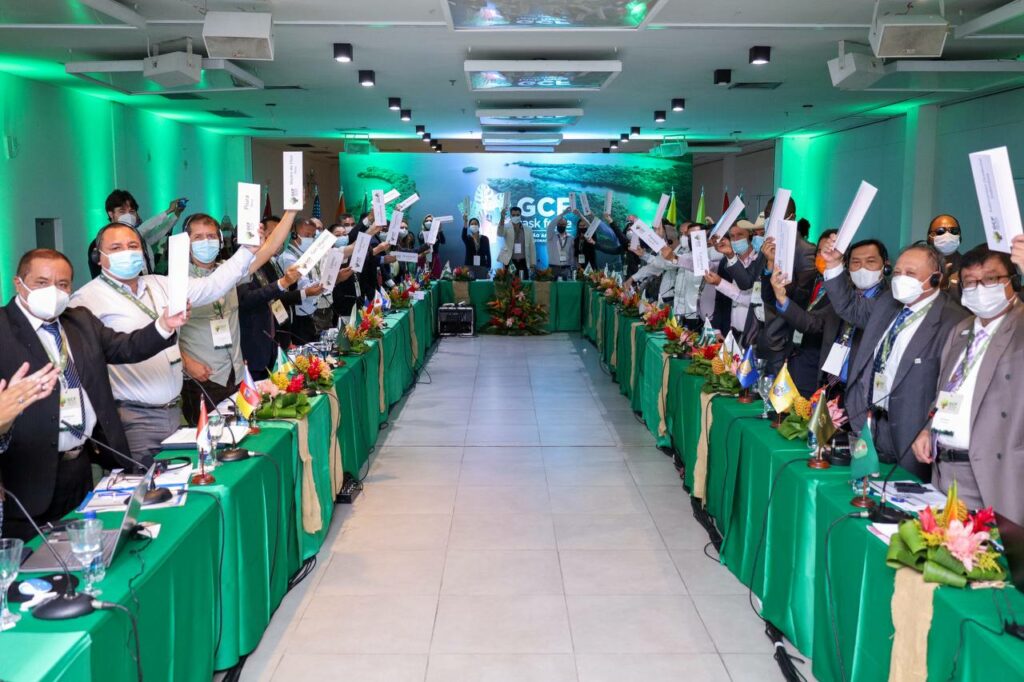
The GCF Task Force has already laid the foundation for a New Forest Economy. In 2022, all GCF Task Force members signed the Manaus Action Plan for a New Forest Economy and renewed commitments to reduce deforestation by at least 80% by 2030. In 2024, we developed a detailed Blueprint for A New Forest Economy outlining four building blocks with key activities and funding mechanisms.
-
Building Block
NATURAL INFRASTRUCTURE
Protect forests as natural infrastructure. Leverage international financing and domestic budgets (e.g. carbon markets, payment for ecosystem services (PES), local development banks) to sustain life-essential services that underpin the other building blocks.
-
Building Block
SUSTAINABLE COMMODITIES
Scaling productivity of commodities to increase value and meet demand without further land clearing. Join producers, commodity companies, transparency organizations, and researchers with private sector investments to benefit regional economies.
-
Building Block
BIOECONOMY
Attract investments into community-based enterprises and startups that value standing forests. Drive local innovation and create sustainable livelihoods that can be scaled up.
-
Building Block
RESTORATION
Pair large public and private upfront investments with repayment based on ecosystem benefits and cost savings stemming from restoration results, including carbon storage, increased resilience to wildfire, lower water purification costs, and improved biodiversity.
Key Highlights
Launch of Blueprint for a New Forest Economy
During our 14th Annual Meeting in Ucayali, Peru in October 2024, we published Blueprint for a New Forest Economy, which outlines four building blocks and proposes innovative financing mechanisms to galvanize this transformation.
Technical Exchange in Santa Cruz, Bolivia
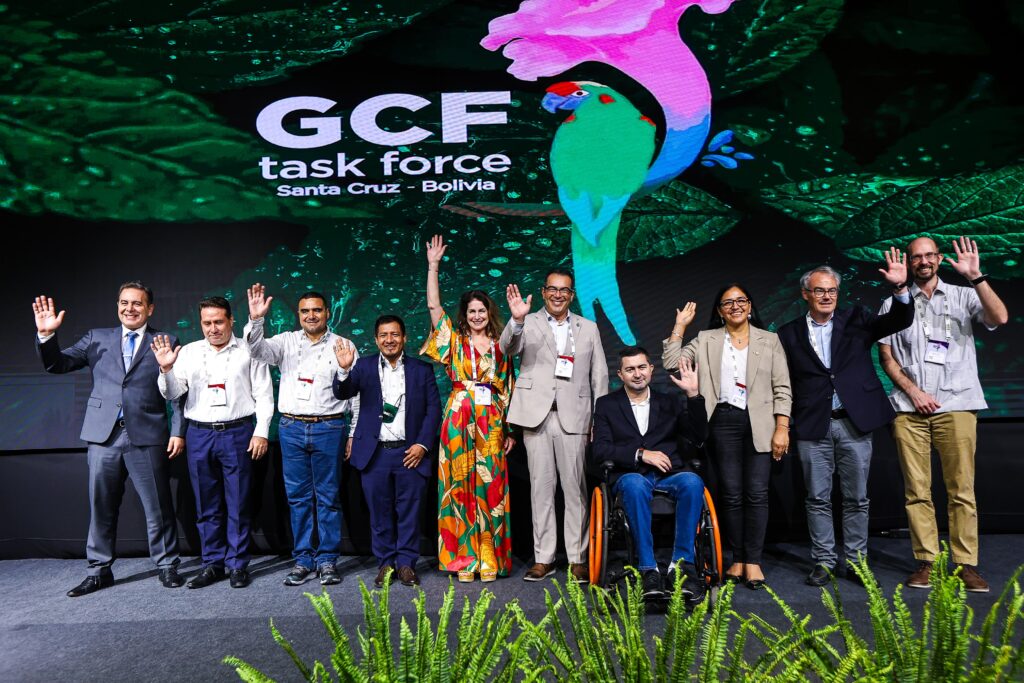
In April 2024, one of our newest members, Santa Cruz, Bolivia, hosted a technical exchange of GCFTF member jurisdictions, Indigenous leaders, donors, and other partners, to begin the process of co-designing a set of regional funding mechanisms to support New Forest Economy efforts in our jurisdictions. Out of this exchange, we identified a clear set of design principles and key activities for these regional funding mechanisms that informed the creation of the Blueprint.
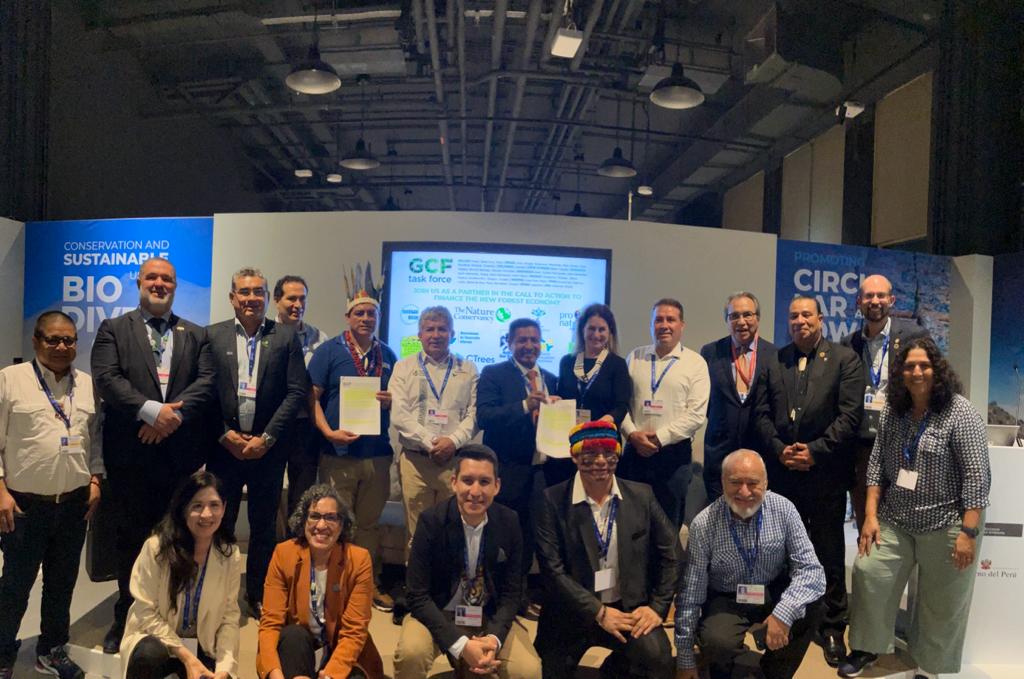
Call-to-Action at COP28
In 2023, we followed up the MAP with a Call-to-Action to finance our efforts to build a New Forest Economy launched during the 28th Conference of the Parties to the United Nations Framework Convention on Climate Change. This Call-to-Action seeks to co-create flexible, substantial funding mechanisms – leveraging existing mechanisms and commitments as much as possible – to direct $1 billion of investments into implementing our jurisdictional low-emission development and forest governance strategies.
This was paired with a report on shovel-ready investment opportunities across our network — Building the New Forest Economy: Advancing Climate Action through the GCF Task Force.
Manaus Action Plan
In 2022, we published the Manaus Action Plan for a New Forest Economy (MAP), committing our governments to substantial reductions in deforestation and calling on partners to support our efforts to build comprehensive, jurisdiction-wide approaches to a New Forest Economy. The MAP centered on four key pillars: our efforts must work first and foremost for the people and communities in our territories; this work must be based on mobilizing science and technology, along with traditional knowledge and wisdom; recognition and support for our on-the-ground efforts will require substantial, flexible financial support from all sources; and we will ensure this work lasts through good governance and durable public policies.
As the MAP emphasizes, we know our realities best, and with support, we are best situated to implement solutions.