
Mato Grosso, Brazil
Brazil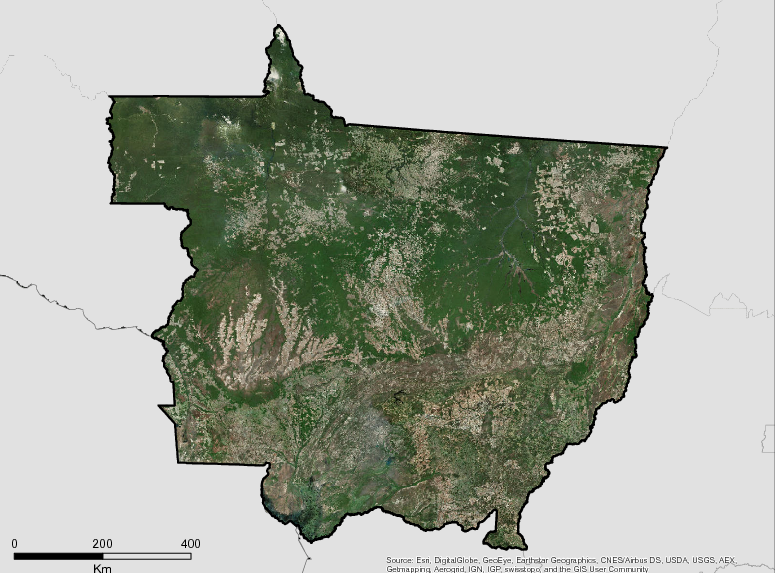
Description
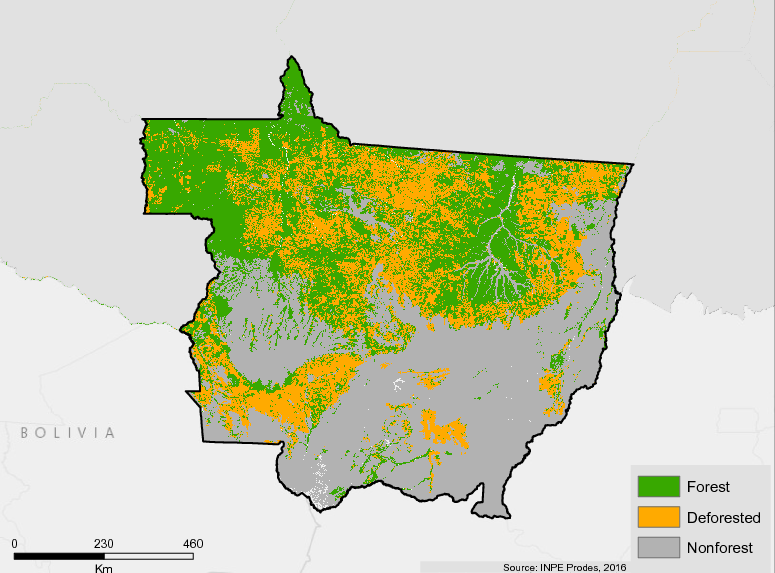
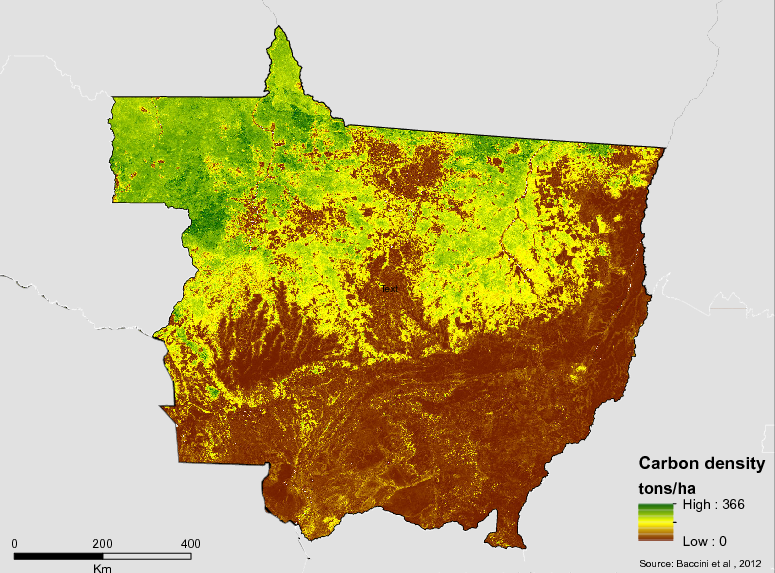
The state of Mato Grosso is located in the Central-West region of Brazil, bordering the states of Pará and Amazonas to the north, Mato Grosso do Sul to the south, Goiás and Tocantins to the East and Rondônia and Bolivia to the West. It is the third largest state in the country by area, with an area of 903,000 square kilometers and a population of three million, two hundred thousand inhabitants. The state territory is composed of three biomes: Pantanal, Cerrado and Amazon. It contains a considerable number of protected areas, divided into 70 indigenous lands, 23 federal conservation units, 46 state conservation units and 35 municipal conservation units. In the three biomes, it is possible to find different types of vegetation, as the plant physiognomy varies from forest fragments to meadows, with great variation in their carbon stocks.
The state of Mato Grosso is one of the main producers of agricultural products in Brazil, including soybeans, corn, beef and cotton. Historically, it recorded high levels of deforestation until 2004. Since then Mato Grosso has achieved drastic reductions in deforestation in its territory. According to PRODES / INPE data, the deforested area of 11,814 Km2, observed in 2004 fell to 1,341 km2 in 2017, equating to a reduction of 89%.
In order to face drivers of deforestation and forest degradation and reach the current deforestation level, Mato Grosso has since 2010 structured various jurisdictional strategic planning instruments to reduce deforestation and sustainable development. These instruments are already in various stages of implementation and comprise an organized framework of government sectoral programs, targets, monitoring and governance tools and an established funding system, most of which are created through participatory processes involving multiple stakeholders.
The Strategy to Produce, Preserve and Include (PCI), launched in 2015, aims to bring a vision for the low-carbon agricultural development of Mato Grosso by 2030. It is based on a set of 21 goals, integrating the agendas of public, private actors and civil society, and aimed at reconciling low-carbon farming with environmental conservation and socio-productive inclusion. The strategy includes targets for reducing deforestation that include the commitments of the Rio Branco Declaration. The role of the PCI Strategy is to articulate and monitor a broad set of initiatives aimed at reducing the emission of greenhouse gases in the State.
The Action Plan for Prevention and Control of Deforestation and Burning in Mato Grosso (PPCDQ) is more operational. Since 2006 it has had two phases of implementation (2006 to 2010 and 2011 to 2016) and was renamed in its third phase to the Plan of Action for Prevention and Control of Deforestation and Forest Fires of the State of Mato Grosso (PPCDIF / MT). It represents a set of strategic actions to prevent and control deforestation and forest fires in Mato Grosso structured in 4 action lines with the respective objectives: Territorial Planning, Monitoring and Control, Promotion of Sustainable Activities and Governance and Executive Management. In the context of PPCDIF and in addition to the federal instruments for monitoring deforestation in the Amazonian forest areas (PRODES and DETER-INPE), the State of Mato Grosso through the State Environmental Secretariat (SEMA) has a monitoring system and quantification of deforestation in the entire territory of Mato Grosso including forest and non-forest areas.
In addition to these initiatives, the main REDD + policy came with Law 9,878, in 2013, which established the State System of REDD + (SISREDD +) with the objective of promoting the progressive, consistent and sustained reduction of deforestation and other activities that emit gases of Greenhouse Effect with coverage in all the biomes of Mato Grosso, aiming to reach the goals of the PPCDQ, the State Policy of Climate Change, and the National Policy of Climate Change and other pertinent legislation. The law allowed for specific governance to be established with the establishment of the REDD + Governing Board and made it possible to obtain payment for results. Thus, it is through this policy that the program of payment by results was approved at the end of 2017; “REDD + for Pioneers” (REDD + for Early Movers – REM) funded by the German government (KfW) and the UK government (BEIS), totaling 178 million reals. REM / MT aims to reward and recognize the REDD pioneer climate change mitigation effort. Through a benefit distribution built between 2017 and 2018 between potential beneficiaries and civil society, REM aims to promote sustainable development for the benefit of farmers, indigenous communities and extractive communities. The work carried out in the framework of the establishment of the REM program has made it possible to establish an operational plan and must ensure the reduction of deforestation by command and control, the implementation of safeguards and monitoring instruments and the implementation of programs directed to direct beneficiaries. Several partnerships were established for this, articulating direct beneficiaries, but also civil society organizations such as ICV, IPAM, EII, ONFI, FEPOIMT, international technical cooperation such as GIZ or even federal institutions such as FUNAI.
Mato Grosso participates actively in the activities and work of the National Commission for REDD + (CONAREDD +), the Thematic Consultative Chambers (CCT) and in the process of building the National Information System on REDD + Safeguards, aiming at ensuring complementarity between the federal and state level and security implementation of public policies and programs.
Additional information can be found on the GCF Impact Platform.
Summary
Demographics
Urban vs. Rural Population
| Category | % | |
|---|---|---|
| Urban | 82.00 | |
| Rural | 18.00 |
Ethnic Groups
| Group | % | |
|---|---|---|
| Multi-ethnic | 52.00 | |
| White | 37.00 | |
| Black | 8.00 | |
| Indigenous | 2.00 |
Economy
GDP Breakdown
| Category | % | |
|---|---|---|
| Services | 54.48 | |
| Agriculture, Forestry | 28.60 | |
| 16.89 |
Forest Status
Major Vegetation Types
| Category | km² | |
|---|---|---|
| Forest | 422,967 | |
| Pastureland | 196,516 | |
| Other Land Uses | 123,459 | |
| Agriculture | 94,671 | |
| Secondary Vegetation | 65,717 |
Forest Management
| Category | km² | |
|---|---|---|
| Unprotected | 273,536 | |
| Protected | 40,464 |
Drivers of Deforestation
In recent decades the implementation of public policies to occupy the Amazon has resulted in profound change in the territory of Mato Grosso its economic development. Policies have attracted thousands of migrant families from various regions of the country, and in particular the south and southeast of the country. Many of these migrants are seeking to support livelihoods through agricultural production and in Mato Grosso the majority of deforestation is directly or indirectly associated with extensive livestock and agricultural operations.
Currently, the state is the largest producer of soy, cotton, meat and timber in Brazil. While this economic expansion has generated wealth it has also impacted the different types of vegetation belonging to the three biomes present in the state (Amazon, Cerrado and Pantanal). The growth of the economy, fueled by the continued expansion of agricultural activities – which peaked in the late 1990s and early 2000s – gave the state high rates of deforestation and burning.
After 2004, deforestation rates dropped substantially, both in Mato Grosso and in other states of the Legal Amazon. This was done through the joint action of the implementation of innovative public policies such as the PPCDA, at the federal level, and PPCDQ / MT at the state level, also associated with the dynamics in the commodities market, such as the Soy Moratorium and the Livestock Agreement . Many companies that purchase these commodities have demanded “zero deforestation” and “zero illegality” from their suppliers, measured at the level of individual farms, to avoid reputational risks. In this way, the possibility of market loss forced the adoption of technological advances to intensify agricultural production and cattle raising, reducing the need for new deforestation.
Deforestation Rates
Notes
| a. | Due to different methodological approaches and base years, Forest Status data fields may differ slightly. Data sources for each field are listed below. |
Sources
| 1. | IBGE, 2010 |
| 2. | Censo Demográfico IBGE, 2010 |
| 3. | IBGE, 2015 |
| 4. | IBGE, 2009 |
| 5. | Mato Grosso em Números, 2010 |
| 6. | Machado, R.B., M.B. Ramos Neto, P.G.P. Pereira, E.F. Caldas, D.A. Gonçalves, N.S. Santos, K.Tabor e M. Steininger. 2004. Estimativas de perda da área do Cerrado brasileiro. Relatório técnico não publicado. Conservação Internacional, Brasília, DF. link |
| 7. | Prodes INPE |
| 8. | MAPBIOMAS 2016 |
Overview of Forest Monitoring and Measurement Systems
Brazil has taken a step-by-step approach to developing the national forest reference emission levels (FREL), as provided for in Decision 12 / CP.17, paragraph 10 of the UNFCCC. A subnational FREL for the Amazon biome was submitted to the UNFCCC in June 2014 to transition to a national FREL, incorporating other biomes and activities as soon as relevant data and information are available.
The FREL Amazônia was constructed based on historical deforestation data, as measured by the Brazilian Amazonian Satellite Monitoring Program (Prodes), developed by the National Institute for Space Research (INPE), which is the official data of deforestation in the Legal Amazon of Brazil.
The Amazon FREL is a dynamic average of CO2 emissions, associated with gross deforestation since 1996 and updated every five years using the most recent historical data consistent with the National Greenhouse Gas Inventory available on the UNFCCC website at the moment of its elaboration. The base year was chosen to exclude the deforestation peak observed in 1995 and also to maintain consistency with policies and initiatives central to REDD + in Brazil, including the PPCDAm PNMC, which has 1996 as its base year. The dynamic nature of the FREL for the Amazon biome seeks to reflect national circumstances, including the effects of policies and plans implemented to reduce deforestation in the Amazon biome, as well as improvements in data quality and availability. The Amazon FREL does not include hypotheses about possible future changes in national policies.
During the second half of 2016, experts from the Technical Working Group on REDD + focused on validating the content to be submitted by Brazil, referring to the results of reduction of deforestation in the Amazon biome between the years 2011 and 2015. The results were sent as Technical Annex to decision 14 / CP.19, attached to the Biennial Update Report (BUR), submitted to the UNFCCC in early March 2017. This document also contains a detailed description of deforestation monitoring methodologies.
In summary, the following text applies to the payment for REDD + results in the different periods:
• FREL A (2006-2010): Emissions from deforestation in the period 1996 to 2005 were estimated by combining activity data (deforested annual area in different forest typologies) and appropriate emission factors (carbon stocks in the associated biomass for each type of forest considered). Regarding the reservoirs, the FREL considered above-ground biomass, below-ground biomass and litter. Dead wood and organic carbon in the soil (for mineral and organic soils) were not included because they were not considered significant sources, following the approach of the Second National Inventory of Greenhouse Gases, the most current when submitting the FREL Amazônia. Regarding the gases included, the Amazon FREL considered only CO2 emissions.
• FREL B (2011-2015): For the calculation of the emission reduction results from 2011 to 2015, the FREL used is equal to the average annual gross CO2 emissions, associated with the annual increases in deforestation adjusted from 1996 to 2010, inclusive . The methodology considers adjustments of the observed deforestation increments in order to estimate the deforested area under clouds (adjusted increments). Both FREL A (2006-2010) and FREL B (2011-2015) were constructed using adjusted increments. With the most recent data, several areas could finally be observed in 2016. FREL B incorporated the estimates of these areas with the most recent data, implying an increase of CO2 emissions of 0.23% relative to FREL B previously submitted and evaluated.
In view of the above, it is observed that there is no forecast for the adoption of a subnational FREL, since, in the context of the National Strategy for REDD + and CONAREDD + (National Commission on REDD +), the limits for raising funds from the Government Federal and Amazon states, based on the results of REDD + obtained by methodology that relates forest areas and reduction of emissions from the reduction of deforestation (“Stock and Flow” approach). Thus, according to the Single Annex to Resolution No. 6 / CONAREDD +, Mato Grosso presents 559,161,890.22 tCO2 and verified reductions, referring to the period from 2006 to 2010 (FREL A) and 475,074,392.24 TCO2e of verified reductions, for the period from 2011 to 2015 (FREL B).
Reference Levels and Targets
Deforestation Rates
Sources
| 1. | Based on Conservative Technical Committee of the Amazon Fund Emission Factors |
| 2. | Rio Branco Declaration based on national FREL 2010-2015 |
| 3. | Prodes INPE |
Laws, Policies & Strategies
Strategies and Policies
The State Plan for Control and Prevention of Deforestation and Fires in Mato Grosso- The State Plan for Control and Prevention of Deforestation and Fires in Mato Grosso(PPCDQ / MT) represents a set of strategic actions to prevent and controlling deforestation and burning in the State of Mato Grosso. The Plan brings together several actions, mostly linked to government bodies, as well as projects a new series of activities, whose management and execution should be shared through the involvement of public power, organized civil society and productive and business segments. The PPCDQ / MT is structured in 4 lines of action with the respective objectives: Territorial Planning, Monitoring and Control, Promotion of Sustainable Activities, and Governance and Executive Management.
For the 2006-2010 period, set by the State Government as the first period in its Action Plan for Prevention and Control of Deforestation and Burning of the State of Mato Grosso – PPCDQ / MT, the goal was to reduce 64% of deforestation in the forest, and the State achieved a reduction of 68.28%. For the second commitment period, from 2011 to 2015, the target reduction of deforestation was of 75%, and a reduction of 80% was achieved. For the third period, 2016-2020, the target is to reduce deforestation by 80%.
The first phase PPCDQ-MT can be downloaded here. The second phase can be downloaded here.
Starting in 2017, the PPCDQ-MT, underwent a comprehensive review process and was attended by several government departments and representatives of civil society. The main objective of the review and construction process of the third phase of the Plan was to incorporate the lessons learned during the first and second phases and to review the state strategy to combat and control deforestation, forest fires and forest fires. In this sense, considering the scope of the plan with regard to forest fire prevention and control actions, the Executive Committee decided to propose a change in its name, to ‘Action Plan for Prevention and Control of Deforestation‘, Accordingly, Decree No. 1,490 was published on May 15, 2018, in the Official Gazette of the State of Mato Grosso, PPCDIF / MT 3rd Phase (2017-2020) was officially established, which aims to reduce deforestation and forest fires in the state through command and control actions, territorial planning and promotion of sustainable activities.
In the Plan, the State of Mato Grosso will seek as a voluntary goal, the elimination of illegal deforestation in forests until 2020 and also the reduction of 80% (eighty percent) of forest deforestation in the period 2017 to 2020, considering the baseline of 5,515 km² (five thousand, seven hundred and fifteen square kilometers), related to the average deforestation occurred in the years 2001 to 201
Produce, Conserve, Include Strategy (PCI)– PCI is a multi-stakeholder strategy which aims to restore 2.9 million hectares of vegetation, reduce deforestation by 90% and increase agricultural productivity while including smallholders and indigenous peoples. It is driven by riven by a multistakeholder committee which was established through Decreto nº 468.
Laws and Regulations
Decree 1,189, 06/09/2017– Institutes the REM Strategic Committee – Provides for the establishment of the Strategic Management Committee of the Global REDD Early Movers Program – REM, in the State of Mato Grosso – CEGREM / MT.
Ordinance 019, 03/28/2017 – Appoints representatives of civil society and municipalities to compose as Guest Members the State Commission for the Socioeconomic Zoning of the State of Mato Grosso – CEZSEE / MT.
Portaria 575, 2017 – Appoints the representatives of the institutions, indicated below, as members of the Management Board of the State System REDD+.
Complementary Law 582, 01/13/2013– Institutes the State Policy on Climate Change.
Decree 883, 21/03/2017– Establishes the State Ecological Socioeconomic Zoning Commission – CEZSEE / MT
Decree 351, 04/12/2015 – delegates a number of responsibilities to the Secretariat of State for the Environment (SEMA) including – formulate and implement environmental policies; promote conservation; formulate policies to contribute to climate change mitigation; control exploitation activities for mineral, water, forestry and wildlife resources; environmental licensing of activities using environmental resources; and carry out technical studies that support the planning activities adopting measures for conservation and preservation of environmental resources and establishing operating criteria.
Decree 306, 26/10/2015– Creates the State Committee for Management of the Environmental Education Program in Family Agriculture PEAAF and makes other provisions.
Decree 239, 3/9/2015 – Amends the development plan for Mato Grosso and promotes the implementation of measures to ensure economic viability for companies established in the State and contributes to the simplification of administrative and legal procedures
Decree 230, 18/08/2015 – requires registration in the Rural Environmental Registry (CAR) for agricultural and livestock activities
Decree 2698, 30/12/2014 – establishes the priority areas within the State for legal reserve compensation purposes.
Decree 2.694, 29/12/2014 – Provides for the institution and regulation of the Management Council of the State System of REDD +.
Decree 2.352, 12/5/2014 – Provides on the composition of the State Environmental Council – CONSEMA, discipline the election of its members and other measures.
Decree 2152, 12/02/2014 – regulates Forestry Sustainable Timber Management Plans in the State of Mato Grosso
Decree 2,055, 19/12/2013 – Establishes the Plan of Action for Prevention and Control of Deforestation and Burnings of the State of Mato Grosso – PPCDQ / MT and makes other provisions.
Decree 2,052, 18/12/20130 – Establishes the State Plan of Low Carbon Agriculture – ABC-MT Plan, within the scope of the “Sectoral Plan for Mitigation and Adaptation to Climate Change for the Consolidation of a Low Carbon Economy in Agriculture”, with the objective of promoting mitigation of GHG emissions from agriculture in the MT, and other measures.
Law 9.878, 2013 – establishes state REDD+ system including institutional arrangements and regulations for forest carbon
Law 343, 12/24/2008 – creates the Mato Grosso Rural Environmental Programme – MT LEGAL. In addition, it regulates licensing procedures for the Environmental of Rural Properties, with the objective to promote the regularization of rural properties, related ownerships and their inclusion in the Rural Environmental Registration System and/or Environmental Licensing of Rural Properties – SLAPR.
Law 233, 21/12/2005 – Establishes the State Policy on Forestry of the State of Mato Grosso. This Policy aims at ensuring the protection of wild flora in the territory of Mato Grosso and allowing forestry sustainability, promoting practices that contribute to the socio-economic development of the State, to improve environmental quality and ecological balance, through the following principles: I – conservation of natural resources; II – preservation of the biomes and their functions; III – maintenance of biological diversity; IV – regional socioeconomic development.
Institutional Framework
Coordination for Climate Change/SEMA – Design and implementation of the State Policy for Climate Change and REDD; Establishment of strategies and coordination of the implementation of the State REDD Program.
Superintendent for Forest Management at SEMA/MT – Forest management licensing and control of forest products through systems called SLAPR (Rural Properties Licensing System) and SISFLORA (Trade and Transport of Forest Products System).
State Secretariat for Rural Development (EMPAER, INTERMAT and INDEA) – Resolution and management of land tenure for properties linked with REDD projects and support for good agricultural practices aimed at reducing pressure on native forests.
Firefighters / Military Police – Prevention and control of fires in state public areas and support in federal public areas, capacity building and creation of municipal and indigenous fire brigades.
Civil Defense / Ministry of Defense and SEMA Coordination of CIMAM – Civil Defense; Coordination of the State Committee for Fire Management, authorization of controlled burning, monitoring of hot spots and air quality, quantification of burned areas.
Coordination for Protected Areas/SEMA – Creation and management of State Protected Areas.
Superintendence for Indigenous Affairs / Chief of Staff (Executive Branch) – Improvement of the coherence of state policies with indigenous peoples’ rights and communication with FUNAI (National Indian Foundation).
Coordination for Geotechnology/SEMA – Monitoring of deforestation, forest degradation and forest management.
Superintendent for Enforcement/SEMA17, Police Nature Protection Battalion, State Environmental Policing Department (DEMA) and Mobile Environmental Court (JUVAM) – Control of environmental violations.
State PCI Committee (CEEPCI) – multistakeholder committee overseeing the advancement of the Produce, Include, Conserve initiative
Zoning & Spatial Planning
Ecological and Economic Zoning (Zoneamento Ecológico-Econômico – ZEE) is required by the Federal Government to designate areas for economic and conservation activities within each state’s territory. In 2008 Mato Grosso created a state commission on ecological and economic zoning through decree n 1.139. Mato Grosso’s ZEE was updated in 2011 and formalized through state law nº 9.523, however it was suspended by court order in 2012. Members of the State Ecological Socioeconomic Zoning Commission, which includes SEMA and SEPLAN, are now coordinating to update and redraft the plan, which is expected to be completed by 2017.
Engagement & Participation with Indigenous Peoples and Local Communities
Resolution No. 6, dated December 29, 2016, includes the Federation of Indigenous Peoples and Organizations of Mato Grosso – FEPOIMT / MT in the composition of the MATO GROSSO FORUM OF CLIMATE CHANGE – FMMC. As a member of the FMMC, FEPOIMT is now composed of the seat for indigenous peoples in the REDD + Management Council and is appointed by Administrative Rule 575 of July 21, 2017.
In the REM-MT Program, the subprogramme Indigenous Peoples is under construction in a participatory manner through consultation and collective construction begun in 2017 and expected to be continued throughout 2018. The process is being led by FEPOIMT, supported by the state government of Mato Grosso, by the German Technical Cooperation – GIZ, and by civil society partners, in coordination with FUNAI. The process involves a stage of mobilization and transfer of information, followed by a prior consultation, in which different peoples can decide whether or not to participate in the Program. Three workshops have been held on the REM Program in 2017 and a workshop to evaluate and monitor the multiplication of this information in the year 2018. The workshops involved indigenous peoples from all regions of the state. Consultation on indigenous participation in the REM program and the construction of components of the subprogramme will be completed by 2018. Once drafted, the breakdown will be incorporated into this program’s benefit-sharing strategy. The expectation is that from 2019 the first activities in this subprogram could be implemented with support from REM resources.
Partnerships and Ongoing Initiatives
Aggregation of value and consolidation of sustainable markets through the collection and processing of the fruits of the Cerrado
- Description
-
Project located in the rural Black Quilombo community of Ribeirão do Mutuca belongs to Quilombo Mata Cavalo, municipality of Nossa Senhora do Livramento (MT). This is a project of the Natural Resources Management Window.
In a region rich in baru, pequi and other typical fruits of the Cerrado, the project Aggregation of value and consolidation of sustainable markets through the collection and processing of the fruits of the Cerrado will develop the internal productive capacity of the community, with the objective of accessing markets. To this end, a beneficiation unit will be implemented, encouraging good collection practices, qualifying beneficiaries and promoting market studies and business plan for the production chain. The project, proposed by the Rural Black Community Association of Quilombo Ribeirão da Mutuca, also foresees production of publicity material to communicate and disseminate the quilombola initiative.
- Partners
- DGM Brazil, world Bank, Center of Alternative Agriculture of the North of Minas
- Funding Amount
- $ 6.5m to Brazil
- Initiative Type
- Non-refundable external financing
- Initiative Status
- Information not found
Agreement Carrefour – Mato Grosso IMAC – Instituto Mato Grossense da Carne
- Description
-
Partnership for the sale of meat with guarantee of origin certified by the IMAC in stores of the network Carrefour.
The Government of Mato Grosso, through the Mato Grosso Institute of Meats (Imac), is a partner in the Carrefour group initiative which establishes traceability of sustainably produced beef that will be resold in the supermarkets of the network. The program was launched in August 2016.
Based on a national policy for the purchase of fresh beef, the company has adopted a system to monitor the production processes and socio-environmental practices of all its suppliers in the country. The tool will be implemented in partnership with the 22 suppliers of fresh beef that they provide to the company and which must strictly comply with the criteria and good practices established by this policy. The initiative reinforces the Carrefour Group’s global commitment to zero deforestation and its commitment to maintaining partnerships that foster sustainable production practices.
- Partners
- IMAC – Instituto Mato Grossense da Carne and Carrefour
- Initiative Type
- Preferential Sourcing Agreement
- Initiative Status
- Under implementation
Amazon's Water Springs
- Description
-
Provides support to strengthen municipal environmental management in Alta Floresta by conducting environmental diagnosis to enable small rural property registration in the Rural Environmental Registration (CAR) programme; fosters efforts to recover degraded permanent preservation areas located close to springs on small properties.
- Partners
- Municipality of Alta Floresta, in the state of Mato Grosso
- Funding Amount
- $1,554,863.82
- Initiative Type
- Land Titling and Registration
- Initiative Status
- Concluded
Amazônia Agroecológica Project
- Description
-
Strengthens sustainable economic activities in traditional and indigenous communities through a public call for the selection of small projects and actions to be undertaken directly by those traditional communities, indigenous peoples, and family farmers in various municipalities within Mato Grosso and Pará.
- Partners
- Federation of Agencies for Social and Educational Assistance (FASE)
- Funding Amount
- $4,736,950.65
- Initiative Type
- Sustainable Livelihoods
- Initiative Status
- Under implementation
Amazonia SAR
- Description
-
Amazonia SAR implements a deforestation detection system utilizing orbital imaging radar to monitor 950,000 km2 per year (23% of the Amazon biome). Of the total land monitored, 764,000 km2 is comprised of areas under the greatest pressure of deforestation, 144,000 km2 is in the state of Amapá, and an additional 5% of isolated points in the Amazon biome will be monitored due to specific demand.
- Partners
- Federal Government/Defense Ministry – Operations and Management Center of the Amazonian Protection System (CENSIPAM)
- Funding Amount
- $20,783,439.87
- Initiative Type
- Protected Areas Initiative
- Initiative Status
- Contracted
ARPA Program – Protected Areas of the Amazon
- Partners
- Coordinated by the Ministry of the Environment – MMA and managed financially by FUNBIO – Brazilian Biodiversity Fund with funds from the Global Environment Facility (GEF) through the World Bank and the German government through the German Development Bank (KfW) of the WWF Network – through WWF-Brazil, and the Amazon Fund, through the BNDES.
- Initiative Type
- Non-refundable external financing
- Initiative Status
- Running
Bahorure Project
- Description
-
Project Bahorure, will cover two Indigenous Lands (TI): Ubawawe, located in the municipality of Santo Antônio do Leste (MT), and part of Parabubure, located in the municipality of Campinápolis (MT), directly contemplating 700 indigenous people from Aldeia Água Limpa, Sucupira , Sete Rios, Pedra Branca and São Benedito (TI Ubawawe) and the villages Buritizal and Paraiso (TI Paraburure). (MT). This is the Project for the Immediate Threat Response Window.
Food insecurity is increasing and hunger is part of the daily lives of most families, and can be evidenced by the large number of people with diseases linked to food shortages (quantity and quality), such as child malnutrition, diabetes, hypertension. The most dramatic result of this threat is the enormous mortality rate in the communities directly involved: in the year 2016, 15 deaths were reported, nine of them children, most of them malnourished. Thus, it is necessary to rescue local agriculture, through the introduction of creole maize varieties, beans and the enrichment of the plantations. It is also necessary to plant native and exotic forest species of food and cultural importance, which besides serving as a food source, will facilitate the maintenance of the animals in the reserve, facilitating hunting. These strategies will also be associated to the implementation of a surveillance post and inspection and construction of a seed house. In the villages of Buritizal, Paraíso, Água Limpa, Sete Rios, Pedra Branca and São Benedito, a work will be done to valorize traditional cultivation and in some crops the reinsertion of traditional species that have been lost. In the village Sucupira will be implanted the nursery, due to the greater availability of water and cultivated land in this village. All villages will be involved in seed collection, building and nursery management.
- Partners
- DGM Brazil, world Bank, Center of Alternative Agriculture d Norte de Minas
- Funding Amount
- $ 6.5m to Brazil
- Initiative Type
- Non-refundable external financing
- Initiative Status
- Information not found
Banco do Brasil Foundation – Amazon Fund
- Description
-
The Amazon Fund provides support to projects related to developing sustainable production in conjunction with conservation in the Amazon Biome. Beneficiaries of The Amazon Fund’s supported projects include: traditional communities (indigenous peoples, quilombolas, rubber tappers, riverside populations, family farmers, subsistence agriculturists), rural workers involved in settlement projects, low-income populations at risk of social exclusion, collective undertakings, solidarity economies, non-profit institutions governed under private law, and public administration entities.
- Partners
- Fundação Banco do Brasil (FBB)
- Funding Amount
- $7,550,588.95
- Initiative Type
- Sustainable Production
- Initiative Status
- Contracted
Banco do Brasil Foundation – Amazon Fund / Phase 2
- Description
-
Phase II of The Amazon Fund supports projects that facilitate the development of productive activities promoting the conservation and sustainable use of the Amazon Biome; the initiative benefits traditional communities (indigenous peoples, quilombolas, rubber tappers, riverside populations, family farmers, subsistence agriculturists), rural workers involved in settlement projects, and low-income populations at risk of social exclusion.
- Partners
- Banco do Brasil Foundation (FBB)
- Funding Amount
- $4,979,666.36
- Initiative Type
- Protected Areas Initiative
- Initiative Status
- Contracted
Buriti Springs
- Description
-
Buriti Springs strengthens municipal environmental management in the municipality of Carlinda in the state of Mato Grosso by physically structuring the Municipal Secretariat of the Environment and Tourism along with efforts to recover 1,722 hectares of permanent preservation areas surrounding Buriti Springs.
- Partners
- Municipality of Carlinda
- Funding Amount
- $1,202,868.95
- Initiative Type
- Environmental Management
- Initiative Status
- Contracted
CAR Mato Grosso do Sul
- Description
-
CAR Mato Grosso do Sul supports the implementation of the Rural Environmental Registration (CAR) in the state of Mato Grosso do Sul to directly benefit 69 municipalities across three different biomes: Cerrado, Pantanal, and Mâta Atlantica.
- Partners
- Environmental Institute From Mato Grosso do Sul State (Imasul)
- Funding Amount
- $3,682,362.80
- Initiative Type
- Protected Areas Initiative
- Initiative Status
- Contracted
Dahöimanazé: Tradition and Sustainability in the Cerrado
- Description
-
Project located in Wederã village, corresponding to approximately 80,000 hectares, located in the northeast portion of the Indigenous Land (TI) Pimentel Barbosa, in the Municipality of Canarara (MT). This is a project of the Natural Resources Management Window.
After several discussions of the Wederã village community in the traditional council, the need to obtain data on the natural resources and other ecological aspects of the Wederã village, along with the Association of Peoples of the Roncador (proponent of the Dahöimanazé subproject: Tradition and Sustainability in the Cerrado), was verified. Thick. The community has decided that it is time to re-know their territory in order to preserve, defend and exploit it in a sustainable way for future generations. This is based on a participative / collaborative territorial management plan, with data collection based on expeditions in which technicians and community will revisit old traditional areas, inspecting, recognizing the territory and reaffirming / maintaining its tradition.
- Partners
- DGM Brazil, world Bank, Center of Alternative Agriculture d Norte de Minas, Alliance of the Peoples of Roncador
- Funding Amount
- $ 6.5m to Brazil
- Initiative Type
- Non-refundable external financing
- Initiative Status
- Information not found
Empowering Environmental Monitoring and Control in Order to Combat Illegal Deforestation in the Brazilian Amazon
- Description
-
Empowers environmental monitoring and control in order to combat illegal deforestation in the Brazilian Amazon over a period of 15 months in regions under the greatest deforestation pressure; utilizes trucks and helicopters to enforce actions in the field.
- Partners
- Brazilian Institute of Environment and Natural Resources (Ibama)
- Funding Amount
- $17,662,033.20
- Initiative Type
- Protected Areas Initiative
- Initiative Status
- Contracted
Environmental Management Qualification Program
- Description
-
Supports the strengthening of environmental management in the 529 municipalities across nine states in the Legal Amazon through (i) offering training and technical support (ii) disseminating knowledge and information through networks (iii) fostering innovation and promoting liaison with other government levels and general society within the framework of environmental public policies.
- Partners
- Brazilian Institute of Municipal Administration (IBAM)
- Funding Amount
- $9,019,941.79
- Initiative Type
- Protected Areas Initiative
- Initiative Status
- Contracted
Environmental Monitoring of Brazilian Biomes
- Description
-
Environmental Monitoring of Brazilian Biomes achieves three objectives: (i) Development and enactment of deforestation monitoring systems for the Atlantic Forest, Caatinga, Pampa, and Pantanal biomes (ii) Calculation of CO2 emissions for deforested areas and creation of a proposed Forest Reference Emission Level (FREL) for each biome, to be provided to the United Nations Framework Convention on Climate Change (UNFCCC) (iii) Platform development for analysis and visualization of vast geospatial data to benefit the entire national territory through platform development.
- Partners
- Space Science, Applications and Technology Foundation (FUNCATE) and National Institute of Space Research (INPE)
- Funding Amount
- $15,911,139.52
- Initiative Type
- Protected Areas Initiative, Financial Initiative
- Initiative Status
- Contracted
Environmental Monitoring via Satellite in the Amazon Biome
- Description
-
Supports the development of studies on land use and land coverage in the Amazon biome; expands and improves environmental monitoring by satellites, as performed by the National Institute of Space Research (INPE).
- Partners
- National Institute of Space Research (INPE)/Science, Applications and Space Technology Foundation (FUNCATE)
- Funding Amount
- $27,783,399.45
- Initiative Type
- Protected Areas Initiative
- Initiative Status
- Contracted
Environmental Operations Company
- Description
-
Structures the Environmental Operations Company of the National Public Security Agency (FNSP) both physically and operationally to perform environmental operations in the Amazon Biome.
- Partners
- Federal Government/Ministry of Justice – National Public Security Force (FNSP)
- Funding Amount
- $11,796,765.00
- Initiative Type
- Protected Areas Initiative
- Initiative Status
- Contracted
Ethnic-environmental protection for isolated or recently contacted indigenous people in the Amazon
- Description
-
This protection initiative provides support and protection to isolated indigenous peoples and those recently contacted throughout the entire Amazon biome in order to establish physical limits and protect natural resources in settled areas within the territories of these groups and surrounding areas. The project aims to help reduce deforestation in the Amazon.
- Partners
- Center for Indigenous Work (CTI)
- Funding Amount
- $7,514,829.72
- Initiative Type
- Protected Areas Initiative
- Initiative Status
- Contracted
Family Farming Value Chains in the State of Mato Grosso
- Description
-
Comprehensively strengthens family farming in municipalities within the southeast region of the state of Mato Grosso by (i) implementing and consolidating agroforestry systems, (ii) assisting collective structures for processing production, and (iii) structuring commercialization channels for agroforestry systems’ products. The initiative benefits both family farmers and indigenous communities within the Amazon Portal, as well as state and federal agrarian reform settlements.
- Partners
- Alternative Technology Center Association (CTA)
- Initiative Type
- Sustainable Production Initiative
- Initiative Status
- Contracted
Forest Firefighters of Mato Grosso
- Description
-
Supports actions to monitor, prevent, and combat deforestation resulting from unauthorized forest fires and burns in the state of Mato Grosso through operational training and purchase of aircraft, vehicles, and support equipment for the Military Fire Brigade Air and Ground Operations Base of the state of Mato Grosso.
- Partners
- State of Mato Grosso
- Funding Amount
- $7,470,856.26
- Initiative Type
- Protected Areas Initiative
- Initiative Status
- Concluded
Forest Information to support public and private sectors in management initiatives
- Description
-
Breve descrição: The objective of the Technical Cooperation (TC) is to implement the National Forest Inventory (NFI) in Cerrado biome and consolidate the National Forest Information System (NFIS) as policy instruments, capable of producing timely and quality information for decision makers in the public and private sectors. The project will contribute to the promotion of sustainable programs aimed at mitigating greenhouse gas (GHG) emissions in the Cerrado. It also aims at promoting partnerships with States and other institutions in the region to promote information exchange and dissemination. The project is part of Brazil’s Investment Plan (IP) for the Forest Investment Program (FIP), which seeks to promote the sustainable use of land and the improvement of forest management in the Cerrado Biome, thus helping to reduce pressure on remaining forests, decreasing greenhouse gas (GHG) emissions and increasing carbon sequestration. It finances the generation and dissemination of forest information to support public and private sectors in management initiatives aimed at the conservation and enhancement of forest resources in the Cerrado biome.
- Partners
- Climate Investment Fund – Forest Investment Program with 26 partners
- Funding Amount
- USD 24,450,000
- Initiative Type
- Financiamento externo não reembolsável Assistência Técnica
- Initiative Status
- Executed from June 2014 – June 2018 (48 months)
Forest Sentinels
- Description
-
Forest Sentinels increases extraction communities’ income by strengthening the Brazil nut sector from collection to enrichment and commercialization. The initiative encompasses eight municipalities in the state of Mato Grosso (Aripuanã, Brasnorte, Castanheira, Colniza, Cotriguaçu, Juara, Juína and Juruena), while focusing on four indigenous ethnic groups (Apiaká, Caiaby, Munduruku and Cinta Larga), COOPAVAM itself, comprising extractionists from the Vale do Amanhecer settlement, and the Cantinho da Amazônia Women’s Association (AMCA), stemming from the COOPAVAM.
- Partners
- Cooperative of the Farmers in the Vale do Amanhecer (COOPAVAM)
- Funding Amount
- $2,195,440.85
- Initiative Type
- Sustainable Production Initiative
- Initiative Status
- Contracted
GEF-Terrestrial Conservation, Restoration and Management Strategies for Caatinga, Pampa and Pantanal Biodiversity – GEF-Terrestrial
- Partners
- Coordinated by the Ministry of the Environment – MMA and managed financially by FUNBIO – Brazilian Fund for Biodiversity with resources from the Global Environment Facility – GEF, through the World Bank., Contact Us |, • Chico Mendes Institute for Biodiversity Conservation (ICMBio), • Rio de Janeiro Botanical Garden (JBRJ), • State Environmental Bodies
- Initiative Type
- Non-refundable external financing
- Initiative Status
- Running
Going Green
- Description
-
Going Green helps mobilize local players across 12 municipalities in the states of Mato Grosso and Pará towards adherence to CAR. The initiative also utilizes satellite imaging to monitor deforestation in the region to the benefit of local municipal councils and rural producers.
- Partners
- Environmental Conservation Institute – The Nature Conservancy of Brazil (TNC Brazil)
- Funding Amount
- $8,117,294.91
- Initiative Type
- Protected Areas Initiative
- Initiative Status
- Concluded
IREHI – Taking Care of Territory
- Description
-
The IREHI initiative benefits indigenous communities in the TIs Menkü, Manoki, Pirineus de Souza and Marãiwatsédé by concluding and implementing Territorial and Environmental Management Plans (PGTA).
- Partners
- Native Amazon Operation (OPAN)
- Funding Amount
- $2,096,159.68
- Initiative Status
- Contracted
Kayapó Fund
- Description
-
The Kayapó Fund is a long-term financial and operational mechanism providing support to Kayapó organizations encouraging sustainable production activities, strengthening institutions, preventing deforestation, and conserving biodiversity and territorial protection. The fund benefits Kayapó indigenous communities living in Indigenous land (TIs) Kayapó, Menkragnoti, Baú and Badjonkôre, in the southern region of the state of Pará; and TI Capoto-Jarina, in the northern region of the state of Mato Grosso.
- Partners
- Brazilian Biodiversity Fund (FUNBIO)
- Funding Amount
- $10,583,004.57
- Initiative Type
- Financial Initiative
- Initiative Status
- Contracted
Mato Grosso Sustainable Landscapes Initiative ISLA
- Description
-
IDH has a memorandum of understanding signed with the Government of the State of Mato Grosso, which is one of the jurisdictions that make up the Sustainable Landscapes project, as a result of the IDH partnership with the Government of Norway.
Within this project, the work in Mato Grosso has three main axes of action:
- Governance: support the development of policies at the state level
- Finance: attracting international investments for profitable conservation activities
- Market: supply chains and verified sourcing areas.
- Partners
- IDH, Government of the State of Mato Grosso
- Initiative Type
- Technical Assistance Partnership
- Initiative Status
- Under implementation
Memorandum of Understanding Between Aprosoja, ABIOVE, FEFAC, FEDIOL & IDH
- Description
-
Recognition of sustainable soy production programs in Mato Grosso as a guarantee of supply for European importers.
On January 19, 2017, a Memorandum of Understanding (MoU) was signed by AproSoja, ABIOVE, FEFAC, FEDIOL and IDH at the Brazilian Embassy in Lisbon. The objective of the agreement is to strengthen cooperation in the area of responsible soy production in Brazil. Brazil has developed comprehensive and detailed legislation to preserve its rich biodiversity, notably the Brazilian Forest Code. This strong regulation leads to a substantial protection and regeneration of natural habitats on the private properties of Brazilian rural producers, who face a challenge of competitiveness since this type of legislation differs strongly from what is done in the rest of the world.
MoU signatories recognize that implementation of environmental legislation requires coordinated and meaningful supportive actions by farmers and supply chain partners to preserve the balance between environmental and social protection objectives and the economic viability of Brazilian agriculture. The Aprosoja / ABIOVE Soja Plus program and the FEFAC Soy Sourcing guidelines play an important role in achieving the common goal of improving the sustainability of soybean production in Brazil, in parallel with landscape and restoration initiatives, including the Regularization Program (PRA), in collaboration with IDH.
- Partners
- Abiove, Aprosoja, Fefac, Fediol, Idh
- Initiative Type
- Preferential Sourcing Agreement
- Initiative Status
- Signed (2017) and under implementation
MIP Althelia
- Description
-
Creation of a trading platform for carbon credits and a private equity fund for investments.
The Althelia Fund presented a Public Interest Statement to the Government of the State of Mato Grosso, through theMTPar, for the creation of a carbon credit trading platform and a private equity fund for investments in business opportunities with environmental impact positive.
- Partners
- Althelia Climate Fund, MTPar
- Initiative Type
- Private Investment
- Initiative Status
- Economic modeling and legal execution
National Forest Inventory – The Amazon
- Description
-
Implements the Forest Inventory in the Amazon Biome to produce information on forest resources, carbon stocks, and territory use by regional populations.
- Partners
- Federal Government/Brazilian Forest Service (SFB)
- Funding Amount
- $31,999,485.00
- Initiative Type
- Protected Areas Initiative
- Initiative Status
- Contracted
PECSA
- Description
-
Pecsa is an agricultural management and partnership company founded in June 2015, headquartered in Alta Floresta, in the north of Mato Grosso. The company promotes the sustainable livestock production chain in the Amazon through partnerships, technology andinvestments. Pecsa has partnered with the Althelia Climate Fund. The fund invests in sustainable land use initiatives that generate financial returns and environmental benefits, such as reducing deforestation.
- Partners
- Althelia Climate Fund, Pecsa
- Funding Source
- Althelia Climate Fund
- Initiative Type
- Private Investment
- Initiative Status
- Under Implementation
Plan of Action for the Prevention and Control of Deforestation and Burning in Mato Grosso (PPCDQ)
- Description
-
The Action Plan for Prevention and Control of Deforestation and Burning in Mato Grosso (PPCDQ) is more operational. Since 2006 it has had two phases of implementation (2006 to 2010 and 2011 to 2016) and was renamed in its third phase to the Plan of Action for Prevention and Control of Deforestation and Forest Fires of the State of Mato Grosso (PPCDIF / MT). It represents a set of strategic actions to prevent and control deforestation and forest fires in Mato Grosso structured in four lines of action with their objectives: Territorial Planning, Monitoring and Control, Promotion of Sustainable Activities and Governance and Executive Management [1] . Under the PPCDIF and in addition to federal instruments deforestation monitoring of forest areas in the Amazon region (PRODES and DETER-INPE), the State of Mato Grosso through the State Department of Environment (SEMA) has a system that performs monitoring and quantification of deforestation in the entire territory of Mato Grosso including forest and non-forest areas.
The Action Plan for the Prevention and Control of Deforestation and Burnings established a framework of coordinated actions at the state level in order to achieve the voluntary state goal of reducing forest emissions, which is in line with the federal target. In addition, the PPCDQ seeks to increase the State’s sustainable development efforts. The first Phase of the Plan was from 2010-2013 and the second Phase was from 2014-2016. The third phase is currently being developed for the period 2017-2019 with the support of the ICV and the IPAM.
- Partners
- State Secretariat for the Environment (SEMA)
- Initiative Type
- planning
- Initiative Status
- Implementation
Pluriethnic Xingu Seed Network
- Description
-
The activities will be carried out in localities of the TIX and in the municipality of Canarana (MT), seat of the Association of Seeds of the Xingu. There are actions planned in the villages of Piyulaga, Moygu and Arayo of the ethnic group Waurá, Ikpeng, Yudja, in the municipalities of Gaúcha do Norte and Feliz Natal (MT). This is a project of the Productive Market Oriented Window.
The purpose of the proposed Multi-ethnic Xingu Seed Network is to strengthen the intercultural dialogue between the indigenous peoples of the TIX in the various processes of the forest seed production chain, so that they can occupy more extensive decision-making and representation spaces, and favor the increase of seed production, as well as better understand the gender and economic relations that permeate the participation of the Xinguano in the Network.
- Partners
- DGM Brazil, world Bank, Center of Alternative Agriculture of the North of Minas
- Funding Amount
- $ 6.5m to Brazil
- Initiative Type
- Non-refundable external financing
- Initiative Status
- Information not found
Pojianare Nossa Mata
- Description
-
Project located in Bakairi Indigenous Land, in the municipality of Paranatinga (MT). This is a project of the Natural Resources Management Window.
The Tapaguia Indigenous Coordination approved a project in the first DGM Brazil announcement to seek, together with the Bakairi community, an option for the continuity of their cultural and social activities, based on the concepts of sustainable use of natural resources, greater community participation in the acquisition of knowledge and training on environmental and financial management. The initiative will also bring the possibility of recovery of degraded areas, enrichment of the forests with planting of native and fruit trees, improvement in the quality of air, water, plants and the history of the people. This will be done through the construction of a nursery of seedlings in Aldeia Cabeceira do Azul and the collection of seeds, planting of seedlings and construction of fences to preserve the buritizais in Aldeias Cabeceira do Azul, Pakuenra, Paikum and Kuiakware. Throughout the two years of the project, it is planned to plant five thousand saplings and other native Cerrado species, recovering and reforesting an estimated area of 100 hectares and building 10 km of fences. Thus, the idea is to recover the buritizais and the riparian forests of the sources of the rivers of the territory, isolating them to avoid the trampling of cattle, and to promote the improvement in the quality of life of the town, guaranteeing the preservation of the culture and the history of the town Bakairi.
- Partners
- DGM Brazil, world Bank, Center of Alternative Agriculture of the North of Minas, Coordination Indigenous Tapaguia
- Funding Amount
- $ 6.5m to Brazil
- Initiative Type
- Non-refundable external financing
- Initiative Status
- Information not found
Portal Seeds
- Description
-
Portal Seeds disseminates agroforestry systems that couple sustainable forest use and income generation in the Portal of the Amazon within the state of Mato Grosso. Additionally, Portal Seeds trains family farmers in the Terena indigenous community to collect seeds for agroforestry systems, along with re-establishing permanent protected areas and legal reserves to foster the environmental recovery of 1,200 hectares of degraded land.
- Partners
- Ouro Verde Institute (IOV)
- Funding Amount
- $3,113,963.05
- Initiative Type
- Protected Areas Initiative
- Initiative Status
- Concluded
Portal Seeds — Phase II
- Description
-
Portal Seeds supports the recovery of damaged areas and strengthens family farming the Amazon Portal region within the state of Mato Grosso. The initiative implements and consolidates agroforestry systems (AFS) through activities including planting trees, improving agroforests, structuring channels for selling products and trees, and conducting research within AFS areas. Eight municipalities in the Amazon Portal region are targeted: Apiacás, Alta Floresta, Carlinda, Colíder, Nova Canaã do Norte, Nova Guarita, Nova Santa Helena, and Terra Nova do Norte.
- Partners
- Outro Verde Institute (IOV)
- Funding Amount
- $7,213,452.91
- Initiative Type
- Sustainable Production Initiative
- Initiative Status
- Contracted
PPP-ECOS in the Amazon – Phase 2
- Description
-
Supports the structuring of sustainable productive chains through public calls within the Small Eco-social Projects Program (PPP-ECOS) to benefit populations of rural, traditional, and indigenous peoples, along with quilombolas, riverside populations, fishermen, and extractive communities in the states of Mato Grosso, Tocantins, and Maranhão within the limits of the Brazilian Amazon.
- Partners
- Society, Population and Nature Institute (ISPN)
- Funding Amount
- $5,460,127.11
- Initiative Type
- Sustainable Production Initiative
- Initiative Status
- Under implementation
Practices and attitudes, attitudes towards food sovereignty in the Xingu
- Description
-
Project located in the low, middle and east of the Xingu Indigenous Territory. This is a project of the Productive Market Oriented Window.
The initiative Practices and attitudes, attitudes towards food sovereignty in the Xingu, proposed by the Socio-environmental Institute, has as a strategy to act in a way to boost the experiences of implementation of Agroforestry Systems to contribute to the recovery of capoeiras and food production, also strengthening dialogue between traditional farming systems. The project will allow a space of exchange between the villages Samaúma, Capivara and Tuba Tuba, as well as other communities, focusing on overcoming the challenges posed today and the political contextualization of issues related to food sovereignty in the low, middle and east Indigenous Territory of Xingu.
- Partners
- DGM Brazil, world Bank, Center of Alternative Agriculture of the North of Minas, Social and Environmental Institute
- Funding Amount
- $ 6.5m to Brazil
- Initiative Type
- Non-refundable external financing
- Initiative Status
- Information not found
Preserving Porto dos Gaúchos
- Description
-
Strengthens municipal environmental management by physically and operationally structuring the Municipal Secretariat of the Environment and Tourism (SEMATUR) to benefit the municipality of Porto dos Gaúchos in the state of Mato Grosso.
- Partners
- Municipality of Porto dos Gaúchos, in the state of Mato Grosso
- Funding Amount
- $72,456.76
- Initiative Status
- Concluded
Prevention of Deforestation and Fires in Mato Grosso
- Description
-
P deforestation and fire prevention in Mato Grosso – represents a set of strategic actions to prevent and control deforestation and burnings in the state of Mato Grosso. The Plan includes several actions, mainly linked to government agencies, as well as projects of a new series of activities, whose management and execution must be shared through the involvement of public power, organized civil society and productive and business segments. PPCDQ / MT is structured in 4 action lines with the respective objectives: Territorial Planning, Monitoring and Control, Promotion of Sustainable Activities and Governance and Executive Management.
For the period 2006-2010, established by the State Government as the first period in its Plan of Action for the Prevention and Control of Deforestation and Burning of the State of Mato Grosso – PPCDQ / MT, the objective was to reduce 64% of deforestation in the forest, and the State obtained a reduction of 68.28%. For the second commitment period, from 2011 to 2015, deforestation reduction was 75%, and a reduction of 80% was achieved. The first phase PPCDQ-MT can be downloaded here . The second phase can be downloaded here .
Starting in 2017, the PPCDQ-MT, underwent a comprehensive review process and was attended by several government departments and representatives of civil society. The main objective of the review and construction process of the third phase of the Plan was to incorporate the lessons learned during the first and second phases and to review the state strategy to combat and control deforestation, forest fires and forest fires. In this sense, considering the scope of the plan with regard to forest fire prevention and control actions, the Executive Committee decided to propose a change in its name, to “Action Plan for Prevention and Control of Deforestation, Forest Fires of the State of Mato Grosso – PPCDIF / MT (http://www.sema.mt.gov.br/attachments/article/106/PPCDIF-MT%202017%20-%202020.pdf). Thus, through Decree No. 1,490 published on May 15, 2018, in the Official Gazette of the State of Mato Grosso the PPCDIF / MT 3rd Phase (2017-2020) was officially instituted (http://www.sema.mt.gov , which aims to reduce deforestation and forest fires in the state by means of command actions. and control, territorial planning and promotion of sustainable activities.
In the Plan, the State of Mato Grosso will seek as a voluntary goal, the elimination of illegal deforestation in forests until 2020 and also the reduction of 80% (eighty percent) of forest deforestation in the period 2017 to 2020, considering the baseline of 5,515 km² (five thousand, seven hundred and fifteen square kilometers), related to the average deforestation occurred in the years 2001 to 2010.
.
- Partners
- State government
- Initiative Type
- Planning Initiative
- Initiative Status
- Implementation
Prevfogo / IBAMA
- Description
-
The initiative supports the structure of the National Center to Prevent and Combat Forest Fires (PREVFOGO) programme both physically and operationally, along with training locals to monitor, prevent, and combat forest fires and unauthorized burns in the Amazon Biome through environmental education.
- Partners
- Brazilian Institute of the Environment and Renewable Natural Resources (IBAMA)
- Funding Amount
- $6,252,557.57
- Initiative Type
- Protected Areas Initiative
- Initiative Status
- Contracted
Produce – Conserve – Include Strategy
- Description
-
Sustainable development goals for the State of Mato Grosso agreed between the public sector, private sector and civil society.
The State of Mato Grosso, through its governor, launched the “Strategy: Produce, Conserve and Include” (PCI) at the Climate Convention (COP 21) held in Paris in December 2015, with the objective of raising funds for the State of Mato Grosso to expand and increase the efficiency of agricultural and forestry production, conserve native vegetation, restore deforested and degraded areas, support the socioeconomic inclusion of family agriculture, and generate emission reductions and carbon sequestration of 6 MTCO2eq by controllingdeforestation and developing a low carbon economy. It is the largest global effort to mitigate climate change ever devised by a subnational state.
This strategy arose from a collective and participatory process involving different state secretaries, representatives of non-governmental organizations, private companies, and representatives of different productive sectors.The initiative is based on the premise that the State could obtain better results by establishing a partnership between the public sector, the private sector, and other stakeholder seeking to meet a common social interest.
For the implementation of the strategy, the organizational structure of the PCI Committee – CEEPCI — was created, through Decree No. 468, of March 31, 2016. The Committee is responsible for approving the actions developed by the coordinating secretariats of the thematic axes, follow-up on the implementation of the strategy and the fulfillment of the goals, as well as the definition of its governance structure and fundraising mechanisms.
www.pci.mt.gov.br
- Partners
- Government of the State of Mato Grosso through its secretariats, private cmpanies, representative entities of production
- Initiative Type
- Public Private Partnership
- Initiative Status
- Contract expected to be signed October 2017, project will last 6 years
Profisc I-B
- Description
-
Profisc I-B is organized by the Federal Government to support the activities of Ibama for environmental monitoring and deforestation control in the Legal Amazon.
- Partners
- Brazilian Institute of Environment and Natural Resources (Ibama)
- Funding Amount
- $41,822,410.40
- Initiative Type
- Protected Areas Initiative, Financial Initiative
- Initiative Status
- Contracted
Recovering Marcelândia
- Description
-
Enhances municipal environmental management and the recovery of degraded areas surrounding fifty springs in the sub-basin of the Manissauá-Missu River to benefit the local population close to Marcelândia’s urban area.
- Partners
- Municipality of Marcelândia
- Funding Amount
- $321,563.81
- Initiative Status
- Concluded
Recovery of degraded area
- Description
-
Project located in the Marãiwatsede Indigenous Land, near the municipality of Alto Boa Vista (MT). This is a project of the Natural Resources Management Window.
The Marãiwatsede Indigenous Land has more than 70% of its deforested area due to invasions promoted by politicians in the region since 1995, seriously compromising the flora and fauna, which contributed to the absence of wild animals and several indispensable plants for the physical and cultural survival of its people. Due to the deforestation promoted by the invaders, there is currently only grass in the area. There is no more hunting or fish. Cerrado foods such as fruits, coquinhos, medicinal plants and honey decreased, causing the substitution of food with traditional products for processed foods. Traditional raw materials have also been lost to make bows and embers for decoration. In addition, deforestation has caused several dams to dry up. Those that remained are with their water volumes very low. In this sense, the Boui Marãiwatsede Association proposes the cultivation of native and fruit plants, aiming at the recovery of degraded areas and the main springs in the Marãiwatsede IT, with the planting of buriti, babassu and other species of the region, in order to contribute to the increase of the volume of water, as well as resources for food and materials for the production of handicrafts, ornaments and rituals. TI Marãiwatsede is near the municipality of Alto Boa Vista (MT). The predominant original vegetation is of Cerrado, but the area today is occupied by brachiaria grass. The project will be implemented in the villages Aopa, Etewawe, Madzaze and Marawatsede, and the monitoring of the work done from the village Aopa.
- Partners
- DGM Brazil, world Bank, Center of Alternative Agriculture d Norte de Minas, Boui Marãiwatsede Association
- Funding Amount
- $ 6.5m to Brazil
- Initiative Type
- Non-refundable external financing
- Initiative Status
- Information not found
REDD+ Early Movers Program
- Description
-
Implementation of the payment program – for performance of EUR 17 million from the German government and EUR 23.9 million from the United Kingdom.
The German REDD Pioneers Program (REM) is an initiative of the German Federal Ministry for Economic Cooperation and Development (BMZ) and implemented by the KfW Development Bank and Gesellschaft für Internationale Zusammenarbeit (GIZ).
Its purpose is to support risk-taking actors and implement pioneering REDD + initiatives. The REM Program promotes the conservation of forests and the reduction of CO2 emissions from deforestation. The support is made through payments for emission reduction results, duly monitored and verified, from deforestation. REDD + initiatives, which must necessarily involve indigenous peoples, traditional communities, actors at the agricultural frontier and public institutions; receive technical and financial support to promote forest conservation, contributing to climate change mitigation and sustainable development.
- Partners
- KfW (Germany), BEIS(UK), State Government of Mato Grosso
- Funding Source
- KfW (Germany), BEIS(UK)
- Funding Amount
- EUR 17 million + 23.9 million british pounds
- Initiative Type
- Pay for Performance Agreement
- Initiative Status
- Contract under development
Seeds of Life
- Description
-
Project located in the Municipality of Canarara (MT), Xavante community. This is a project of the Productive Market Oriented Window.
The Xavante Ripá Pimentel Barbosa Association joins efforts to strengthen the food sovereignty of the Xavante community. The Seeds of Life project aims to develop the autonomy and control of the processes of the native seed production chain and, for this, it foresees actions of structuring of collecting groups, construction of multipurpose spaces for storage of seeds, holding of fairs and dissemination of the activities.
- Partners
- DGM Brazil, world Bank, Center of Alternative Agriculture d Norte de Minas, Xavante Ripá Association Pimentel Barbosa
- Funding Amount
- $ 6.5m to Brazil
- Initiative Type
- Non-refundable external financing
- Initiative Status
- Information not found
Small Eco-Social Projects in the Amazon
- Description
-
Small Eco-Social Projects in the Amazon supports four public calls-for-submission for selecting and funding low-cost socioenvironmental projects focusing on family farmers and traditional communities living in the Amazon Biome across the states of Maranhão, Mato Grosso , and Tocantins.
- Partners
- Society, Population and Nature Institute (ISPN)
- Funding Amount
- $6,456,480.19
- Initiative Type
- Financial Initiative
- Initiative Status
- Contracted
State System of REDD + (SISREDD +)
- Description
-
In addition, the main REDD + policy came with Law 9.878, in 2013, which established the State REDD + System (SISREDD +) to promote the progressive, consistent and sustained reduction of deforestation and other activities that emit greenhouse gases covering all the biomes of Mato Grosso, with a view to achieving the goals of the PPCDQ, the State Policy on Climate Change, and the National Policy on Climate Change and other pertinent legislation. The law allowed for specific governance to be established with the establishment of the REDD + Governing Board and made it possible to obtain payment for results. There are several perspectives being worked on today for this funding. The Althelia Fund is for example developing a Private Interest Manifestation (MIP) to structure a carbon credit trading platform, an impact fund (see note on p.6) and a contribution to finalize the REDD + system. The Permian Fund is discussing the management of the mosaic of conservation units in northwest Mato Grosso with REDD + resources. UK KFW and BEIS are in the final stages of a total investment of € 178 million through the REDD + for Early Movers (RE / MT) program to reward and recognize the change mitigation effort REDD pioneers in Mato Grosso.
- Partners
- KFW, BEIS, Altheria
- Funding Source
- KFW, BEIS, Altheria
- Initiative Type
- REDD + State
- Initiative Status
- Implementation
Strengthening environmental management in the Amazon
- Description
-
(i) supports efforts to strengthen environmental management related to developing policies aimed at preventing and controlling deforestation within priority municipalities in the Amazon biome, (ii) supports studies to advance land-title diagnosis in the states of Amazonas, Mato Gross, Pará, and Rondônia in order to expand disclosure on the progress of ongoing efforts towards widespread land-title regularization in the state of Pará, and (iii) supports improvements to PA management in the Calha Norte region in the state of Pará. The initiative benefits population and civil servants residing in the municipalities on the Brazilian Ministry of the Environment’s list of priority cities to mitigate deforestation, as well as peoples living in protected areas of the Calha Norte region in the state of Pará.
- Partners
- Institute of People and the Environment of the Amazon (IMAZON)
- Funding Amount
- $3,194,485.79
- Initiative Type
- Protected Areas Initiative, Financial Initiative
- Initiative Status
- Contracted
Strengthening the production and marketing of artisanal products of indigenous women in the region of Araguaia
- Description
-
This project was developed in the Karajá Indigenous Territory, which covers four municipalities: Formoso do Araguaia (TO), Confusion Lagoon (TO), Luciara (MT) and Santa Teresinha (MT), involving a total of 12 villages and an area of 1,253 .800 hectares. This is a project of the Productive Market Oriented Window.
The sale of handicrafts is a source of income for the families of the region of Araguaia, but women are forced to sell their products to brokers who pay a very low price. Thus, the main objective of the project is to strengthen the productive and commercial activities of the Karajá women and young people, through actions to improve the parts and elaborate an efficient marketing strategy. In this way, it provides workshops and consultancy for the administrative management (physical and financial) of the proposing institution, management of the production and commercialization of the products, strengthening strategies for dissemination and furnace construction. It also seeks the institutional strengthening of the Karajá Culture House which, besides being a space for exhibition and commercialization, is investing in a movement to rescue and maintain the culture inỹ (Karajá).
- Partners
- DGM Brazil, world Bank, Center of Alternative Agriculture d Norte de Minas
- Funding Amount
- $ 6.5m to Brazil
- Initiative Type
- Non-refundable external financing
- Initiative Status
- Information not found
Support the articulation of extractive production and sustainable production systems of the Guaporé Valley
- Description
-
Project located in the Chiquitano Acorizal and Fazendinha indigenous villages, in Pontes and Lacerda (MT). This is a project of the Natural Resources Management Window.
the Association of the Alternative Technology Center (CTA) will advise the Chiquitano Acorizal and Fazendinha indigenous villages in the execution of a project to strengthen territorial development. The initiative aims to restore and protect degraded areas in the sources of Fazendinha Stream; improve and adapt the system of water abstraction for supply in the villages; support socio-cultural, productive and market access activities.
- Partners
- DGM Brazil, world Bank, Center of Alternative Agriculture d Norte de Minas, Center for Alternative Technology (CTA)
- Funding Amount
- $ 6.5m to Brazil
- Initiative Type
- Non-refundable external financing
- Initiative Status
- Information not found
Sustainable Indigenous Amazon Project
- Description
-
The project benefits indigenous communities in the TIs Igarapé Lourdes, Zoró, Rio Guaporé and Rio Negro Ocaia by helping to design and implement Territorial and Environmental Management Plans (PGTA).
- Partners
- Association in Defense of Ethno-environmental Kanindé
- Funding Amount
- $2,156,669.07
- Initiative Type
- Financial Initiative
- Initiative Status
- Contracted
Sustainable Mato Grosso
- Description
-
Sustainable Mato Grosso provides support to (i) consolidate the Amazon Biome in Conservation Units, (ii) strengthen inspections and state environmental licensing, and (iii) decentralize state environmental management.
- Partners
- State of Mato Grosso
- Funding Amount
- $14,932,820.16
- Initiative Type
- Protected Areas Initiative
- Initiative Status
- Contracted
Technical Cooperation Agreement
- Description
-
Brief description: Technical Cooperation Agreement for the promotion of environmental regularization of rural properties in the State of Mato Grosso, resulting from the actions to implement components 1 and 2 of the Brazil – Germany Cooperation Project for the environmental regulation of rural properties in the Amazon and in areas transition to the cerrado. PARTICIPANTS: THE MINISTRY OF THE ENVIRONMENT, through the BRASILIAN FOREST SERVICE – SFB, and the STATE OF MATO GROSSO through the SECRETARY OF STATE ENVIRONMENT – SEMA. DURATION: 48 (forty-eight) months from the date of signature on 07/11/2018.
- Partners
- Leader: MMA / BRASILEIRO FOREST SERVICE, Partners: SEMA / MT
- Funding Amount
- –
- Initiative Type
- Non-refundable external financing
- Initiative Status
- Running
Technical cooperation for REM
- Partners
- Deutsche Gesellschaft für Internationale Zusammenarbeit (GIZ), German Technical Cooperation
- Funding Amount
- US $ 1,000,000 (one million euros)
- Initiative Type
- Institutional technical assistance
- Initiative Status
- Running
TFA2020 – Accession of Mato Grosso to TFA to Support Sustainable Development in the Jurisdiction
- Description
-
The goals of production, conservation and inclusion of PCI are shared by many TFA 2020 platform members, here in the region and in the world, making membership an opportunity to access multiple concrete experiences, possibilities of partnerships, articulations, exchanges and shared constructions.
Membership also strengthens the international projection of the State of Mato Grosso, placing it alongside important government actors in support and encouragement of this agenda, such as the governments of Norway, the United Kingdom, Colombia, the United States and the Netherlands, of multinational companies such as Cargill , Marfrig, Kellogg, Mars, McDonald’s, Nestlé, Unilever and Walmart, financial agents and leading civil society organizations in the area of conservation and environmental services.
TFA 2020 has taken the jurisdictional approach as a strategic option to address the challenges related to reducing deforestation associated with commodities.
The TFA has elected 5 priority jurisdictions worldwide to work in bilateral partnership, and also to promote articulations among themselves, with Mato Grosso being one of them.
- Partners
- TFA, Government of the State of Mato Grosso
- Initiative Type
- Public Private Partnership
- Initiative Status
- Under Implementation
The sociobiodiversity of the Cerrado would die as an inheritance of the future
- Description
-
Project located in the municipality of Cáceres – MT. This is a project of the Natural Resources Management Window.
The project will benefit about 120 traditional Morrocan families spread across 15 communities in an area of 11,000 hectares. Families depend on water to continue their productive activities. They are now supplied with well water, which is also used to process and benefit the mesocarp of the babassu that makes the flour, which in turn is used in the production of breads and cookies provided for the feeding of 580 school students rural community Buriti. The group, through the Regional Association of Extractive Producers of the Pantanal, intends to organize and invest in the processing of other native products of the Cerrado and in the production of horticultural crops. But for that, it is necessary to repair these problems. In this way, the project The socio-biodiversity of Cerrado da Morraria as a heritage of the future aims to contribute to generate knowledge and learning about the impacts of socio-environmental degradation and to enable actions to repair, recover and preserve natural resources with a view to the sustainability of Morraria communities.
- Partners
- DGM Brazil, world Bank, Center of Alternative Agriculture d Norte de Minas, Regional Association of Extractive Producers of the Pantanal
- Funding Amount
- $ 6.5m to Brazil
- Initiative Type
- Non-refundable external financing
- Initiative Status
- Information not found
Tsirãpré Dzawidzé: protection of the Cerrado
- Description
-
Project located in the São Marcos Indigenous Land, jurisdiction of the municipality of Barra do Garças (MT). This is a project of the Natural Resources Management Window.
It was defined that it is necessary for the people to identify their potentialities and their most vulnerable areas, with a view to their appropriation of techniques for the sustainable management of the Cerrado’s water resources, fauna and flora for territorial protection and management. Therefore, the idea is to carry out a socioenvironmental diagnosis through anthropological and environmental reports of the Namunkurá region, based on the recognition of the impacts of the projects implemented in the region, aiming at the construction of strategies of action and confrontation, and ensuring actions for political, generational empowerment and gender. The actions also include video records of the memories and knowledge about the fauna, flora and water resources of the region. Led by the Namunkurá Xavante Association (NAX), the project Tsirãpré Dzawidzé: protection of the Cerrado involves etnapoints, highlighting important sites for the A’uwe Uptabi People. Thus, it is expected that it will benefit all the villages of the São Marcos Indigenous Land, which covers a total of 188,478,2600 hectares: Aldeia Namunkurá, São Luís, São Gabriel, Nossa Senhora Auxiliadora, Santíssima Trindade, Nossa Senhora Aparecida and Divina Providência.
- Partners
- DGM Brazil, world Bank, Center of Alternative Agriculture d Norte de Minas, Namunkurá Association Xavante (NAX)
- Funding Amount
- $ 6.5m to Brazil
- Initiative Type
- Non-refundable external financing
- Initiative Status
- Information not found
Use of Social Technologies to Reduce Deforestation
- Description
-
Contributes to environmentally sustainable food security and income generation in riverine and agricultural households in communities influenced by hydroelectric projects in the states of Pará, Mato Grosso, Rondônia, and Tocantins by implementing family units of diverse agroecological food production to reduce pressure on natural resources.
- Partners
- Interstate Agricultural Development Association – ADAI
- Funding Amount
- $2,779,138.85
- Initiative Type
- Sustainable Production Initiative
- Initiative Status
- Contracted
Valuable Forests – New business models for the Amazon
- Description
-
Supports (i) the consolidation and expansion of the “Brazil Origins” certification system to strengthen production chains and promote socio-biodiversity products in protected areas of the Brazilian Amazon, and (ii) the sustainable production of cocoa in the Xingu region to benefit indigenous peoples, traditional communities, and over 5,000 family farmers around Xingu—one of the largest clusters of protected areas of rainforest in the world, covering 52 million hectares of land.
- Partners
- Institute of Agriculture and Forest Management and Certification (Imaflora)
- Funding Amount
- $5,411,041.23
- Initiative Type
- Sustainable Production Initiative
- Initiative Status
- Contracted