
Tocantins, Brazil
Brazil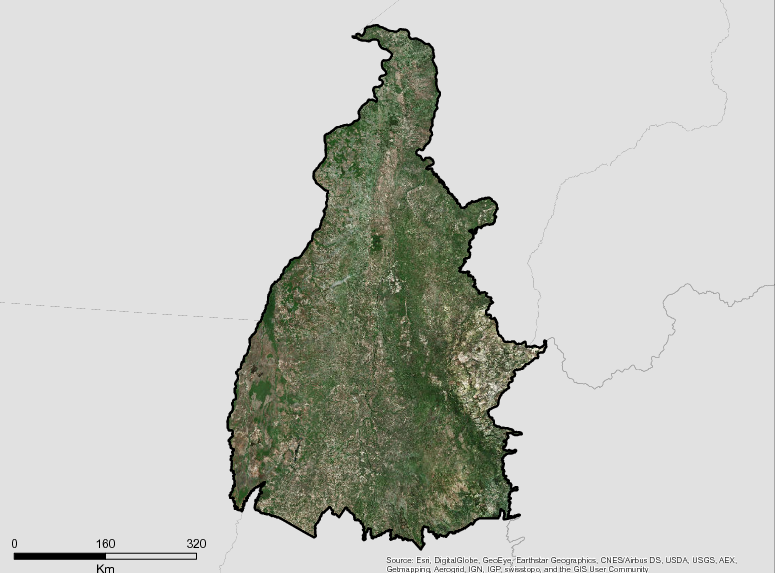
Description
Tocantins is the most recent state in the twenty-seven states of Brazil, having been created in 1988. With 22% of its protected area in protected areas or indigenous lands (equivalent to about 62,000 km²), Tocantins is a State with great relevance in the national and international context due to the natural resources and the sociobiodiversity that it harbors. Two biomes are present, the Cerrado biome, with greater predominance in terms of the occupied area, and the Amazon biome, as well as transition zones between biomes (Cerrado-Amazon ecotone and Cerrado-Caatinga ecotone). Economically, the agricultural sector is the most relevant sector, with emphasis on the production of soybeans and meat and its derivatives. According to data from CONAB – Companhia Nacional de Abastecimento (March 2013), it is estimated that the soybean harvest in Tocantins in 2012/2013 has a record increase compared to the previous harvest, with an expected growth of the area cultivated in about 20% to 543 thousand hectares, and a production of 1,657 thousand tons, the largest in the North Region.
Regarding the existence of regulatory frameworks in the areas of Climate Change, REDD + or Environmental Services, Tocantins pioneered the establishment of a State Policy on Climate Change, published in 2008. Currently, this Policy on Climate Change, Conservation (Law No. 1,917 / 2008) is in the process of being reformulated to accommodate recent national and international developments in the field of climate, including REDD +. The State Plan for Mitigation and Adaptation to Climate Change is also in the initial stage of elaboration, as well as the State Policy on Environmental Services, the latter aiming to define the guidelines for encouraging biodiversity conservation and services provided through ecosystem services, notably through Environmental Services Payment Programs and other conservation incentive strategies.
The Secretariat for the Environment and Sustainable Development of Tocantins has a Climate Change Coordination and an Environmental Services Payment Coordination, which demonstrates efforts to create robust regulatory frameworks in both areas. The State also reactivated the State Forum on Climate Change in 2012 (through Decree-Law no. 4,550), which is composed of governmental and non-governmental representatives, whose objective is to raise awareness and foment public discussion on issues related to change climate, energy, biodiversity, forests and ecosystem services and REDD +.
In addition to having specific legislation on Climate Change in the process of revision and developing a regulatory framework in the area of environmental services, the State of Tocantins has a great legal tool that provides for actions to reduce illegal deforestation and degradation forestry: the Plan of Prevention and Control of Deforestation and Burnings of Tocantins – PPCDQ / TO, published in May 2009, revised in 2015, and under consultation for a further revision in 2017 or 2018. This plan aims to contain illegal deforestation and forest fires through integrated actions in four areas of action: monitoring, territorial and landscape management, forest management and promotion of sustainable production practices. Among the 23 targets of the PPCDAM-TO, the reduction of illegal deforestation rates to zero within five years stands out; the reduction of 15% per year of fire outbreaks in the municipalities with the highest incidence; the promotion of environmental regularization, the improvement of annual monitoring routines and the implementation of the environmental register of rural properties (CAR).
In addition to these policies, Tocantins is committed to developing a State Plan for Reducing GHG Emissions and Adapting to Climate Change.
Tocantins will make every effort to elaborate a plan that will have as objectives
- to make an inventory of GHG emissions in each sector,
- identify possible actions
- reduction, mitigation and compensation
- strengthen municipalities and
- decentralization of actions, thus ensuring the promotion of a low-income economy carbon.
The Plan will be in force until 2020.
Additional information can be found on the GCF Impact Platform.
Summary
Demographics
Urban vs. Rural Population
| Category | % | |
|---|---|---|
| Urban | 78.80 | |
| Rural | 21.20 |
Ethnic Groups
| Group | % | |
|---|---|---|
| Multi-ethnic | 68.00 | |
| White | 24.00 | |
| Black | 7.00 | |
| Indigenous | 1.00 |
Economy
GDP Breakdown
| Category | % | |
|---|---|---|
| Services | 70.00 | |
| 16.00 | ||
| Agriculture, Forestry | 14.00 |
Forest Status
Major Vegetation Types
| Category | km² | |
|---|---|---|
| Pastureland | 80 | |
| Agriculture | 12 | |
| Forest | 10 |
Forest Management
| Category | km² | |
|---|---|---|
| Protected | 70,167 |
Drivers of Deforestation
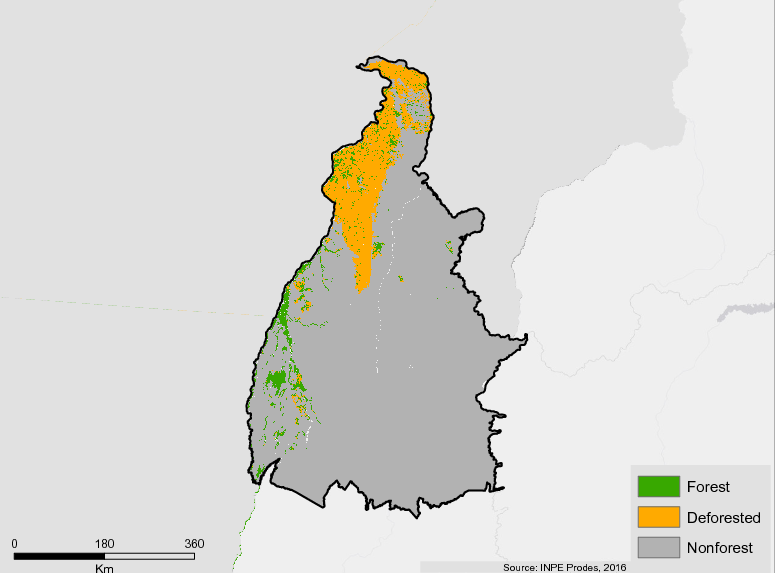
The most recent deforestation in the state of Tocantins has been occurring:
- in the vicinity of the intensive and semi-intensive agricultural production zone in the Papagaio Bico (North Tocantins);
- around the northwest region of the state, for the production of beef cattle by small and medium-sized producers;
- around the central belt, along the BR 153 highway, as a result of the competition between the different uses and the intensification process;
- in the extreme northeast and east of the state under pressure from the soybean fronts in Bahia and Maranhão;
- along BR010, TO 050 and marginal and isolated areas;
- in the Southeast and Northeast of the State for the production of charcoal.
In summary, the main drivers of deforestation are: the expansion of agriculture, the lack of land-use planning caused by squatting of public lands by squatters, livestock and infrastructure works, especially roads.
Deforestation Rates
Notes
| a. | Due to different methodological approaches and base years, Forest Status data fields may differ slightly. Data sources for each field are listed below. |
Sources
| 1. | SEMADES, 2013 |
| 2. | Atlas do Tocantins: subsídios ao planejamento da gestão territorial, Secretaria do Planejamento e da Modernização da Gestão Pública – SEPLAN, 2012 link |
| 3. | Censo Demográfico IBGE, 2010 link |
| 4. | Censo Demográfico IBGE, 2010 link |
| 5. | Contas Regionais do Brasil, IBGE, 2010 link |
| 6. | PNUD, 2005 link |
| 7. | Indicadores sócio-econômicos do Tocantins, SEPLAN, 2011 link |
| 8. | Machado, R.B., M.B. Ramos Neto, P.G.P. Pereira, E.F. Caldas, D.A. Gonçalves, N.S. Santos, K. |
| 9. | 183.933 km² (Cerrado – remanescente de vegetação nativa), 7.140 km² (Amazônia – remanescente de vegetação nativa |
| 10. | Prodes link |
| 11. | TerraClass 2014 |
| 12. | Plano de Ação para Prevenção e Controle do Desmatamento e das Queimadas no Estado do Tocantins, 2009 link |
Overview of Forest Monitoring and Measurement Systems
Tocantins relies on the Monitoring and Management of Environmental Information – MONIT, which is committed to planning, elaborating and structuring information and data pertinent to the issue of loss of vegetation cover, scars from fires / fires and environmental emergencies, water use and licensed activities. Management feeds the Geotocantins Database continuously, as well as other geospatial data socialization platforms.
In addition, the Government also opposes with the Information Management and Environmental Intelligence, which has as competencies (I) to participate in the elaboration, structuring and integration of Environmental Management Systems; (Ii) maintain and supply the structure of the environmental and geographic database; (III) to manage the Center for Intelligence in Environmental Management; (Iv) to disclose the environmental data existing in the state; (V) maintain the geoprocessing core for State Environmental Management; (VI) to design, coordinate and oversee projects for the structuring of management and CIGMA; (VII) implement the Rural Environmental Registry – CAR in the state; (VIII) to participate in the execution of the CAR – Tocantins Legal – Fundo Amazônia / BNDES project.
Reference Levels and Targets
Deforestation Rates
Laws, Policies & Strategies
Strategies:
The Plan of Action for the Prevention and Control of Deforestation and Fires of the State of Tocantins (PPCDQ-TO) – In 2009, the State of Tocantins prepared its first Plan for the Prevention and Control of Deforestation in the State of Tocantins – PPCD. It was coordinated by a multidisciplinary and intersectorial team, under the leadership of Instituto Natureza do Tocantins (Naturatins). From the Signing of the Non-Refundable Financial Concession Agreement No. 13.2.0558.1 with the Amazon Fund / BNDES, in June 2013, the State began the process of revising the PPCD, in compliance with the obligations of Clause XXXVI (updating the plan would be part of the State’s counterpart), having concluded in 2015.
The general objective of the PPCD is to promote the reduction of deforestation rates and the use of fire in the state of Tocantins, through a set of integrated actions of monitoring, territorial and landscape management, forest management and promotion of productive alternatives. Continuing the continuous process of updating, the State of Tocantins published, on November 20, 2018, in the Official State Gazette, a public call for presentations of Manifestations of Interest of individual consultants to update the PPCDQ-TO. In summary, the work aims to:
a) Perform the survey of the database and information at state level and other levels to compose the PPCDQ and data update and reset protocols;
b) Hold sectoral meetings with representatives of the Secretariat of the Environment and Water Resources, and other bodies involved in the implementation of the PPCDQ in order to establish criteria, quality standards (indicators), data protocols that will compose the plan;
c) Conduct a survey of the institutional capacities of executing institutions for data, personnel, logistics, network and internet infrastructure, and data storage and processing capacity;
d) Presentation of the proposal of the new PPCDQ for the State of Tocantins, including the monitoring strategy with the necessary investments for its implementation in a term of 10 years;
e) Carry out the necessary information from the proponent and the institutions involved (partners), observing the guidelines and procedures of the donor agencies. Example: institutional data, projects already developed and values, inventory of equipment, technical and administrative staff and other necessary data of the proponent and institutions involved;
f) Elaboration of the diagnosis before the collected data pointing out the main deficiencies detected in each institution, correlating them with the supporting activities of the project and its components;
g) Presentation of the strategy demonstrating the effective contributions of the project activities, and achieving the expected results within the axes supported by the funding body;
h) Seminar to present and discuss proposed strategies with all institutions involved;
i) Final presentation of the project that contains a consolidated strategy listing all products and services, with respective activities, that will be developed with the implementation of the project, aiming at the achievement of its objectives. Including all the necessary metrics to follow the evolution of the activities and the implantation of the products / services, as well as the integration of the work fronts; and control of project expenditures.
State Plan for Mitigation and Adaptation to Climate Change to Consolidate a Low Carbon Economy in Agriculture (ABC-TO Plan) – one of the sectoral plans elaborated in accordance with Article 3 of Decree No. 7,390 / 2010 and purpose is the organization and planning of the actions to be taken to adopt the sustainable production technologies, selected in order to respond to the commitments of reduction of GHG emissions in the agricultural sector assumed by the country.
The ABC Plan is comprised of seven programs, six of which are related to mitigation technologies, as well as one last program with actions to adapt to climate change. In this context, Tocantins assumed a commitment by 2020 to mitigate between 8.5 and 10.5 million tons of CO2 eq. the Plan ABC will be reviewed and updated with a view to the new reduction and mitigation goals. The plan was formalized through decree on March 28, 2014.
Laws
Law no 2,713, 2013 – Creates the Programme for the Environmental Harmonisation of Rural Property and Productive Activities. . This Programme aims at promoting the the environmental regularization of rural properties (through permanent preservation areas and legal reserve activities) and infrastructure by including them in the system of the Rural Environmental Register – CAR, owned by the Institution “Natureza do Tocantins” – NATURATINS.
Law no 2,656, 2012– establishes the Economic Ecological Zoning of the State of Tocantins.
Law no 2,476, 2011– Establishes the Program of Environmental Adequacy of Property and Rural Activity – TO-LEGAL, and adopts other measures.
Law no 1,917, 2008 – Institutes the State Policy on Climate Change, Environmental Conservation and Sustainable Development of Tocantins, and adopts other measures. Recognizes the states’ climate change, environmental conservation, and sustainable development policy which references actions to reduce deforestation and regulations on environmental services such as forest carbon.
Law no 1,789, 2007 – Established the State Council for the Environment of Tocantins – COEMA / TO.
Law no 1,560, 2005 – establishes state system of conservation units in Tocantins
Law no 1,445, 2004 – Establishes instruments of compensation for areas of Legal Reserve.
Law no 1,307, 2002 – Provides for the State Policy of Water Resources, and adopts other measures.
Law no 1,236, 2001 – amends the State Policy on Forestry and establishes regulations for extracting timber in legal reserves
Institutional Framework
Naturatins – Institute of Nature of Tocantins. Responsible for the implementation of the State’s environmental policy; environmental monitoring and control; supervision of compliance with environmental legislation; the provision of the service related to it resulting from agreements, agreements and contracts
Secretariat for Environment and Water Resources (SEMARH)– Restructured in 2015, the Secretariat for Environment and Water Resources (Semarh) has a mandate which includes:t o Coordinate the process of reviewing the state policy on the environment and water resources and their instruments; to promote the environmental adequacy of the rural property in an agile and efficient way; encourage and strengthen municipal environmental management; evaluate the environmental assets of the State of Tocantins; Consolidate the state system of water resources management; Promote the recovery and conservation of hydrographic basins and aquifer systems; Implement projects to adapt to climate change with a focus on adequacy of social and environmental infrastructure; implement a system of management and maintenance of Conservation Units with financial return; Encourage the management of solid waste in partnership with the Secretariat of Cities and Urban Development, with support in legislation, fundraising and training; Encourage and strengthen the Environmental Organizations of Civil Society.
Secretary of Planning (SEPLAN) – the government body responsible for coordinating and managing the government plans of the State of Tocantins. It is responsible for preparing and monitoring budget programming, also responding to ecological-economic zoning and the formulation and implementation of statistical systems and socioeconomic research in the within the state.
Zoning & Spatial Planning
Economic Zoning- – The Ecological-Economic Zoning has as main objectives: to support the State Government in the process of formulating public policies and decision making; to support the elaboration of plans, programs and projects for sustainable economic and social development; recommend areas for production, conservation and environmental preservation considering the support capacity of the landscapes and order the process of occupation of the lands of Tocantins.
Mapping of the Phytophysiological Regions – The objective of this report was to describe the pattern of wealth, density, basal area, importance value, alpha diversity and levels of similarity of vegetation types sampled in the river basins of the Tocantins State.
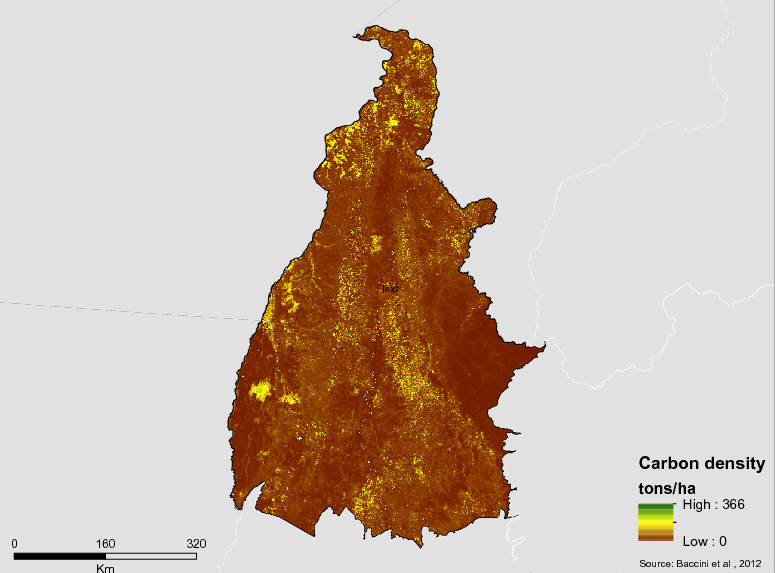
Forest Inventory- The objective of this report was to present the volume of woody material, plant biomass, carbon stock and the potential of wood and non-timber use of the phytophysiognomies sampled in the hydrographic basins of the State of Tocantins.
Vegetation Use Plan- The purpose of this report is to propose the zoning of potential use of the vegetation cover of the State of Tocantins based on the richness of species; indices of Shannon and Pielou; number of protected and threatened species; number of individuals of protected and threatened species; number of rare, endemic or restricted species; number of rare, endemic or restricted-species individuals; yield of woody material (volume) and distribution and density of species with potential for extractivism.
Study coverage of Dynamics and Land Use State of Tocantins The aim of the study was to evaluate and quantify the spatial dynamics of Tocantins territory in the period 1990-2007, through TM / Landsat satellite images, the generation of dynamic coverage and use of the land, and integrated analysis of geographic data with the support of socioeconomic variables. The information generated in the work aims to subsidize the Public Power in the planning and planning of the use of landscapes, both in terms of conservation and environmental protection, as well as expansion and consolidation of productive activities, especially agricultural and livestock; support the assessment of socio-economic and environmental impacts; and serve as a reference for the design of strategies and public policies in the transportation, agriculture, livestock, and environmental sectors, among others.
Engagement & Participation with Indigenous Peoples and Local Communities
The safeguards to be designed by the state of Tocantins in a future REDD + scheme will aim to minimize the occurrence of socio-environmental risks of defined policies and activities associated with REDD +, such as the non-involvement or lack of involvement of forest peoples in the construction of projects of REDD (and in the construction of the legal framework of REDD + at the state level, considering its traditional knowledge and its forms of interaction with the forest) and the non-directed distribution of benefits to those who are effectively responsible for forest conservation. The promotion of forest conservation through future REDD + projects should also include the identification of biodiversity conservation and ecosystem services associated with forest preservation. All the documentation generated in the scope of national and international discussion groups on the subject will be consulted and a discussion will be carried out at the state level to focus on the particularities of the State of Tocantins.
Studies are currently being proposed to identify and evaluate the ecosystem services associated with conservation units of integral protection of the State (project to be financed by GEF-MMA)
The future REDD + system to be developed by the State will take into account the increase in biodiversity and other ecosystem services to be promoted together with the reduction of emissions from deforestation and forest degradation.
More information available through this link http://redd.mma.gov.br/images/conaredd/SEI_MMA—0160864—Resoluo-9.pdf.
Partnerships and Ongoing Initiatives
Action Plan for the Prevention and Control of Deforestation and Burnt of the State of Tocantins (PPCDQ-TO) –
- Description
-
Action Plan for the Prevention and Control of Deforestation and Burning of the State of Tocantins (PPCDQ-TO): In 2009, the State of Tocantins prepared its first Plan for the Prevention and Control of Deforestation in the State of Tocantins – PPCD. It was coordinated by a multidisciplinary and intersectorial team, under the leadership of Instituto Natureza do Tocantins (Naturatins). From the Signing of the Non-Refundable Financial Concession Agreement No. 13.2.0558.1 with the Amazon Fund / BNDES, in June 2013, the State began the process of revising the PPCD, in compliance with the obligations of Clause XXXVI (updating the plan would be part of the State’s counterpart), having concluded in 2015
http://gcftaskforce-database.org/assets/downloads/managed/brazil/tocantins/tocantins_ppcdq_to_2015_update.pdf
The general objective of the PPCD is to promote the reduction of deforestation rates and the use of fire in the state of Tocantins, through a set of integrated actions of monitoring, territorial and landscape management, forest management and promotion of productive alternatives. Continuing the continuous process of updating, the State of Tocantins published, on November 20, 2018, in the Official State Gazette, a public call for presentations of Manifestations of Interest of individual consultants to update the PPCDQ-TO. In summary, the work aims to:
-
Perform the survey of the database and information at state level and other levels to compose the PPCDQ and the data update and reset protocols;
-
To hold sectoral meetings with representatives of the Secretariat of Environment and Water Resources, and other bodies involved in the implementation of the PPCDQ in order to establish criteria, quality standards (indicators), data protocols that will compose the plan;
-
Conduct a survey of the institutional capacities of executing institutions for data, personnel, logistics, network and internet infrastructure, and data storage and processing capacity;
-
Presentation of the proposal of the new PPCDQ for the State of Tocantins, including the monitoring strategy with the necessary investments for its implementation in a term of 10 years;
-
Carry out the necessary information from the proponent and the institutions involved (partners) observing the guidelines and procedures of the donor agencies. Example: institutional data, projects already developed and values, inventory of equipment, technical and administrative staff and other necessary data of the proponent and institutions involved;
-
Elaboration of the diagnosis before the collected data pointing out the main deficiencies detected in each institution, correlating them with the supporting activities of the project and its components;
-
Presentation of the strategy demonstrating the effective contributions of the project activities, and achieving the expected results within the axes supported by the funding body;
-
Seminar presenting and discussing proposed strategies with all institutions involved;
-
Final presentation of the project that contains a consolidated strategy listing all products and services, with respective activities, that will be developed with the implementation of the project, aiming at the achievement of its objectives. Including all the necessary metrics to follow the evolution of the activities and the implantation of the products / services, as well as the integration of the work fronts; and control of project expenditures.
-
- Partners
- State government
- Initiative Type
- Planning Initiative
- Initiative Status
- Implementation
Amazonia SAR
- Description
-
Amazonia SAR implements a deforestation detection system utilizing orbital imaging radar to monitor 950,000 km2 per year (23% of the Amazon biome). Of the total land monitored, 764,000 km2 is comprised of areas under the greatest pressure of deforestation, 144,000 km2 is in the state of Amapá, and an additional 5% of isolated points in the Amazon biome will be monitored due to specific demand.
- Partners
- Federal Government/Defense Ministry – Operations and Management Center of the Amazonian Protection System (CENSIPAM)
- Funding Amount
- $20,783,439.87
- Initiative Type
- Protected Areas Initiative
- Initiative Status
- Contracted
Banco do Brasil Foundation – Amazon Fund
- Description
-
The Amazon Fund provides support to projects related to developing sustainable production in conjunction with conservation in the Amazon Biome. Beneficiaries of The Amazon Fund’s supported projects include: traditional communities (indigenous peoples, quilombolas, rubber tappers, riverside populations, family farmers, subsistence agriculturists), rural workers involved in settlement projects, low-income populations at risk of social exclusion, collective undertakings, solidarity economies, non-profit institutions governed under private law, and public administration entities.
- Partners
- Fundação Banco do Brasil (FBB)
- Funding Amount
- $7,550,588.95
- Initiative Type
- Sustainable Production
- Initiative Status
- Contracted
Banco do Brasil Foundation – Amazon Fund / Phase 2
- Description
-
Phase II of The Amazon Fund supports projects that facilitate the development of productive activities promoting the conservation and sustainable use of the Amazon Biome; the initiative benefits traditional communities (indigenous peoples, quilombolas, rubber tappers, riverside populations, family farmers, subsistence agriculturists), rural workers involved in settlement projects, and low-income populations at risk of social exclusion.
- Partners
- Banco do Brasil Foundation (FBB)
- Funding Amount
- $4,979,666.36
- Initiative Type
- Protected Areas Initiative
- Initiative Status
- Contracted
CAR: Lawful Tocantins
- Description
-
Supports the implementation of the Rural Environmental Registry (CAR) programme in municipalities throughout the state while improving the deforestation monitoring and control system of the state of Tocantins.
- Partners
- State of Tocantins (Secretariat for the Environment and Water Resources – SEMARH)
- Funding Amount
- $13,182,490.00
- Initiative Type
- Land Titling and Registration
- Initiative Status
- Contracted
DGM Brazil (development of indigenous communities and traditional populations in the Brazilian Cerrado)
- Description
-
Brief description: The DGM Investment Program supports some local projects in the State of Tocantins. The projects supported by the DGM in Tocantins include:
-
Traditional Knowledge of Krahô culture (Kraholândia Indigenous Land), aimed at enhancing the Krahô culture and strengthening the production chain and handicrafts;
-
Alternative for the babaçu coconut breakers (São Miguel do Tocantins), aimed at agroindustrial reform for babaçu oil, and strengthening the babaçu production chains and organization of productive centers, combining income generation with the appreciation of traditional knowledge of coconut breakers.
-
Territorial and environmental management of the village Porteira (Xerente Indigenous Land), aimed at the restoration of springs and environmental recovery of degraded areas and the cultural strengthening of the Xerente population.
-
Quilombola Communities of Jalapão (Jalapão-TO), aimed at training the quilombolas to deepen their knowledge on land regularization and territorial management, as well as to promote the debate on traditional practices developed in territorial management and protection, in extractive and agricultural production.
-
Environmental Education in the context of the indigenous school (Apinajé Indigenous Land), aimed at the construction of nurseries of native seedlings and distribution among the villages, creation of community garden to promote food sovereignty and articulation with indigenous school.
-
Strengthening Agroextractivism in the Cerrado, aimed at the Mixed Cooperative of Family Farmers, Extractivists, Fishermen, Vacuums, Settlers and Tour Guides of the Cerrado. It aims to strengthen and expand the number of socio-biodiversity products managed and organized in a networked community, aimed at reaching the main institutional and private markets.
The average value of each initiative is around R $ 30 – 180 thousand reais
-
- Partners
- Traditional communities, indigenous populations and quilombolas of Tocantins
- Initiative Type
- Non-refundable external financing
- Initiative Status
- Running
Empowering Environmental Monitoring and Control in Order to Combat Illegal Deforestation in the Brazilian Amazon
- Description
-
Empowers environmental monitoring and control in order to combat illegal deforestation in the Brazilian Amazon over a period of 15 months in regions under the greatest deforestation pressure; utilizes trucks and helicopters to enforce actions in the field.
- Partners
- Brazilian Institute of Environment and Natural Resources (Ibama)
- Funding Amount
- $17,662,033.20
- Initiative Type
- Protected Areas Initiative
- Initiative Status
- Contracted
Environmental Management Qualification Program
- Description
-
Supports the strengthening of environmental management in the 529 municipalities across nine states in the Legal Amazon through (i) offering training and technical support (ii) disseminating knowledge and information through networks (iii) fostering innovation and promoting liaison with other government levels and general society within the framework of environmental public policies.
- Partners
- Brazilian Institute of Municipal Administration (IBAM)
- Funding Amount
- $9,019,941.79
- Initiative Type
- Protected Areas Initiative
- Initiative Status
- Contracted
Environmental Monitoring via Satellite in the Amazon Biome
- Description
-
Supports the development of studies on land use and land coverage in the Amazon biome; expands and improves environmental monitoring by satellites, as performed by the National Institute of Space Research (INPE).
- Partners
- National Institute of Space Research (INPE)/Science, Applications and Space Technology Foundation (FUNCATE)
- Funding Amount
- $27,783,399.45
- Initiative Type
- Protected Areas Initiative
- Initiative Status
- Contracted
Environmental Operations Company
- Description
-
Structures the Environmental Operations Company of the National Public Security Agency (FNSP) both physically and operationally to perform environmental operations in the Amazon Biome.
- Partners
- Federal Government/Ministry of Justice – National Public Security Force (FNSP)
- Funding Amount
- $11,796,765.00
- Initiative Type
- Protected Areas Initiative
- Initiative Status
- Contracted
Ethnic-environmental protection for isolated or recently contacted indigenous people in the Amazon
- Description
-
This protection initiative provides support and protection to isolated indigenous peoples and those recently contacted throughout the entire Amazon biome in order to establish physical limits and protect natural resources in settled areas within the territories of these groups and surrounding areas. The project aims to help reduce deforestation in the Amazon.
- Partners
- Center for Indigenous Work (CTI)
- Funding Amount
- $7,514,829.72
- Initiative Type
- Protected Areas Initiative
- Initiative Status
- Contracted
Forest Information to support public and private sectors in management initiatives
- Description
-
Breve descrição: The objective of the Technical Cooperation (TC) is to implement the National Forest Inventory (NFI) in Cerrado biome and consolidate the National Forest Information System (NFIS) as policy instruments, capable of producing timely and quality information for decision makers in the public and private sectors. The project will contribute to the promotion of sustainable programs aimed at mitigating greenhouse gas (GHG) emissions in the Cerrado. It also aims at promoting partnerships with States and other institutions in the region to promote information exchange and dissemination. The project is part of Brazil’s Investment Plan (IP) for the Forest Investment Program (FIP), which seeks to promote the sustainable use of land and the improvement of forest management in the Cerrado Biome, thus helping to reduce pressure on remaining forests, decreasing greenhouse gas (GHG) emissions and increasing carbon sequestration. It finances the generation and dissemination of forest information to support public and private sectors in management initiatives aimed at the conservation and enhancement of forest resources in the Cerrado biome.
- Partners
- Climate Investment Fund – Forest Investment Program with 26 partners
- Funding Amount
- USD 24,450,000
- Initiative Type
- Financiamento externo não reembolsável Assistência Técnica
- Initiative Status
- Executed from June 2014 – June 2018 (48 months)
Forest Protection in the State of Tocantins
- Description
-
Supports efforts towards monitoring, preventing, and combating deforestation resulting from forest fires and unauthorized burn-offs in the state of Tocantins through training, structuring mechanism for integrated management, and purchasing materials and equipment to prepare the Environmental Protection Platoon (located in the municipality of Araguaína.
- Partners
- State of Tocantins Military Firefighters (CBMTO)
- Funding Amount
- $2,755,883.81
- Initiative Type
- Environmental Enforcement
- Initiative Status
- Contracted
GEF – Cerrado Sustentável
- Description
-
The GEF – Cerrado Sustentável project was executed by SEMARH, Naturatins and Ruraltins, between 2011 and 2015. In total, US $ 9 million was invested in the project, of which US $ 3 million was international financing and US $ 6 million counterpart of the state of Tocantins. The main actions of the project were the creation and implementation of Conservation Units in the State and support to low impact productive projects and alternatives to deforestation, as a strategy for the conservation of biodiversity and promotion of sustainable development of the State. The project was completed in June 2015.
Implementation arrangement: The GEF Cerrado Sustentável initiative was coordinated by the Ministry of Environment. The State of Tocantins, through SEMARH, was one of the executing agencies of the project, together with the Government of Goiás and ICMBio.
- Partners
- Semarh, Naturatins and Ruraltins
- Initiative Type
- Planning and execution
- Initiative Status
- Completed in 2015
National Forest Inventory – The Amazon
- Description
-
Implements the Forest Inventory in the Amazon Biome to produce information on forest resources, carbon stocks, and territory use by regional populations.
- Partners
- Federal Government/Brazilian Forest Service (SFB)
- Funding Amount
- $31,999,485.00
- Initiative Type
- Protected Areas Initiative
- Initiative Status
- Contracted
PPP-ECOS in the Amazon – Phase 2
- Description
-
Supports the structuring of sustainable productive chains through public calls within the Small Eco-social Projects Program (PPP-ECOS) to benefit populations of rural, traditional, and indigenous peoples, along with quilombolas, riverside populations, fishermen, and extractive communities in the states of Mato Grosso, Tocantins, and Maranhão within the limits of the Brazilian Amazon.
- Partners
- Society, Population and Nature Institute (ISPN)
- Funding Amount
- $5,460,127.11
- Initiative Type
- Sustainable Production Initiative
- Initiative Status
- Under implementation
Preserving the Babassu Forest
- Description
-
Supports the operation of the Babassu Fund to select and support socioenvironmental projects related to agro-extractive organizations in the states of Maranhão, Tocantins, and Pará; supports skill development, provides technical support, and strengthens associativism through public calls of projects approved by BNDES to benefit traditional communities of babassu coconut breakers.
- Partners
- Interstate Association of the Movement of Women Babassu Coconut Breakers – AMIQCB
- Funding Amount
- $2,777,933.43
- Initiative Type
- Sustainable Production Initiative
- Initiative Status
- Contracted
Prevfogo / IBAMA
- Description
-
The initiative supports the structure of the National Center to Prevent and Combat Forest Fires (PREVFOGO) programme both physically and operationally, along with training locals to monitor, prevent, and combat forest fires and unauthorized burns in the Amazon Biome through environmental education.
- Partners
- Brazilian Institute of the Environment and Renewable Natural Resources (IBAMA)
- Funding Amount
- $6,252,557.57
- Initiative Type
- Protected Areas Initiative
- Initiative Status
- Contracted
Profisc I-B
- Description
-
Profisc I-B is organized by the Federal Government to support the activities of Ibama for environmental monitoring and deforestation control in the Legal Amazon.
- Partners
- Brazilian Institute of Environment and Natural Resources (Ibama)
- Funding Amount
- $41,822,410.40
- Initiative Type
- Protected Areas Initiative, Financial Initiative
- Initiative Status
- Contracted
Project Prevention, Control and Monitoring of Irregular Fires and Forest Fires in the Cerrado – Jalapao
- Description
-
The Cerrado-Jalapão Project aims at the prevention, control and monitoring of fires in the Cerrado and contributes to the maintenance of the Cerrado as a carbon sink of global relevance for the reduction of greenhouse gas emissions and for the conservation biodiversity by improving the integrated and adaptive management of fire in selected areas of the Cerrado. The project has already produced and published documents on alternatives to fire use, participatory management of PAs and terms of engagement,monitoring, fire research, operational plans and protection plans, seminars and videotapes, bulletins and project factsheets; all available at <http://cerradojalapao.mma.gov.br/biblioteca/arquivos>.
- Partners
- KfW, GIZ and Caixa
- Funding Source
- Private Investment KfW, GIZ and Caixa
- Funding Amount
- 12,000,000 eurofor the maintenance of the Cerrado’s functions, through improvement, control of deforestation, irregular fires and forest fires in the Cerrado Region.
- Initiative Type
- Public investment, Private investment
- Initiative Status
- In progress expected to end in 2017
Protected Areas Program of Amazonia – ARPA
- Description
-
Brief description: ARPA (Protected Areas of the Amazon) is a Federal Government program, coordinated by the Ministry of the Environment (MMA), managed financially by FUNBIO and financed with resources from the Global Environmental Facility (GEF) – through the World Bank, of the government of Germany – through the German Development Bank (KfW), the WWF Network, and the Amazon Fund, through BNDES. Launched in 2002, ARPA is the largest tropical forest conservation program on the planet and the most expressive related to the conservation units in Brazil. It is currently in the third phase, which began in 2014. The program was created with the objective of expanding and strengthening the National System of Conservation Units (SNUC) in the Amazon, protecting 60 million hectares, securing financial resources for the management of these areas in the short / long term and promote sustainable development in the region.
- Partners
- Leader : Global Environment Facility (GEF) – World Bank., Partners: KfW; Brazilian Biodiversity Fund (FUNBIO); MMA; WWF- Brazil and BNDES.
- Funding Amount
- R $ 2,071,493.86
- Initiative Type
- Non-refundable external financing
- Initiative Status
- In progress (Third phase started in 2014)
Small Eco-Social Projects in the Amazon
- Description
-
Small Eco-Social Projects in the Amazon supports four public calls-for-submission for selecting and funding low-cost socioenvironmental projects focusing on family farmers and traditional communities living in the Amazon Biome across the states of Maranhão, Mato Grosso , and Tocantins.
- Partners
- Society, Population and Nature Institute (ISPN)
- Funding Amount
- $6,456,480.19
- Initiative Type
- Financial Initiative
- Initiative Status
- Contracted
Sustainable Management and Environmental Restoration in Degraded Rural Areas of Tocantins
- Description
-
Brief description: The project Sustainable Management and Environmental Recovery of Degraded Rural Areas in Tocantins involved a US $ 5.7 million grant to promote the environmentally sustainable use of rural property and strengthen environmental conservation in the states of Tocantins and Goiás through recovery degraded areas and environmental protection through agricultural management. The project was completed in the year 2012.
- Partners
- Climate Investment Fund – Forest Investment Program
- Funding Amount
- USD 5.7 million
- Initiative Type
- Non-refundable external financing
- Initiative Status
- completed
Tocantins Integrated and Sustainable Regional Development Project
- Description
-
Within the PDRIS a number of projects are being developed, some of which fall under the categories of the Balikpapan Challenge:
- REDD + Jurisdictional Program: This initiative, which is still in the development phase, means that isolated REDD+ projects are integrated to a jurisdictional level, allowing a greater alignment with national policies and legislation. In addition, it aims to ensure that emission reductions scale to a jurisdictional level and can be inserted into a registration system, which in turn will promote a fair distribution of benefits and enable the implementation of socio-environmental safeguards;
- The elaboration of the State Policy for the Sustainable Use of Capim-Dourado and Buriti was finalized, whose objective is to promote the socioeconomic development of traditional communities that historically make handicrafts of Capim-Dourado and Buriti by means of the incentive to sustainable practices of use of these two species and their environments;
- Tocantins is finalizing its legal framework, the draft Law that establishes the State Policy on Climate Change and Environmental Services of Tocantins, with the general objective of promoting the regional economy with low emission of greenhouse gases and encouraging and promote environmental services in the biomes of the State;
- Environmental Monitoring and Fire Management Center (CeMAF) – Through a Term of Cooperation, the Secretariat of Environment and Water Resources (SEMARH) and the Federal University of Tocantins (UFT) promote the mutual conjugation of efforts to carry out the activities technical and research related to the implementation of CeMAF. The Center works in the production of studies, technical and scientific information, mainly related to burned forest fires, which subsidize the actions of the state, municipal and other public authorities through mutual collaboration in the evaluation of regulatory mechanisms and development of new technical instruments to improve environmental management. The partnership also involves the training of managers and technical experts in order to improve the efficiency of public management, especially related to conservation activities and the sustainable use of natural resources. CeMAF is located on the UFT campus in the city of Gurupi
- Partners
- World Bank
- Funding Source
- World Bank
- Funding Amount
- US $ 300 million to improve the efficiency of road transport, logistics and the quality of the selection of public services in the State
- Initiative Type
- Public investment, Private investment
- Initiative Status
- Under Implementation
Tocantins Rural Environment Registry (CAR)
- Description
-
Description: The project aims to reduce deforestation in the territory of the State of Tocantins in the Amazon and Cerrado biomes through the creation of a monitoring and control system for deforestation; the implementation of the Rural Environmental Registry (CAR); encouraging the decentralization of environmental management to the municipalities with the greatest number of inhabitants; the strengthening of the organs of the State System of Environment, the implementation of Sustainable and Certified Production Poles and the implementation of a system of protected areas.
- Partners
- Amazon Fund, BNDES
- Funding Source
- Amazon Fund, BNDES
- Funding Amount
- BNDES (R $ 40,504,400.00) and counterpart of the State (R $ 3,060,000.00) for implementation of the Rural Environmental Registry – CAR in the municipalities of the State of Tocantins.
- Initiative Type
- Public investment, Government Planning Initiative
- Initiative Status
- Tocantins already has 62% of areas registered by the end of June / 17
Use of Social Technologies to Reduce Deforestation
- Description
-
Contributes to environmentally sustainable food security and income generation in riverine and agricultural households in communities influenced by hydroelectric projects in the states of Pará, Mato Grosso, Rondônia, and Tocantins by implementing family units of diverse agroecological food production to reduce pressure on natural resources.
- Partners
- Interstate Agricultural Development Association – ADAI
- Funding Amount
- $2,779,138.85
- Initiative Type
- Sustainable Production Initiative
- Initiative Status
- Contracted