
Caquetá, Colombia
Colombia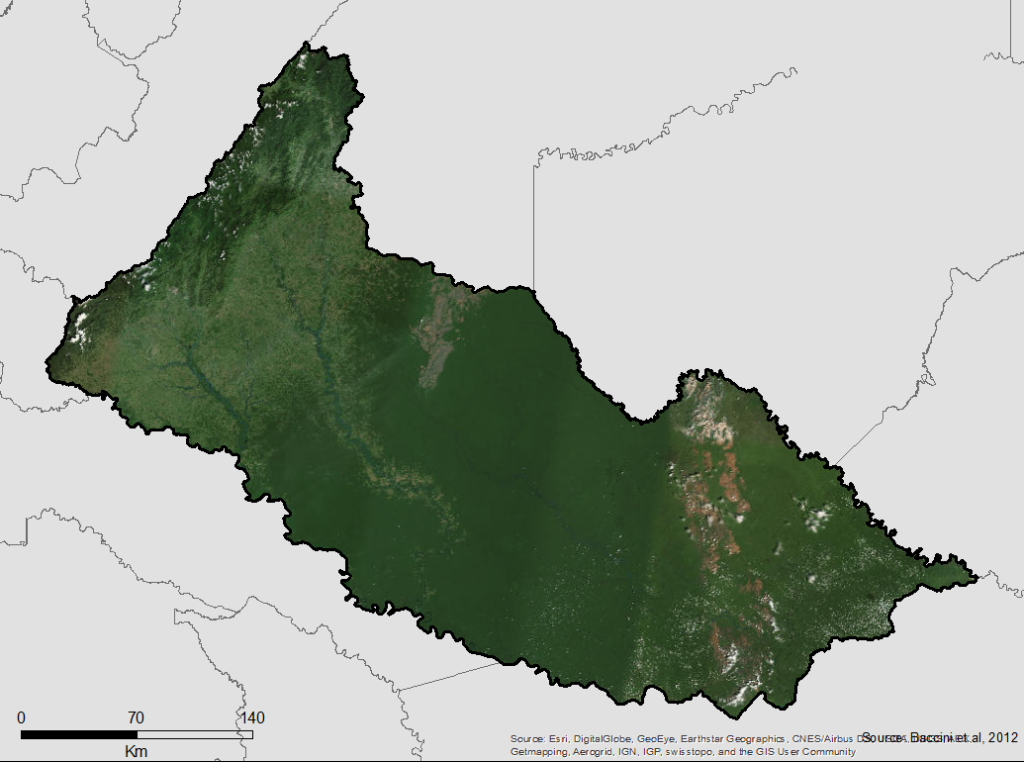
Description
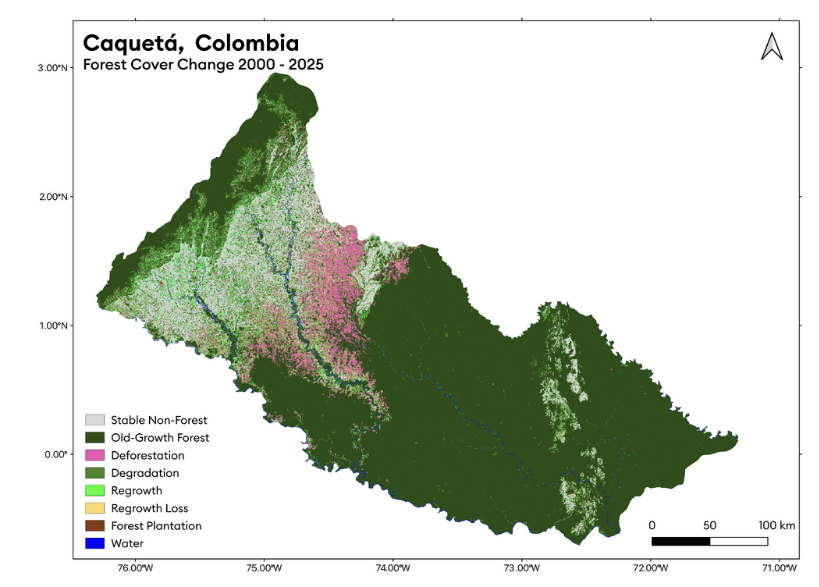
The Department of Caqueta is located in the Andean-Amazon confluence in the south-east of Colombia. Its geographical situation and colonization history have influenced not only its socio-economic development, but the strong deforestation of its tropical forest in recent years. Caquetá has existed as a departmental entity for only 36 years, and for this reason, its public management has been faced with major challenges such as the lack of experience of its leaders, high informality of its economy and a low level of public revenues necessary to carry out investments for its development. It has also faced great challenges facing land use, such as the expansion of illicit crops (coca), illegal gold mining, armed conflict with the FARC, and expansion of the extensive cattle ranch and the extraction of wood.1.
These challenges have hindered the growth and limited the consolidation of institutional structures in the region.
According to the Institute of Hydrology, Meteorology and Environmental Studies (Ideam), in 2017 219,973 hectares of trees were deforested, 65.5% of that occuring in the Amazon. This new figure is an increase of 23% compared to 2016, when 179,000 hectares of forests were converted. 81% national deforestation occurs in only in six departments (Caquetá, Guaviare, Meta, Antioquia, Putumayo and Chocó). In the Amazon region, the deforested area has doubled destroying 144,147 hectares of forest.
Almost half (49.1%) of the country’s forest loss is concentrated in only seven Amazonian municipalities. All of them showed an increase in deforested area of more than 100% compared to what was detected in 2016. In general terms, by 2017, 723 municipalities registered at least 1 hectare deforested. Vicente del Caguán (26,632 ha), Cartagena del Chairá (22,591 ha), and Solano (6,890 ha) were the most impacted.
However, the transformations that the country has undergone in recent years, especially the commitments it has acquired in international scenarios against the conservation of biodiversity, the fight against climate change and the Sustainable Development Goals, and the signing of the Peace Accords with the FARC have influenced regional public policy and the interest of various actors to contribute to the changes required by the region to reorient its development. As a result, numerous initiatives have emerged, led by different actors, both local and national and international, with diverse but complementary objectives, which, while not constituting a low emission development strategy, contribute to its objectives and are exercises that are already orienting the region in the right direction.
Summary
Demographics
Urban vs. Rural Population
| Category | % |
|---|
Ethnic Groups
| Group | % |
|---|
Economy
GDP Breakdown
| Category | % |
|---|
Forest Status
Forest Management
| Category | km² |
|---|
Drivers of Deforestation
| Land sepculation, extensive Livestock, mining, illicit crops, legal and illegal use of timber, and above all irregular infrastructure that is breaking the connectivity of ecosystems. |
Deforestation Rates
Notes
Sources
Overview of Forest Monitoring and Measurement Systems
Since 2012 Colombia has a Forest and Carbon Monitoring System (SMByC).
The SMByC is a set of tools, procedures and professionals specialized in generating information that allows stakeholder to know where, when and why changes are happening in the surface and in the carbon contents of the country’s forests. To achieve this, the system performs the following activities:
- Identification and periodic report of the surface of natural forest
- Generation of methodologies for the annual quantification of deforestation at the national level
- Quarterly generation of Early Warning for Deforestation (AT-D)
- Characterization, modeling and simulation of causes and agents of deforestation and degradation
- Monitoring carbon stored in forests (carbon stocks and GHG emissions)
The SMBYC complies with the provisions of the relevant decisions of the United Nations Framework Convention on Climate Change -CMNUCC and the Intergovernmental Panel on Climate Change -IPCC in its guide to good practices, operating under the principles of transparency, completeness, comparability, consistency and precision. Likewise, To pay attention to the global requirements regarding the reduction of climate change, the system allows the identification and establishment of national reference levels, a fundamental basis for defining international commitments in reducing emissions from deforestation and forest degradation. (REDD +).
At the national level, there is a complete and comparable historical series of greenhouse gas emissions that began in 1990, followed by 1994, 2000, 2004, 2010 and 2012.
The country has committed to reducing emissions in 2030 by 20% compared to projected following current trends. According to the projections of sectoral emissions, there is a national baseline for the period 2010-2030, with an average annual growth rate of 1.99%, assuming a stabilization in deforestation rates and an economic growth that is gradually reduced in the short term and that increases in efficiency by the strategy of green growth.
Within these scenarios, the emission reduction potential of the Agriculture, forestry and other land uses sector is 347 Mton CO2 eq. (approximately 57% of the goal to 2030).
At departmental level, there are no series of historical emissions. We have the emissions data for 2012, where Caquetá’s emissions were 19.82 Mton CO2 eq. which corresponds to the third department with the highest emissions in the country, after Antioquia and Meta, of which the great majority are due to the transformation of forest to pasture.
The Vision Amazon program has a reference level of deforestation estimated for the entire region, based on the historical average deforestation rates of 2000-20012
Reference Levels and Targets
Deforestation Rates
Sources
| 1. | http://documentacion.ideam.gov.co/openbiblio/bvirtual/023634/INGEI.pdf http://www.minambiente.gov.co/images/cambioclimatico/pdf/colombia_hacia_la_COP21/Documento_Tecnico_de_Soporte_Jul24_Final.pdf |
| 2. | IDEAM, Colombia |
Laws, Policies & Strategies
Strategies and Policies:
PUBLIC POLICY OF SUSTAINABLE RURAL DEVELOPMENT OF THE CAQUETÁ: The PPDRSC, is an innovative bet that covers the entire territory. Part of a diagnosis of the rural sector, proposes integrating policies on issues such as rural development, environmental, forestry, water resources management and post conflict. It transcends sectoral policies and defines policy guidelines for 20 years. Its objective is to manage sustainable development, by including its rural inhabitants, progressively diminishing social inequalities, poverty and lack of opportunities, based on the conservation and sustainable use of its natural wealth.
The PPDRSC aims to manage the sustainable development of the department of Caquetá, through the social inclusion of its rural inhabitants and the improvement of their living conditions, progressively diminishing social inequalities, poverty and lack of opportunities. Taking advantage of the richness of its natural base and the biodiversity that characterizes it, by controlling the deterioration of its strategic ecosystems, the preservation, sustainable use, restoration and knowledge management of its water systems, forests and soils, through the establishment of economies rural sustainable solidarity and competition with the support and strengthening of public and social institutions as part of the construction of territorial peace.
STRATEGY OF THE RAP – AMAZONIA: The RAP-Amazonía , is an initiative led by the Department of Caquetá, which seeks to consolidate an Administrative and Planning Region with the 6 Governors of the Amazonian Departments and the Huila, to achieve greater incidence in national politics , in the new National Development Plan (2018-2021) and take advantage of international opportunities in climate change issues, particularly in the GCF, by presenting itself as a common block committed to the sustainable development of the Colombian Amazon. This coalition represents 6.4% of the Amazon biome and 41.8% of the national territory [1] .
CLIMATE CHANGE TABLE: The conformation of the
SubNode Departmental Climate Change – Caquetá framed by the Regional Node of Climate Change of the Amazon formed since February 2017, is given from the need to generate the Comprehensive Plan for adaptation and mitigation of climate change in the department, which has two main components: 1. Strengthening of Climate Change issues and 2. Construction of policy guidelines on climate change adaptation and mitigation to be institutionalized and included in the different planning instruments of the department. The SubNodo is part of an inter-institutional working group that exercises leadership in the region and seeks to articulate the different initiatives.
Currently under the SubNode the construction and implementation of a jurisdictional strategy of Rural Development Low in Emissions (LED-R for its acronym in English) is being carried out, where the articulation of the different regional actors is sought to concretize in a participative way the future vision of the territory and the goals to be achieved in a short and medium term.
PRODUCTIVE AND SOCIAL MANAGEMENT PLAN OF RURAL PROPERTY: The productive and social ordering of rural property (PROSP) is the result of a participatory and multisectoral planning process of a technical, administrative and political nature, which seeks to contribute to the harmonization of the productive base of the department with an agro-environmental focus (agricultural uses, eco-systemic services, tourism, sectoral issues and rural land tenure), in order to improve or maintain an adequate balance in the efficient use of land, competitiveness and social, environmental and economic sustainability in a manner articulated to the instruments of territorial ordering and rural development existing in the territory. [2] The plan is an instrument of ordering and at the same time of public policy that will define in a horizon of 70 years the guidelines and action plan to be followed in all the productive issues that are developed in the department of Caquetá.
TERRITORIAL MANAGEMENT GUIDELINES FOR THE CAQUETA DEPARTMENT AND ITS TERRITORIAL ENTITIES: The Ordenamiento Guidelines are the general frame of reference from which the efforts of all the development actors that in one way or another are interested in this important must be articulated region of the world, the Amazon and the country.
The Guidelines and guidelines for Territorial Planning of the Department of Caquetá are structured on the basis of the Diagnosis of the Current Territorial Model that allows characterizing, analyzing and spatializing the biophysical, economic and cultural potentials and limitations, the environmental determinants and the protection areas of the national system. of protected areas.
The Guidelines constitute guidelines for both policies and actions, criteria and regulations that municipalities must include in their Territorial Ordinance Plans, either in its formulation and in its revision, to guarantee the use, occupation and sustainable transformation of the departmental territory in accordance with its optimal potential, and obeying the general interest with a regional vision.
They respond to a desirable and viable vision of the future and to priority development and welfare objectives for the entire population in order to achieve a competitive territory, an attractive territory, a supportive territory and a sustainable territory. Therefore, they must be binding; that is to say, of obligatory fulfillment in the Plans of Territorial Ordering.
The vision or objective image is expressed in the future territorial model that presents a series of scenarios of use and occupation of the territory that are the basis for defining guidelines and guidelines for the territorial ordering of the department [3] .
ECOLOGICAL RESTORATION STRATEGY: Alliance for the Restoration of the Colombian Amazon Six (6) strategic pillars have been determined:
- Generate and disseminate priority scientific information required for the design of ecological restoration strategies
- Encourage the intercultural training of community promoters such as local scientists, co-researchers and environmental educators in the process of socio-ecological restoration in their localities.
- Manage spaces of social appropriation and exchange of scientific and local knowledge resulting from ecological restoration processes in the Colombian Amazon at the local, municipal, departmental, regional, national and international levels.
- Position the ecological restoration in the construction of public policies of the region that allows to strengthen a development model based on the conservation of the Amazonian ecosystems and to restore the productive and functional capacity of the degraded ecosystems.
- Contribute to the social construction of the territory, strengthen spaces for dialogue between various actors of society ‘to promote the generation of attitudes and decision-making around the restoration.
Promote intercultural agreements and practices between indigenous peoples and peasant societies to share ancestral and traditional knowledge and knowledge in the restoration of socio-ecosystems.
Laws and regulations:
SENTENCE STC 4360 of 2018 : (Declares the Amazon subject of rights) .Proffered by the Supreme Court of Justice of April 5, 2018, ordered all municipalities of the Colombian Amazon to perform within a period of five (5) following months to the notice of the ruling, update and implement the logs of Territorial Order, in pertinent, must contend a plan of action of zero reduction of deforestation in its territory, which will encompass measurable strategies of preventive, mandatory, corrective and pedagogical control, directed to the adaptation of the climatic change.
Ordinance 18, 2015 – By which the integral public policy of the Indigenous of Caquetá is adopted. Guarantee the physical and cultural integrity of the indigenous peoples of Caquetá, their survival in the territory and other fundamental, integral and collective rights of indigenous peoples according to the worldview and thought of each of the indigenous peoples of Caquetá.
Ordinance 17, 2015 – By which the Departmental System of Protected Areas (SIDAP) is adopted in the Department of Caquetá. Contribute to the reduction of the deterioration of eco-systemic goods and services by anthropic actions, through the articulation of the different actors in the definition of strategies, programs, proposals and actions for the formulation of projects aimed at the protection, conservation and recovery of resources Natural, the promotion of civil society participation mechanisms both in the direction of investment resource and in the implementation of protection policies conservation and recovery of the environment, creating special incentives for conservation, preserving the environmental and ordering regulations existing territorial: identification, geo-referencing, declaration and disclosure of Protected Areas; implementation of resource management mechanisms for scientific research in environmental conservation and education.
Institutional Framework
CORPOAMAZONIA: Responsible for conserving and managing the environment and renewable natural resources, promoting knowledge of the natural offer represented by its biological, physical, cultural and landscape diversity. Guide the sustainable use of their resources facilitating community participation in environmental decisions
UPRA: Guides the formulation, execution, monitoring and evaluation of the policy of land management for agricultural uses, through the planning of the productive and social ordering of the property, and the definition of guidelines, criteria and instruments, that promote the use efficient soil for rural development with a territorial approach.
IGAC:
Responsible for producing, researching, regulating, arranging and disseminating geographic, cartographic, agrological, cadastral, geodesic and geospatial technologies information for application in the processes of knowledge management, planning and integral development of the country.
SINCHI: It is an entity of scientific and technological research of high level, committed to the generation of knowledge, innovation and technology transfer and the dissemination of information on the biological, social and ecological reality of the Jurisdiction, timely satisfying the needs and expectations of the communities of the region, for which we have committed human talent.
CORPOICA: The Corporación Colombiana de Investigación Agropecuaria, Corpoica, is a decentralized public entity with mixed non-profit participation, of a scientific and technical nature, whose objective is to develop and execute research, technology and transfer technological innovation processes to the agricultural sector. .
SECRETARIAT OF AGRICULTURE Lead in the Department of Caquetá the sustainable and competitive development of the Agricultural Sector, starting from the identification of the demand for services, having as fundamental tools the promotion, creation and / or operability of instances of interinstitutional agreement that allow building the general guidelines for the policy of the Sector in the Department according to the local, regional, national and international context, contributing to its operation and effectiveness.
TABLE OF CONCERTATION OF INDIGENOUS PEOPLES: It is an instance of agreement between indigenous peoples, departmental and municipal governments to define, implement and monitor the integral indigenous public policy of the department and guarantee the fundamental and collective rights of the indigenous population of Caquetá.
Zoning & Spatial Planning
DETERMINATIONS AND ENVIRONMENTAL MATTERS FOR TERRITORIAL ORDERING IN THE CAQUETA DEPARTMENT : Article 10 of Law 388 of 1997 establishes the regulation for territorial planning in the department.
National and regional norms that develop and specify from the environmental, the normative framework for spatial planning to be carried out be the departments in Colombia. (MADS, 2012).).
As a result of the foregoing, the Environmental Determinants for Municipal Territorial Ordering are higher hierarchical norms, and therefore, of mandatory compliance by the municipalities.
The main characteristics of the Environmental Determinants are summarized in the following aspects:
- They are mandatory compliance. They do not constitute a matter of agreement for the formulation, revision or adjustment of the POTs.
- They are exhaustive, in the terms of article 10 of Law 388 of 1997.
- They are defined by the entities that make up the SINA (MADS, CAR, PNN, departments and municipalities).
- Constitute a higher hierarchy rule for territorial ordering.
Environmental issues are criteria and guidelines defined by the environmental authorities, object of agreement between the environmental authority and the municipality or district in the process of Territorial Regulation (MADS, 2012). This scope of the process of coordination of exclusively environmental matters between the environmental authorities together with the municipalities, is reaffirmed in paragraph 6 of Article 1 of Law 507 of 1999, which amended Article 24 of Law 388 of 1997. In the In the same sense, Article 49 of Law 1537 of 2012, clarifies that: ” Urban, architectural or structural norms, nor other non-environmental technical or legal matters are not part of exclusively environmental matters”. (Underlined out of text).
The main objective of Environmental Affairs is to reduce territorial conflicts over the use of natural resources (MADS, 2012). The general characteristics of environmental matters are the following:
- They must be supported in technical studies to serve as a support to the decisions that are intended to be adopted in the POT.
- The commitments that are included in the POT Execution Program (through plans, programs, projects) must have agreed indicators between the parties in order to facilitate monitoring and evaluation of compliance.
- In the concertation process, it must be borne in mind that it is also an environmental issue, the harmonization of municipal land management processes outside the protected areas to guarantee their protection.
In the jurisdiction of the department of Caquetá, the categories of public and private protected areas that make up the National System of Protected Areas (SINAP) are Environmental Determinants. These correspond to the System of National Natural Parks (SPNN), Forest Protective Reserves (RFP), Regional Natural Parks (PNR), Integrated Management District (DMI), Soil Conservation District (DCS), Recreation Areas (AR) and Natural Reserves of the Civil Society RNSC).
Engagement & Participation with Indigenous Peoples and Local Communities
The Department of Caquetá has been advancing in the articulated work with indigenous peoples based on indigenous public policy in the following points:
- Generate guidelines for state entities to guarantee the effective enjoyment of the rights of indigenous peoples in the department of Caquetá.
- Promote a process of adaptation and institutional strengthening that guarantees the integral, differentiated, pertinent and efficient attention of the indigenous peoples by the entities of the state.
- Generate recognition and visibility of the various cultures in the department, as well as the different situations (social, humanitarian, environmental, political, among others).
- Institutionalize differential attention as a mechanism for guaranteeing the integral, individual and collective rights of the indigenous peoples of Caquetá.
- Strengthen the organizational processes of the peoples of Caquetá around common objectives such as the implementation of the policy.
- Generate the inputs and guidelines for dialogue and articulation between the Departmental Government and the Indigenous Government, within the framework of the agreement table.
- Promote peace in the territory of Caqueta.
- Recognize the right to self-determination and the Special Indigenous Jurisdiction in their territories.
Sources
| 1. | testing |
| . |
Partnerships and Ongoing Initiatives
Adaptation, Vulnerability and Development of Low Carbon in the Colombian Piedemonte
- Description
-
Implement a landscape management approach to maintain the integrity of the ecosystem in the Amazonian piedmont while promoting sustainable economic development
- Partners
- Actor: Natural Heritage, Implementers: WWF Colombia
- Initiative Status
- May 2014 – March 2017
Agreement of wills RAP Amazonia
- Description
-
Unite efforts that allow progress in a methodical and systematic way in the exploration for the construction of a process of associativity between the signatory territorial entities
- Initiative Status
- In process
Agroforestry for Conservation
- Description
-
Enabling conditions to reduce deforestation in the Colombian Amazon (Caquetá) through sustainable agroforestry actions under a landscape approach
- Partners
- The Nature Conservancy, The Amazon Conservation Team, Federal Ministry of the Environment, Nature Protection and Nuclear Safety
- Initiative Status
- 2017-2021
Alliance for the Restoration of the Amazon
- Description
-
The groups signed the Alliance for the Restoration of the Colombian Amazon, within the framework of the IV National Congress of Ecological Restoration, with the objective of jointly designing ecological restoration strategies, leaving installed capacity and promoting agreements between the indigenous and peasant communities of the zone, under an intercultural process; scaling up restoration processes at the public policy level in order to recover degraded ecosystems.
This kind of collective initiatives are important due to the fragility of the ecosystem and the urgent need to protect the multiple services provided by forests, among which are:
Be habitat of different species of fauna and flora.
Mitigate the impacts of droughts and extreme rains.
Infiltrate the water more efficiently, which makes them protective of the water supplies consumed by humans.
They are excellent carbon sinks.
Release oxygen
To be a very important cultural symbol for indigenous and peasant communities.
Wood is an important energy source that represents approximately 45% of the world’s renewable energy supply.
It is everyone’s commitment to work for the restoration and conservation of the Amazon, a patrimony of all, so this alliance is just the first step to begin to mobilize processes that have a clear result in the region.
- Partners
- University of the Amazon, Sinchi Institute, The Nature Conservancy, Fundacion ALMA, Fundacion Natura, National Natural Parks of Colombia, Codazzi Geographical Institute, REDCRE, Gobernacion del Caquetá
- Initiative Type
- Initiation of resolution
- Initiative Status
- Signed
AMAZONIA 2.0
- Description
-
Strengthening forestry governance models in indigenous territories and peasants of the Amazon biome are taking actions together with peasant and indigenous communities to strengthen forest and territorial governance, such as the issue of nannies 2017
- Partners
- financed by the European Union led by IUCN South America and executed by a network of partners, Natura Foundation, In colombia, Fundación Natura in Colombia, ECOCIENCIA, and ECOREDD in Ecuador and Peru; IWOKRAMA Foundation in Guyana; ATTUNE in Suriname and IUCN Office in Brazil.
- Initiative Type
- Collaborative regional initiative
- Initiative Status
- 2017-2020
Bio-cultural corridors Tandachiridu Inganocuna
- Description
-
Support to the Inga community in the municipality of San José del Fragua, inspections of Yurayaco and San Miguel for the legal expansion of indigenous reserves
- Partners
- ACT
Cattle reconversion for the sustainability of milk producers in Caquetá – NESTLE
- Description
-
Improve the social and economic prosperity of up to 100 milk producers in the department of Caquetá, by implementing a model that allows for more and better milk.
- Partners
- NESTLE
- Funding Amount
- US $ 1,250,000
- Initiative Status
- 2015-2022
Chiribiquete Project, Heart of the Amazon
- Description
-
Improve governance and promote sustainable landscape management to reduce deforestation and conserve biodiversity in the forests of the Colombian Amazon
- Partners
- Actor: Natural heritage, Implementers: MADS, PNN, IDEAM, SINCHI
Churumbelos Conservation
- Description
-
Implementation of sustainable production and conservation actions in the area of influence of the Serranía de los Churumbelos biological corridor – Cueva de los Guacharos. Implementation of 130 Hectares of sustainable production systems.
- Partners
- Actor: WWF Implementers:, Coganasis, Docesis Mocao-Sibundoy in Putumayo, CORDESPA in Caquetá.
- Initiative Status
- Continuous
Comprehensive Indigenous Public Policy
- Description
-
Guarantee the physical and cultural integrity of the indigenous peoples of Caquetá, their survival in the territory and other fundamental, integral and collective rights of indigenous peoples according to the worldview and thought of each of the indigenous peoples of Caquetá.
- Partners
- Governación del Caquetá – Mayoralties – Ministry of, Agriculture – Ministry of Environment – Ministry of Culture, – Department for Social Prosperity DPS -, CORPOAMAZONIA – Institute of Culture, Sports and Tourism, – ICBF – SENA – Nal. Of Indigenous Territories -, IGAC – Permanent people’s conciliation table, indigenous people of Caquetá
Connected landscapes
- Description
-
Stop the degradation and disappearance of forests by strengthening local governance, promoting sustainable livelihoods and preparing payments for environmental services linked to forest conservation.
- Partners
- Action fund, Amazon Conservation Team-ACT Colombia (2013 – 2017) and Governación del Caquetá- With you We do more for Caquetá.
- Initiative Status
- 2013-2020
Conservation and Governance in the Amazonian piedmont
- Description
-
Contribute to the conservation of biodiversity and the reduction of deforestation through a scheme of incentives to conservation that promotes sustainable production processes, while strengthening local capacities in relation to land use planning and land use planning. It provides key information on climate change and biodiversity for decision making and effective and efficient monitoring of the territory.
- Partners
- Actor: Natural Heritage, USAID, Implementers: National Natural Parks of Colombia (PNN) (Alto Fragua Indi Wasi Park), Amazon Scientific Research Institute (SINCHI), Center for Research in Sustainable Systems of Agricultural Production (CIPAV), WCS, WWF, Livestock Committee
- Funding Amount
- US $ 10,000,000 USAID eu $ 1,200,000 European Union
- Initiative Status
- 2015 – September 2016
Conservation and sustainable use of the biological, socioeconomic and cultural diversity of the Colombian Amazon.
- Description
-
Produce knowledge about the biological, socioeconomic, cultural diversity and the sustainable use of the Colombian Amazon.
- Partners
- Sinchi
- Initiative Status
- 2016-2019
Consolidation of the production and distribution of plant material of promising species from the South Amazonian Region of Colombia
- Description
-
Produce and distribute plant material of medicinal, aromatic, ethnobotanical and ornamental forest species, producers and protectors, to strengthen research, environmental education and technology transfer.
- Partners
- CORPOAMAZONIA
- Initiative Status
- 2014-2016
Construction and participatory validation of the environmental management proposal in the ethnic territories of the departments of Amazonas, Caquetá and Putumayo, for the consolidation of the planning tool of CORPOAMAZONIA
- Description
-
Generation of environmental planning instruments offering valid and concerted elements for the definition of positions on development, which can be part of dialogue scenarios with other ethnic groups and included in territorial planning instruments
- Partners
- Corpoamazonia
Declaration of Rio Branco
- Description
-
Reduce deforestation by 80% by 2020. Governors of the GCF call on donor countries, the private sector and civil society to work in partnership with them to help preserve the world’s tropical forests, to improve the means of life and develop clear and transparent mechanisms to ensure and deliver a benefit-based performance for forest dependent communities, farmers, smallholders, and indigenous peoples.
- Funding Amount
- Governors’ Climate and Forest Task Force
- Initiative Type
- Government Climate Commitment
Design of an incentive system for conservation in the Amazonian piedmont
- Description
-
Subproject of Conservation and Governance in the Amazonian Piedemonte-Patrimonio Natural. Design a system of incentives for the conservation of biodiversity in the area prioritized by the Conservation and Governance program through the application of mixed research methodologies.
- Partners
- Actor: Natural Heritage, Implementers: Universidad de los Andes
- Initiative Status
- March 2016 – February 2017
Design of corridors for the upper area of the department of Caquetá and its subsequent monitoring based on an approach to water resources and ecosystem services
- Description
-
Subproject of Conservation and Governance in the Amazonian Piedemonte-Patrimonio Natural. Design connectivity corridors for the upper area of the department of Caquetá, under a focus on water resources and conservation of biodiversity. Identify potential areas of conservation, restoration, rehabilitation as alternatives for biological connections between the upper area of the department.
- Partners
- Actor: Natural Heritage, Implementers: 4D Elements
- Initiative Status
- January 2016 – November 2016
Develop the readiness phase of the community monitoring program in the San Pedro River Basin, municipality of San Jose del Fragua, Caquetá, zone of influence of the PNN Alto Fragua Indi Wasi,
- Description
-
Integrate a landscape management approach to maintain the integrity of the ecosystem in the Amazonian piedmont while promoting sustainable economic development.
- Partners
- Actor: Natural Heritage, Implementers: Corporation for the sustainable development of the Andean Amazonian piedmont – CORDESPA
- Initiative Status
- Corporation for the sustainable development of the Andean Amazonian piedmont – CORDESPA
Development of capacities for Governance and Governance in Caquetá
- Description
-
Support to the territorial peace process, based on models of Socioeconomic Inclusion, integral management for territorial ordering and local governance, in the central region of the Amazonian Piedemonte in the Department of Caquetá.
- Partners
- Actor: Natural Heritage, Implementer: Red Caquetá Paz
- Initiative Status
- February 2016 – July 2016
Ecosystems and Natural Resources Program
- Description
-
This program advances the characterization of the ecosystems and natural resources of the Amazon region in topics such as flora, fauna, hydrobiological resources, genetic resources and soil microorganisms, to provide information oriented to their knowledge, use and conservation.
To provide the scientific basis with sustainability criteria for the knowledge, monitoring, management and integrated management of natural resources in the different Amazonian ecosystems
- Partners
- Actor: SINCHI, Implementers: Colciencias, National University, ASOHECA, General System of Royalties Science, Technology and Innovation Fund Department of Caquetá, GIZ, Natural Heritage
- Initiative Status
- 2014-ongoing
Environmental and Forest Bubble
- Description
-
Strategy of the Colombian National Government to stop deforestation. It consists of an early warning monitoring system to prevent, control and monitor the foci of deforestation.
- Partners
- Actors: FFMM, Regional environmental corporations, MADS, Governations and local institutions
- Initiative Status
- 2017- running
Expansion of participatory environmental management processes in five municipalities in the north of the Department of Caquetá
- Description
-
Reduce the rate of deforestation in five municipalities in the north of the Department of Caquetá, through actions of sustainable use of the forest and the establishment of productive and conservation systems with zero deforestation agreements that will allow the future to promote sustainable economic development in the area
- Partners
- Corpoamazonia
- Initiative Status
- 2014 – 2016
Forest and Climate Protection Program / REDD +
- Description
-
Advises the Ministry of Environment and Sustainable Development of Colombia (MinAmbiente) in the coordinated and participatory preparation and implementation of the National REDD + Strategy
- Partners
- GIZ, SINCHI, UNODC, Humeda Jungle, Forestry Tables, Corporations, Governorships and Mayoralties in Departments and Priority Municipalities
Forest conservation and sustainability in the Heart of the Amazon
- Description
-
The project seeks to conserve biodiversity and prevent deforestation by 9.1 million hectares, at the same time, which ensures the livelihoods of peasant and indigenous communities.
- Partners
- Actor: Natural Heritage, Implementers: SINCHI Amazon Scientific Research Institute, Ministry of Environment and Sustainable Development – MADS, PNN National Parks Unit, IDEAM Institute of Hydrology, Meteorology and Environmental Studies
- Initiative Status
- 2015-2019
Generate technical inputs for Biodiversity Management – MADS
- Description
-
Celebrate an Interadministrative Agreement of Association between the Ministry of Environment and Sustainable Development, and the Amazon Scientific Research Institute “Sinchi” to generate technical inputs on topics identified as priority, related to the integral management of biodiversity and ecosystem services in the region amazonian
- Partners
- SINCHI
Generation of conditions for governance and environmental management in the municipalities of Belén de los Andaquíes, San José del Fragua and Albania.
- Description
-
Contribute to the generation of conditions for governance and environmental management in the municipalities of Belén de los Andaquíes, San José del Fragua and Albania through the construction of environmental planning instruments and generation of spaces for political advocacy, in the face of sustainable development and construction of territorial peace.
- Partners
- Actor: Natural Heritage, Implementers: Red Caquetá Paz
- Initiative Status
- April 2015 – February 2016
Governors' Climate and Forest Task Force
Green municipalities
- Description
-
Evaluation at the municipal level of the integral management of the territory with a green growth approach.
- Partners
- IBD
Incentives for conservation
- Description
-
Make agreements with the peasant communities to leave some strategic conservation areas and in return the department supports them in initiatives low in emissions (This in the framework of the program of payments for environmental services of the national government)
- Initiative Status
- 2016
Incentives to reduce deforestation
- Description
-
The program seeks to promote environmentally friendly production chains and create access routes to incentives to reduce deforestation.
Strengthen productive chains and involve the private sector
- Partners
- Actor: IBD, Implementers, Natura Foundation, WWF Colombia and Forest Trends
Investments for the preservation and restoration of ecosystems through the preparation and promotion of value chains in Caquetá, Putumayo and Amazonas
- Description
-
Preserve and restore ecosystems through the preparation and promotion of value chains of ecotourism, handicrafts and natural ingredients focused on the green business program and BioTrade.
- Partners
- Corpoamazonia
- Initiative Status
- 2014-2016
Management proposal for the Soil and Water Conservation District of Caquetá
- Description
-
To elaborate a proposal of ordering that contributes to the Plan of Rehabilitation and Handling of the District of Conservation of Waters and Soils (DCSA) of the Caquetá, to contribute with the territorial ordering of the subregion and at the same time to fulfill the requirements of buffer function of the National Park High Forge Indi Wasi – PNNAFIW.
Integrate a landscape management approach to maintain the integrity of the ecosystem in the Amazonian piedmont while promoting sustainable economic development.
- Partners
- National Natural Parks – Amazon Territorial Direction – Alto Fragua National Park Indi Wasi
- Initiative Status
- May 2014 – February 2017
Pact of zero deforestation and livestock reconciliation in Caquetá
- Description
-
It seeks to encourage the containment of deforestation and the return of an area to the forest through the generation of capacities to lead processes of livestock reconciliation, having a transversal program of services and opportunities for sustainable regional development.
- Partners
- Actor: Departmental Committee of Cattle Ranchers of Caquetá, Implementers: Environment and Sustainable Development, Department of Caqueta, Municipality of Florence, The Nature Conservancy, GIZ, Natural Heritage Fund, CIPAV, FEDEGAN, PNUD, PNN, Global Agenda for Sustainable Livestock, agri benchmarck, Rausch, among others
- Initiative Status
- 2016 – In Execution
Promotion of the Amazonian Peasant in the improvement of living conditions in the Doctrine of the Church
- Description
-
Food security from agroforestry systems
- Partners
- Social Pastoral of the Diocese of Florence
- Initiative Status
- 01/02/2011 – 01/07/2021
Proyecto Visión Amazonia (VA) REM portfolio Component of agreements with Campesinos Caquetá
- Description
-
Signing of agreements for forest conservation and low-carbon rural development with already established Farmers’ Associations, in exchange for the financing of productive projects and activities of interest to the associations.
- Partners
- Actor: SINCHI, Implementers: Natural Heritage
- Initiative Status
- 2016-2021
Public Policy of Sustainable Rural Development of Caquetá (PPDRSC)
- Description
-
Manage the sustainable development of the Department of Caquetá, through the social inclusion of its rural inhabitants and the improvement of their living conditions, progressively diminishing social inequalities, poverty and lack of opportunities. Taking advantage of the richness of its natural base and the biodiversity that characterizes it, by controlling the deterioration of its strategic ecosystems, the preservation, sustainable use, restoration and knowledge management of its water systems, forests and soils, through the establishment of economies rural sustainable solidarity and competition with the support and strengthening of public and social institutions as part of the construction of territorial peace.
- Partners
- Coresponsibility between:, Gobernación, Mayoralties, University of the Amazon,, Instituto SINCHI, SENA, CORPOAMAZONIA, Institutions, educational, CORPOICA, guilds
- Initiative Status
- 2018
Recovery of degraded ecosystems in the Departments of Caquetá and Putumayo
- Description
-
Two hundred and twenty six (226) Hectares recovered and rehabilitated.
- Partners
- Corpoamazonia
- Initiative Status
- 2015-2017
School of political education of the OPIAC
- Description
-
This school was created with the purpose of strengthening the local experiences of the Amazonian community schools and their areas of education, and their reflections in different scenarios about how should be their own education, given the necessary task of preparing to strengthen as culture in the midst of colonizing and bureaucratized processes of what education means.
- Partners
- Actor: OPIAC
- Initiative Status
- 2016-2020
Scientific Research in Ecosystem and Natural Resources of the Colombian Amazon
- Description
-
Provide with sustainability criteria the scientific basis for knowledge, monitoring, management and integrated management of natural resources in different Amazonian ecosystems
- Partners
- SINCHI
Sectorial strategy for strengthening the value chain of Caquetá cheese, denomination of origin Queque del Caquetá – La Ruta del Queso
- Description
-
Strengthen the Value Chain of the actors of the Queque del Caquetá Collective Brand, based on the consolidation of the Management Unit “Comercializadora Queso del Caquetá” that promotes sustainable development under a commercial scheme and integral technical assistance to the associates.
Implement a landscape management approach to maintain the integrity of the ecosystem in the Amazonian piedmont while promoting sustainable economic development.
- Partners
- Actor: Natural Heritage, Implementers: Departmental Committee of Livestock Farmers of Caquetá, Departmental Committee of Cattle Ranchers of Caquetá,, Governación del Caquetá, Municipal Mayorships
- Initiative Status
- January 2016 – January 2017 Active development
Strengthening of Forest Governance in the Jurisdiction area of CORPOAMAZONIA
- Description
-
Optimize Corpoamazonia’s institutional performance capacity that contributes to the development of forest governance in its Jurisdiction.
- Partners
- CORPOAMAZONIA
- Initiative Status
- 2015-2016
Strengthening of the National Parks system for the protection of the climate and the conservation of biodiversity
- Description
-
The strengthening of the national natural parks system and assistance in the expansion of the Chiribiquete National Park.
- Partners
- GIZ, MADS, CORPOAMAZONIA, TNC
- Initiative Status
- 06/21/2013 – 09/30/2017
Structure and implement a Participatory Community Territorial Organization process, with a subregional approach in the Department of Caquetá.
- Description
-
Obtain a pilot model of land-use planning proposals from civil society, which would allow the direct participation of the communities in said management, and influence the municipal and departmental territorial ordering processes.
Support to the territorial peace process, based on models of Socioeconomic Inclusion, integral management for territorial ordering and local governance, in the central region of the Amazonian Piedemonte in the Department of Caquetá.
- Partners
- Actor: Natural Heritage Implementers: Red Development and Peace Foundation of Caquetá – RED CAQUETÁPAZ. Presidential Agency for Cooperation.
- Initiative Status
- June 2016 – January 2017
Sustainability and Intervention Program
- Description
-
Developing sustainable productive alternatives, which lead to generating processes of innovation and technology transfer to improve living conditions and reconvert inappropriate intervention processes, represents a potential for the implementation of actions in the field, mainly related to the agro-environmental pillar, sectoral development sustainable and indigenous governance
- Partners
- Actor: SINCHI, Implementers: Colciencias, General Royalty System Science, Technology and Innovation Fund Department of Caquetá.Colciencias, National University, ASOHECA, Natural Heritage Fund for Biodiversity and Protected Areas, USAID
- Initiative Status
- 2014-ongoing
Sustainable Landscapes for the Amazon – CIAT
- Description
-
Identify agricultural systems capable of increasing carbon sinks, protect forests, increase the capacity of local communities to adapt to climate change and improve agricultural productivity. It also provides national environmental authorities and local farmers in Colombia and Peru with scientific evidence that increases their capacity to mitigate and adapt to climate change, while improving environmental services and socioeconomic benefits for farmers.
- Partners
- CIAT
Tax Forest Incentive
- Description
-
Put an end to deforestation and the consequent expansion of the agricultural frontier in the rural properties of the municipality. Protect water rounds from water sources in rural areas. Contribute to the mitigation of climate change.
- Partners
- Mayor of Belén de los Andaquíes
- Initiative Status
- 2009-ongoing
Under Two
- Description
-
The Under2 coalition is driven by a group of ambitious state and regional governments committed to keeping the global temperature rise well below 2 ° C.
The coalition consists of more than 220 governments representing more than 1.3 billion people and 43% of the world economy.
The Climate Group is the Secretariat of the Under2 Coalition and works with governments to accelerate climate action through three workflows.
2050 WAYS
Planning of the deep decarbonisation path: support to governments to develop solid medium and long-term emission reduction plans (2050) in line with the objectives of the Paris Climate Agreement.
Political action
Expanding innovative policy solutions: spreading the best climate policies today and supporting governments to develop new policies.
TRANSPARENCY
Integration of transparency: support governments to have the experience and systems necessary to accurately assess their emissions, track progress and ensure that policies remain adequate to meet climate objectives.
- Partners
- 187 jurisdictions
- Initiative Type
- Government Climate Commitment
- Initiative Status
- Signed
Vision Amazonia
- Description
-
The main objective is to achieve net deforestation 0 by 2020. In addition, it aims to achieve a low deforestation regional development, with the possibility of replication in other regions. Among the most relevant activities for the implementation of this approach are the promotion of licit and sustainable productive activities and the strengthening of environmental governance and the participation of indigenous and peasant communities.
- Partners
- Actor: MADS, Implementers: Patrimonio Natural, Sinchi, Other Ministries, Regional Autonomous Corporations, NGOs
- Initiative Status
- 2016-2020