West Kalimantan, Indonesia
Indonesia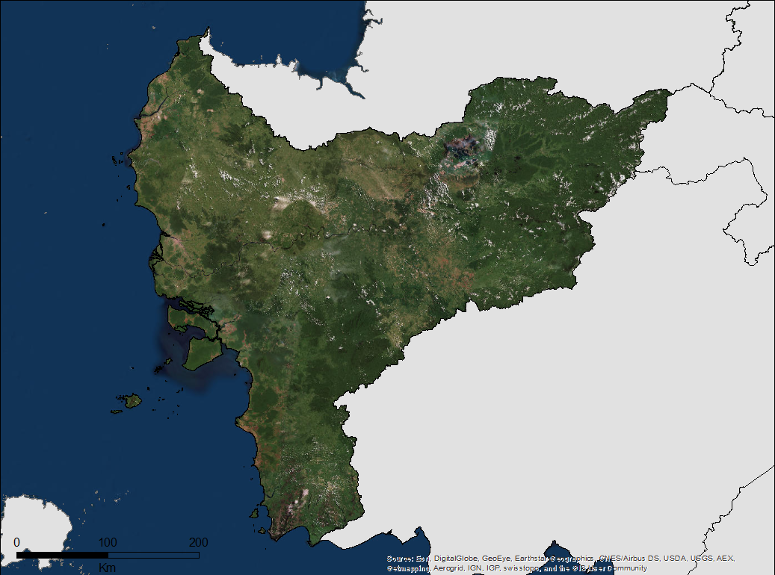
Description
The Province of West Kalimantan covers an area of 147, 000 km and is home to 4.25 million people, including an estimated 3.5 million people living in its rural hinterland. The Province has a number of large rivers, the largest being the Kapuas which drains from the spectacular inland wetland of Lake Santarum within the biodiversity region know as the Heart of Borneo. Because of its strategic location within SE Asia the old capital of Pontianak grew as a port city and it and the other settlements along the Kapuas River contain trading communities from a wide range of ethnic backgrounds within a cultural matrix dominated by the indigenous Dayak who make up 35% of the population. Poverty is a significant issue with the HDI below the national average and average income across the Province at only USD 627 per year.
In 2008, the GDP for the Province was USD 2.9 million derived mainly from primary industries. The forest sector contributed about half of the GDP with a further USD1.35 million from the agricultural sector, reflecting a strong investment in estate crops particularly oil palm. Lowland tropical peats cover an area of 1.7 million ha and Conversion of forest lands on peats to estate crops and the proliferation of fire through the dry seasons has been a significant historical factor in the high levels of GHG emissions from the Province.
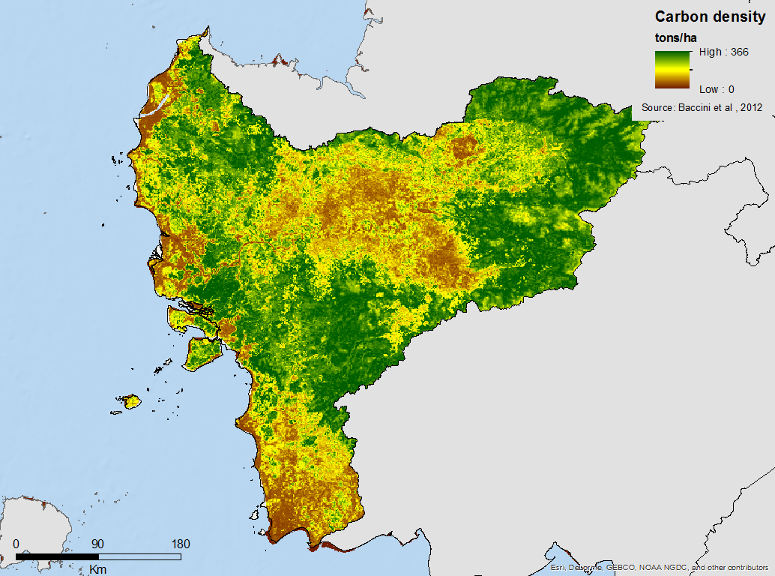
The national forest estate consists of an area of about 90 000 km2 over half of which is zoned as permanent production forest. Only 5000 km2 of the production forest designated for conversion remains attesting to the rapid expansion of estate crops in the Province. 23 000 km2 are zoned for protection and a further 14,500 km2 for conservation purposes within a network of national parks, nature reserves and wildlife reserves. The estimated carbon stock remaining in these forests is 1,600 Giga Tons CO2e, over half of which is sequestered in the Production Forest. Future carbon dioxide emissions will likely be as a result of burning of converted peat soils and forest degradation.
At this stage the Province has not enacted any specific legislation to facilitate REDD and other climate change programs but is proceeding in line with national legislation and policy related to reducing carbon emissions. The Province hosts several REDD projects including village level carbon pool assessments in the Districts of Ketapang and Kapuas Hulu, Ecosystem restoration over 90 000 ha in the Putri River and Lake Siawan Belidak in collaboration with FFI. There is also an FFI/Macquarie Bank REDD project and a demonstration activity supported by the German Government (Kfw-FORCLIM). USAID has also recently begun activities through their IFAD program in Ketapang. As elsewhere in the member provinces there is still to be developed a close working and learning collaboration between the provincial government and these REDD projects.
More information can be found on the GCF Impact Platform.
Summary
Demographics
Urban vs. Rural Population
| Category | % | |
|---|---|---|
| Rural | 83.10 | |
| Urban | 16.90 |
Ethnic Groups
| Group | % | |
|---|---|---|
| Dayak | 33.75 | |
| Malay | 33.75 | |
| Chinese | 10.01 | |
| Javanese | 9.41 | |
| Other | 8.58 | |
| Bugis | 3.29 | |
| Sundanese | 1.21 |
Economy
GDP Breakdown
| Category | % | |
|---|---|---|
| Agriculture, Livestock, Forestry & Fisheries | 25.05 | |
| Trade, Hotel & Restaurant | 22.57 | |
| Processing Industry | 17.97 | |
| Construction | 9.97 | |
| Services | 9.70 | |
| Transport & Communication | 7.40 | |
| Mining & Quarrying | 2.04 |
Forest Status
Major Vegetation Types
| Category | km² | |
|---|---|---|
| Dryland Forest | 45,925 | |
| Primary Swamp Forest | 13,560 | |
| Mangrove forest | 1,224 | |
| Water body | 89 | |
| Swamp | 60 |
Forest Management
| Category | km² | |
|---|---|---|
| Natural Forest | 23,109 | |
| Limited Production Forest | 21,324 | |
| Ordinary Production Forest | 21,274 | |
| Forest National Park | 12,442 | |
| Conversion Production Forest | 1,972 | |
| Nature Reserve | 1,909 | |
| Forest of Nature Reserve | 1,538 | |
| Nature Tourism Forest | 313 |
Drivers of Deforestation
- Fires
- Illegal logging and forest land conversion
- Clearing for oil palm plantations
Deforestation Rates
Notes
| a. | Due to different methodological approaches and base years, Forest Status data fields may differ slightly. Data sources for each field are listed below. |
Sources
| 1. | Kalbar dalam Angka, hal.82 (BPS, 2012) |
| 2. | BPS 2016 |
| 3. | Kalbar dalam Angka, hal.397 (BPS, 2012) |
| 4. | Kalbar dalam Angka, hal.429 (BPS, 2012) |
| 5. | Berita Resmi Statistik Provinsi Kalbar 07/02/61/Th. XV, 1 Februari 2012, hal.1 (BPS, 2012) – 02 BRS Feb 2012.pdf |
| 6. | Pengolahan data citra landsat 7 tahun 2003 (diolah BPKH 2013) |
| 7. | Ministry of Environment and Forestry 2018 |
| 8. | 1) SKI 2011 (Kemenhut, 2012); 2) Outline SRAP REDD+ Kalbar (tanpa tahun) |
Overview of Forest Monitoring and Measurement Systems
West Kalimantan Province uses the Forest Measurement, Reporting, and Verification system established by the National Government for REDD+. The MRV database in West Kalimantan Province uses Forest Reference Emission Level (FREL) data prepared by the government in 2017 as a basis for measuring performance.
The objective of the REDD + MRV system is to support REDD + implementation through measurement mechanisms, and reporting on GHG emission reduction performance by project and program implementers, as well as independent verification mechanisms aligned with UNFCCC methodology and modalities. Given this system any reduction and enhancement of forest carbon stocks can be measured accurately, and can serve as a basis for rewarding the achievement of emission reduction performance.
The Provincial Government is currently preparing for the establishment of MRV institutions needed to support REDD + implementation. The provincial MRV institutions will build MRV policies, standards, coordinate MRV activities, and ensure mechanisms are in accordance with UNFCCC decisions. MRV institutions operate independently under the coordination of the REDD + Agency.
Reference Levels and Targets
Deforestation Rates
Sources
| 1. | Rio Branco Declaration |
| 2. | Ministry of Environment and Forestry 2018 |
Laws, Policies & Strategies
Strategies and Policies
Provincial REDD+ Action Plan (Strategi dan Rencana Aksi Provinsi – SRAP) – passed in 2012, West Kalimantan’s SRAP outlines provincial strategies and arrangements for addressing tropical deforestation.
Provincial Action Plan for the Reduction of GHG emissions (RAD-GRK) – establishes the strategy of the province to address GHG emission issues, linkages between national and provincial emissions reductions, strategies and action plans, monitoring, reporting, verification, institutional development, policies synergies, and efforts to establish multistakeholder management with the communities.
Provincial long-term development plan (Rencana Pembangunan Jangka Panjang Daerah – RPJPD) – The RPJPD is a long-term development planning document for a period of time 20 years starting from 2005 to 2025. It contains the vision, mission and
direction of development in the province, and was updated in 2016 through Provincial Regulation 3/2016.
Laws and Regulations
Provincial Regulation 3/2016 – Formally updates the long term development plan for West Kalimantan Province through 2025
Provincial Bylaw 10/2014 – formally approving the Provincial spatial plan (Rencana Tata Ruang Wilayah – RTRW) for West Kalimantan province.
Governor Decree 5/BAPPEDA/2013 – on the formation of coordination team to implement provincial action plan on GHG reduction to coordinate, socialization, facilitate, and monitoring of the related activities.
Governor Decree No. 115 / 2012 – on the formation of the Working Group on Reducing Emissions from Deforestation and Forest Degradation (Pokja REDD +) in West Kalimantan Province.
Governor’s Decree No. 35/2010 – on Guidelines for Verification of Applications for Village Forest Management Rights in West Kalimantan Province.
Governor Regulation No. 103/2009 – on Procedure for Mobilization of Controls for Land and Forest Fires in West Kalimantan Province.
Provincial Regulation No. 7/2008 – formalizes Long-Term Development Plan of the Region (RPJPD) Year 2007-2027.
Provincial Regulation No. 8/2006 – on the Utilization and Distribution of Belian Wood in the Region of West Kalimantan Province.
Provincial Regulation No. 6/1998 – on Prevention and Control of Forest and Land Fires.
Institutional Framework
REDD+ Management Agency – a coordination body chaired by the Governor and composed of representatives of different agencies that related to land uses and climate change. The council also works with different stakeholders that engage in action plans to reduce GHG emissions.
Provincial Forestry Agency – manages and oversees the forestry sector related issues, including policy formulation.
Plantation Agency – controls the non-forest areas land use, plan, and issuance of the permits.
Environmental Agency – oversees the protection and management of environment, including climate change related issues.
Provincial Development Planning Agency (BAPPEDA) – coordinates policy formulation of the regional development planning with sustainable development and low carbon as the basis.
Zoning & Spatial Planning
West Kalimantan Province approved its Spatial Plan through provincial bylaw 10/2014. The plan covers the period 2014-2034, and can be downloaded here.
Engagement & Participation with Indigenous Peoples and Local Communities
West Kalimantan Provincial Government has established a Working Group on Social Forestry Acceleration (POKJA PPS) based on West Kalimantan Governor’s Decree No. 693 / Dishut / 2016 dated October 4, 2016. POKJA PPS ihas an institutional mandate to pursue and accelerate action to reach the Provincial targets for granting rights and management access to 1.5 million hectares of forest. Social Forestry is a sustainable forest management system implemented by local communities and indigenous and tribal peoples in state forest areas or customary forest areas. Indigenous people and tribal communities are the primary stakeholders and the initiative seeks to improve their welfare, environmental sustainability, and promote and socio-cultural dynamics in the form of Village Forest, Community Forest, Forest People’s Plants, People’s Forests, Indigenous Forest and Forestry Partnerships.
As of December 2017, the realization of the granting of rights and public access in the Social Forestry scheme has resulted in 31 permits on the Right to Management of Village Forests (HPHD), 16 Forest Utilization Utilization Licenses (IUPHkm), 5 License for Timber Forest Product Utilization (IUPHHK -HTR) and 1 Adat Forest. A total area of 151,972.5 hectares has benefitted from the intiative. In 2018, the Provincial Government of West Kalimantan seeks to grant rights and access to Kawasan Hutan area of ± 632,318 hectares. Several other initiatives are currently underway at both the provincial and district levels to encourage participation in natural resource management such as the Local Regulation on the Recognition and Protection of Indigenous Peoples (PERDA PPMA).
Partnerships and Ongoing Initiatives
— Unnamed Initiative —
- Description
-
DGM Indonesia focuses on supporting activities related to the certainty of rights to land and natural resources as well as community-based and sustainable management. In addition, this funding can also be used to explore options for tenure instruments that take advantage of opportunities provided by the government (including the capacity building of indigenous peoples and local communities in carrying out selected options). In addition to the above activities, funding support for activities related to improving the livelihoods of indigenous peoples and local communities is also open to support selected tenure security options. To guarantee the participation and community ownership of the activities carried out, DGM Indonesia requires grantees to disseminate information, disseminate information to the community, FPIC or the like before implementing the project.
- Partners
- AMAN, Papua Institute for Indigenous Peoples Strengthening Studies (LSPK); Papua Arrow Association;, Limited Association for the Study and Empowerment of Indigenous Peoples (PtPPMA), LBBT Consortium
- Initiative Type
- indigenous peoples initiative
- Initiative Status
- Implementation
1st Amending of Grant – Improve Local Policies in Mining Sector, Access to Justice of Indigenous Rights and Sustainable Community Based Forest Management in West Kalimantan
- Description
-
Government of West Kalimantan is working with The Asia Foundation to implement SETAPAK 2 Program which supported by the British Government on Climate Change Unit ( UKCCU ) is working with . The program aims to improve forest and land governance in Indonesia, with a focus on increasing transparency and accountability and strengthening rule of law in all decisions around forest and land use, by supporting Indonesia’s vibrant civil society movements and media to play a stronger role in forest and land governance. Approaches include supporting external oversight of government performance and law enforcement; field monitoring of land use infractions and forestry crimes, and reporting of illegalities. In addition, gender mainstreaming, raising public awareness, and assisting citizens to form constituencies and express their needs and preferences with regard to environmental policies.
- Partners
- The Asia Foundation
- Initiative Type
- Indigenous Peoples Initiative, Public Private Partnership
- Initiative Status
- On-going
Belantara Landscape Initiative
- Description
-
Belantara Landscape Initiative is a program funded by Belantara Foundation since 2014 with the goal of delivering wide-ranging community and conservation results for area outside their main funder concession, APP. To implement this program, Belantara Foundation funds local projects in areas that are set aside for conservation, reforestation and sustainable community development. This project primary focus is to allocate grants to support restoration, protection, conservation of endangered species (specifically Sumatran Tiger, Sumatran Elephant, as well as Sumatran and Bornean Orangutan), institutional development, and community development and empowerment initiatives in conservation areas, production forests, protection forests, and social forestry in the ten specified grant distribution areas across five provinces on the islands of Sumatra and Kalimantan (Indonesian Borneo).
- Partners
- Belantara Foundation is partnering with local NGOs for the conservation projects
- Funding Amount
- Field level projects
- Initiative Type
- Conservation project
- Initiative Status
- Under implementation
Community-Based Tenure & Management of Natural Resources
- Description
-
DGMI is part of Forest Investment Project (FIP) that aims to increase indigenous/local people participation on REDD+ project and livelihood resources. The development objective of this project is to improve the capacity of participating indigenous peoples and local communities (IPLCs) to engage in tenure security processes and livelihood opportunities from sustainable management of forests and land. There are three components in this project. 1) The first component, Subgrants to Strengthen IPLC Capacity to Enhance Tenure Security and Improve Livelihoods will, through the provision of subgrants, build the capacity of IPLCs to pursue (a) clarity and security over their rights to land (including forestland) in rural areas and (b) improved livelihoods. This component will result in mechanisms, skills, and outputs that will assist the participating IPLCs to advance efforts to strengthen tenure and improve their well-being. It will help the participating IPLCs to fulfill (to the extent possible) government requirements for greater land tenure security and access to services that improve livelihoods. 2) The second component, Inform Policy Processes and Dialogues will focus on strengthening how IPLC representatives engage in national and subnational policy and decision-making processes that will inform issues regarding REDD+, addressing drivers of deforestation, landscape management, and IPLC livelihoods. 3) The third component, Project Management, Monitoring and Evaluation, and Institutional Development will finance management and supervision of the project. This project has started since March 2017 and expected to close in June 30, 2011.
- Partners
- DGMI is implemented by The Samdhana Institute as National Executing Agency (NEA). In West Kalimantan, DGMI is working with LBBT consortium with several NGOs involved.
- Funding Amount
- Institutional and policy framework
- Initiative Type
- Land Tenure Right
- Initiative Status
- Under implementation
Constructing Green Growth Plan in Kayong Utara Ketapang and Kubu Raya District
- Description
-
National Government, West Kalimantan Province and district/city Government to develop and implement green growth strategies, allowing for forests to be set aside for conservation while enabling a legal framework and law enforcement. The project are currently at the last stage of finalizing the provincial green growth plan.
- Partners
- The Sustainable Trade Initiative (IDH)
- Initiative Type
- Public Private Partnership
- Initiative Status
- On-going
FORCLIME (Forests and Climate Change Programme)
- Description
-
FORCLIME’s overall objective is to reduce greenhouse gas emissions from the forest sector while improving the livelihoods of Indonesia’s poor rural communities. To achieve this goal, the programme team assisted the Indonesian government to design and implement legal, policy and institutional reforms for the conservation and sustainable management of forests, at local, provincial and national level. Support to REDD+ demonstration activities is a key feature of the programme, providing decision-makers with experience of how REDD+ can be implemented “on the ground”. This project launched in 2009 and will end in 2020. The government of Germany commissioned KfW for financial and GIZ for technical support of FORCLIME. REDD demonstration activities financed by KfW are – together with other initiatives (i.e. AusAID; TNC; WWF). While GIZ works with the Ministry of Environment and Forestry on national policy and sector strategies, including provincial and district governments.
- Partners
- GIZ FORCLIME, National, Provincial, and Districts Governments
- Funding Amount
- Investments in demonstration activities for national, Model of Forest Management Unit (KPH) and international carbon markets
- Initiative Type
- Financial Cooperation (FC) and Technical Cooperation (TC) on REDD+
- Initiative Status
- Under Implementation
Forest Investment Project Phase 1: Community-Focused Investments to Address Deforestation and Forest Degradation
- Description
-
The Forest Investment Program 1 (FIP-1) administered by the Asian Development Bank (ADB) seeks to support the Indonesian government and indigenous peoples in sustainable forest management and reducing greenhouse gas emission (GHG). The Community-Focused Investments to Address Deforestation and Forest Degradation project supports capacity and livelihood building of local communities around the forest and is expected to provide environmental and livelihood benefits for the community. This project outcome is to advance the implementation of REDD+ in the area surrounding the program in West Kalimantan Province. The project is also expected to contribute to the effectiveness of REDD+ fiscal strategy and harmonization at the provincial and national levels. This project has started since January 2017 and expected to finish until December 2021
- Partners
- FIP-1 is implemented by Ministry of Environment and Forestry (MoEF) and PT. Hatfield Indonesia as the Project Implementation Supporting Unit (PISU)
- Funding Amount
- Investments in demonstration activities
- Initiative Type
- Financing and Investment Initiative project on REDD+
- Initiative Status
- Under implementation
Forest Management Community Based (PHBM Project)
- Description
-
In collaboration with the district forestry office, and West Kalimantan Provincial Forestry Office, FORCLIME comprehensively supports the PHBM development process in two villages, Setulang in Malinau District (5,300 ha) and Manua Sadap (1,600 ha) in Kapuas Hulu District together with other partners. As a first step and based on information on different PHBM options, communities choose the PHBM scheme that seems most appropriate to them, that resemble their Village Forest. Facilitation activities in two villages included the preparation of village forest development proposals, training and assistance to strengthen village forest management organizations, and legal drafting drafting training. FORCLIME and West Kalimantan Government assists in the creation of participatory village boundaries, verification of village forest areas and a participatory inventory of potential non-timber forest products. Capacity development includes skills on how to assess and list the quantity and quality of available forest resources and how to prepare sustainable forest management plans.
- Partners
- GIZ; FORCLIME
- Initiative Type
- Indigenous Peoples Initiative
- Initiative Status
- On-going
Forest Management Units (FMU) Establishment, and Enhancing FMU Capacity in West Kalimantan
- Description
-
This project was initiated by FORCLIME to supports the establishment and development of FMUs in Indonesia at the national and local levels. While support at the national level mainly focuses on the development of policies relevant for FMU development and capacity building, at the local level FORCLIME supports the implementation of FMU design, planning and management.
- Partners
- GIZ; FORCLIME
- Initiative Type
- Jurisdictional Partnership
- Initiative Status
- On-going
Green commodities development
- Description
-
This program is organized by BLU as an institution under Ministry of Environment and Forestry (MoEF). This program is to support the financial needs of community and private sector to improve their commodity development.
- Partners
- The Forest Finance Facility (BLU) of Ministry of Environment and Forestry is partnering with SAMPAN Kalimantan to provide $5 million co-investment to Village Forest of Padang Tikar in Kubu Raya, West Kalimantan Province
- Funding Amount
- 5 years soft-loan platform support to develop community green commodity development
- Initiative Type
- Green Finance/Investment Support
- Initiative Status
- Under implementation
Heart of Borneo (H0B) Initiative
- Description
-
The Heart of Borneo (HoB) Initiative is a transboundary collaboration established in February 2007 among the governments of Brunei, Indonesia and Malaysia to enable conservation and sustainable development that improves the welfare of those living on the island while minimizing deforestation, forest degradation and the associated loss of biodiversity and ecosystem services. Under this Initiative, the three countries involved have committed 355,000 hectares, 16.8 million hectares and 6 million hectares respectively to be included in the HoB. The commitments of the three HoB governments are contained in the Heart of Borneo Declaration.
The HoB Initiative is government-led and NGO-supported programme. WWF is the lead NGO which also in collaboration with WWF-Malaysia and driven by support from WWF offices around the world.
- Partners
- WWF; National governments of Indonesia, Malaysia and Brunei Darussalam
- Initiative Type
- Landscape Initiative project; Government Initiative
- Initiative Status
- Under implementation
Improved Livelihoods for Smallholder Farmers in West Kalimantan
- Description
-
The project “Improved Livelihoods for Smallholder Farmers in West Kalimantan” was formulated in response to issues of income fluctuation, the need for environmentally sustainable farming practices to address lagging yield improvement and to develop social entrepreneurs to support the independent smallholders. The first phase of this project was designed and implemented in April 2012 that ran through up to December 2013. After a successful phase I, the next phase was started in July 2014 and concluded in December 2015. The current phase 3, supported by Henkel and BASF started in January 2016 and will run till mid 2019. The Two Goals with One Kernel (TGOK) project completed two phases and the third phase is under implementation. While the project supports the growth of the oil palm sector, at the same time it aims at reducing greenhouse gas (GHG) emission by preventing expansion into forest and peat areas in the 4 districts of Sintang, Sanggau, Sekadau and Melawi. The project is focused on the win-win opportunity for smallholders, increased yields to meet the demand without further deforestation whilst achieving economic development. The need for sustainable production practices intended to result in higher yields and reduced social and environmental impact, is becoming apparent and has gained growing attention.
- Partners
- Solidaridad in an implementing agency that works with CU Keling Kumang in 4 districts of Sintang, Sanggau, Sekadau and Melaw
- Funding Amount
- Human resources and market investments
- Initiative Type
- Supply chain improvement program
Improving Forest Dependent Community Prosperity Through Conservation 3 and Local Wisdom of Tembawang Optimization
- Description
-
TFCA and Government of West Kalimantan Cooperation for Regional Conservation Project through Agroforestry and Non-Timber Forest Product Management as Local People’s Income Alternative in Labian-Leboyan Corridor. The program start by 2016 – 2018.
- Partners
- Tropical Forest Conservation Act
- Initiative Type
- Indigenous Peoples Initiative
- Initiative Status
- On-going
Indonesia-Japan Project for Development of REDD+ Implementation Mechanism (IJ-REDD+)
- Description
-
This project is targeting two provinces of West Kalimantan and Central Kalimantan and is making efforts for institutionalization and capacity building of governments of provinces and districts through pilot activities, as well as enhancing institutional capacity of the Ministry of Environment and Forestry that is in charge of this project. Purpose of this project is REDD+ implementation mechanism is developed in West and Central Kalimantan. Following the purpose, there are 5 outputs of the project, such as: (i) Sub-national Framework on REDD+ is developed in West Kalimantan, (ii) a REDD+ model for Gunung Palung National Park (GPNP) and its landscape is developed, (iii) capacity of carbon monitoring is enhanced at the provincial level in Central Kalimantan, (iv) emission reduction activities regarding forest and land fire control are mobilized in West Kalimantan, and (v) project findings are referred to in the process of developing REDD+ implementation mechanisms at the national level. This project had finished in June 2018. Government of Indonesia and Japan are under negotiating process for upcoming IJ-REDD+ project.
- Partners
- Government of Japan was directly partnering with Ministry of Environment and Forestry (MoEF), Provincial Government of West Kalimantan and Central Kalimantan and the Gunung Palung National Park Office.
- Funding Amount
- Field level, Institutional and policy framework
- Initiative Type
- Technical support project on REDD+
- Initiative Status
- Under development for 2nd project phases. The first project phase started from 16th June 2013 until 15th June 2018
Low Carbon Consumption and Production in Indonesia Initiative
- Description
-
The project supports national governments in their development of mitigation strategies in the agro-food sector. Companies are encouraged to implement sustainable business models and are offered support on this path. Consumer awareness regarding sustainable consumption and production (SCP) is raised through the engagement of opinion leaders and communication campaigns. In Indonesia, this project focuses on contributions to NDC implementation in the agricultural sector, focusing on palm oil production, are evolved and sustainable business models are implemented. This project has started since March 2017 and expected to close in February 2020.
- Partners
- International Climate Initiative works with WWF
- Funding Amount
- Field level, Institutional and policy framework
- Initiative Type
- Sustainable business models project
- Initiative Status
- Under implementation
Peat Protection and Rehabilitation Initiative
- Description
-
This program initiated by Government of Indonesia to response massive destruction on peatland ecosystem. This program is mandated to National Peat Restoration Agency (BRG) as a non-structural institution directly under and responsible to the President of the Republic of Indonesia. The establishment of BRG is a testimony to the Indonesian government’s commitment to restore the degraded peatland ecosystems. This project targets two millions of hectares of degraded peatland within five years period to be restored in the provinces of Riau, South Sumatra, Jambi, Central Kalimantan, South Kalimantan, West Kalimantan and Papua. BRG’s target is to restore the approximately
- Partners
- National Restoration Agency (BRG RI) is working with Provincial’s Peat Restoration Team in West Kalimantan Province
- Funding Amount
- Field level project, Institutional and policy framework
- Initiative Type
- Restoration project
- Initiative Status
- Under implementation
PPI Compact Initiative
- Description
-
The IDH landscape program uses an innovative, integrated approach to sustainable natural management. It also works towards preventing deforestation, improving smallholder and community livelihoods, and ensuring supply security for businesses. Through a three-pronged approach – production, protection and inclusion (PPI approach) – IDH work supports four key stakeholder groups: companies sourcing sustainably; governments aiming to enable sustainable growth; smallholder famers who need to diversify their income, secure land rights, and strengthen their position in supply chains; and finally, impact investors and the mainstream finance sector who need bankable projects that deliver impact on SDGs. This project has started since 2014. IDH works closely with Provincial Government and Districts Governments, Private Companies, and NGOs.
- Partners
- IDH, Provincial Government and Districts Governments, Private Companies
- Funding Amount
- Field level project, Institutional and policy framework
- Initiative Type
- Landscape Agreement
- Initiative Status
- Under implementation and development
PPI Compact's
- Description
-
IDH is convening stakeholders in “PPI Compacts”: An agreement between public, private, community, and civil society stakeholders to enhance the sustainability and productivity of land and increase and diversify community livelihoods in exchange for forest/natural resources protection. The PPI Compacts provide an improved governance environment at the landscape level, which enables investment in PPI land use. Based on this, we create conditional financial incentives for sustainable palm oil production, forest protection and activities to intensify land use by (in)dependent smallholders.
- Partners
- The Sustainable Trade Initiative (IDH)
- Initiative Type
- Jurisdictional Sourcing; Private partnership
- Initiative Status
- On-going
Safeguard Information System (SIS) Training
- Description
-
The West Kalimantan Province government together with FORCLIME Technical Cooperation (TC) conducted a training on Safeguards Information System (SIS) – REDD+ on 30 March 2017 in Pontianak, West Kalimantan. This activity is as part of REDD readiness for the province in the transition phase towards full implementation of REDD+ performance based payment in 2020. The training is also important for West Kalimantan since the province is keen to promote green development initiative, additionally, it is a member of the Governor Climate Forum (GCF).
- Partners
- GIZ; FORCLIME
- Initiative Type
- Jurisdictional Partnership
- Initiative Status
- On-going
SAMPAN Kalimantan – Protect the Remaining Mangrove as Coastal Frontiers in West Kalimantan Province
- Description
-
SAMPAN Kalimantan intends to protect the remaining coastlines (particularly mangroves) in western Kalimantan. The idea is to promote fair and sustainable coastal governance by supporting the protection and use of coastal communities through the use of community-based forest management models(eg HD, HKm), legislation permits on the protection of mangroves. It provides the community with access to and control of their forests. The project works with village communities but also affects local government.
- Partners
- Siemenpuu Foundation
- Initiative Type
- Jurisdictional Partnership
- Initiative Status
- On-going
SETAPAK (Improving Forest and Land Governance)
- Description
-
Funded by the United Kingdom’s Climate Change Unit – The British Embassy, the Asia Foundation’s environmental governance (SETAPAK) program is focused on improving forest and land governance in Indonesia. Good forest and land governance will allow Indonesia’s decentralized governance to ensure transparency and accountability in the management, protection and distribution of benefits from natural resources to achieve pro-poor sustainable growth.
Improving land governance to protect forests and communities in Indonesia
SETAPAK has been working to improve forest and land governance in Indonesia since 2011. The program promotes good forest and land governance in order to reduce greenhouse gas emissions and ensure that the benefits of natural resources are distributed sustainably and equitably.
Indonesia hosts the world’s third largest area of tropical rainforest, which is being destroyed at a rate of 8,400 square kilometres annually. Indonesia’s peatlands are also a vital resource, yet approximately 120,000 square kilometres have been disturbed, in some places irreparably. These changes are responsible for 80 percent of Indonesia’s greenhouse gas emissions, which are the third highest in the world. They also increase the risk of natural disasters such as floods, harm animal and plant life, reduce state revenues, cause land conflict, and affect livelihoods detrimentally.
These issues are critical for Indonesia and the world. To ensure that our responses are strategic, efficient and coordinated, SETAPAK works to promote good forest and land governance in Indonesia.
- Partners
- The Asia Foundation, PLH Nunukan, Lalinka foundation, SAMPAN Kalimantan, AMAN Kalbar, LBBT, Perkumpulan Pancur Kasih, Elpagar and JARI Borneo Barat
- Initiative Type
- Donor-Supported Programs; Environmental Governance Program
- Initiative Status
- Under implementation
Strengthen Educational Forest of Tanjungpura University as Community Based Learning Centre of Peat Protection and Restoration
- Description
-
This project is to support Forestry Faculty of Tanjungpura University in managing their Educational Forest of Tanjungpura. This project objective is to develop the Educational Forest to be a Community Based Learning Center for Peat Protection and Restoration in West Kalimantan Province. This project has begun in August 2017 and will finish in August 2018.
- Partners
- Indonesia Climate Change Trust Fund (ICCTF) is partnering with Forest Faculty of Tanjungpura University.
- Funding Amount
- Field level projects
- Initiative Type
- Community empowerment program
- Initiative Status
- Under implementation
Strengthening Forest Area Planning and Management in Kalimantan: HCVF Baseline Development in Ketapang and Sintang Districts (KALFOR Project)
- Description
-
This project aims to maintain forest areas, including the biodiversity and ecosystem functions of Kalimantan’s lowland and montane areas, from the development of estate crops. This project consists of 3 components, such as: (i) forest ecosystem services and biodiversity mainstreamed in national and provincial policies and decision making processes for forest area planning and management, (ii) strengthened and expanded implementation of best practices in the plantation sector in 3 target landscapes in Kalimantan, (iii) creation of incentives to safeguard forests. Thus project is organized by UNDP and funded by GEF Trust Fund under award ID 00093330 with a total project amount USD 9.000.000 for 7 years-project implementation, started in 2017.
- Partners
- KALFOR Project is implemented by Ministry of Environment and Forestry (MoEF), organized by UNDP and Forestry Faculty as the Project partners in West Kalimantan Province
- Funding Amount
- Institutional and policy framework
- Initiative Type
- Forest Area Planning and Management project
- Initiative Status
- Under implementation
Tropical Forest Conservation Initiative (TFCA).
- Description
-
TFCA is a cooperative program between the Indonesian Government and the US Government in partnership with TNC and WWF Indonesia. It launched in September 29, 2011. The program is part of the debt for nature swap scheme to support sustainable development, to encourage the efforts of biodiversity conservation and sustainable use of biological resources, and also to reduce emission. TFCA is administered by KEHATI Foundation and they work with local partners under 3 grant cycles. Cycle 1 started in 2014 with 9 NGOs/Universities were involved, Cycle 2 started in 2015 with 16 NGOs/Universities involved, and Cycle 3 have been starting in 2017 with 14 NGOs/Universities as their partners. Detail TFCA grantees can be found through the following link: http://tfcakalimantan.org/siklushibah
- Partners
- KEHATI Foundation, University, Provincial Government and Districts Governments, NGOs
- Funding Amount
- Field level, Institutional and policy framework
- Initiative Type
- Bilateral program
- Initiative Status
- Under implementation
Village Forest Initiative
- Description
-
This project is initiated by SAMPAN Kalimantan in West Kalimantan Province. This project is mainly to improve site level forest management by letting community to have a legal access to manage their forest. This project has started since 2014, funded by numerous international and national funding agency. Under this project, SAMPAN Kalimantan with 32 villages managed 174.150 hectares of state forest under village forest regulation framework. This project sets 3 main strategy: (i) ensure the protected area is protected by developing robust monitoring, regulatory, institutional, and implementation framework as well as its incentive scheme, (ii) improve commodity productivity by scaling the business unit to be a bankable institution, improve production and supply chains, investment plan, and enrich the commercial deals with off taking company, and (iii) increase the involvement of other key stakeholders in the landscape in managing the license by strengthening the landscape institution and its governance and role.
- Partners
- SAMPAN Kalimantan works with Bentang Kalimantan, CU KNB, and PT Kayuh Nusantara Jaya
- Funding Amount
- Institutional, policy framework, commodity development
- Initiative Type
- Community Investment Project
- Initiative Status
- Under implementation