
Cavally, Ivory Coast
Côte d'Ivoire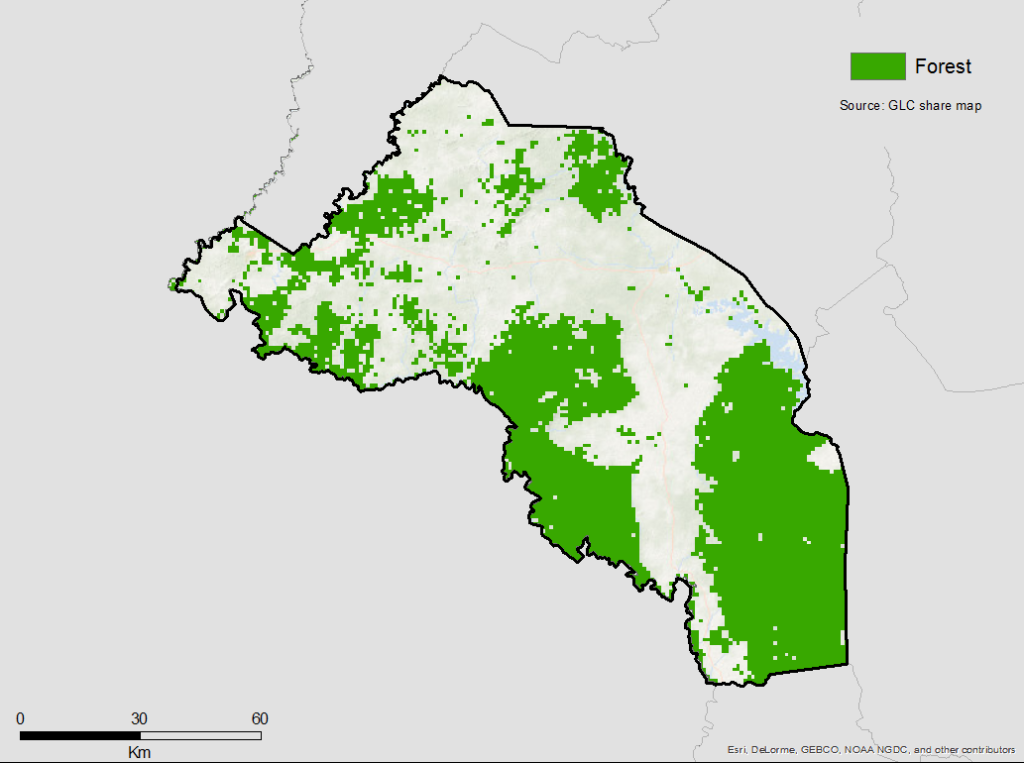
Description
The Cavally region has an area of about 11,300 km2. The population in 2014 was 459,964 (2014 General Population and Housing Census (RGPH)) and is estimated to be 550,000 today with the return of some exiles.
The climate is warm and humid tropical with abundant and regular rainfall resulting in lush vegetation favorable to agriculture. The hydrography is composed of the Cavally River and other large rivers including the N’zo, Douihi, N’zé, Niyon and Goin.
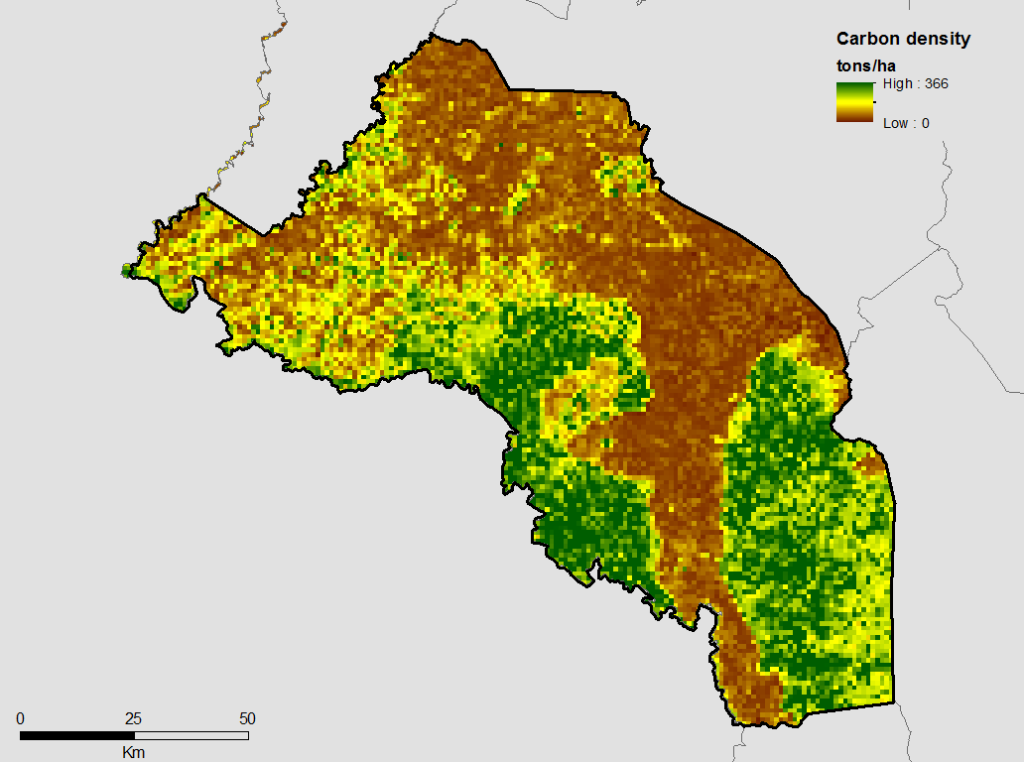
The Tai National Park is composed of primary forest and has an area of 5,300 km2. The Tai Forest is classified by UNESCO world heritage. Other classified forests include the GOIN-DEBE forest (1,331 km2), the CAVALLY forest (642 km2), the SCIO Forest Reserve (880 km2).
The primary economic sector in the region is agriculture. Due to the abundant forest vegetation and the fertility of the land, the economy of the region is based on agriculture including cash crops, food crops, and logging. The extractive industry is also developing for ore. However, since the arrival of rubber manufacturers including CHC, SOGB, and TRCI, rubber growing has been widely practiced in the region and could supplant coffee and cocoa.
Apart from the Tai National Park, protected areas in the Cavally Region are experiencing a high rate of degradation due to human activity, including the practice of agriculture, hunting, and gold panning in parks and reserves. The Cavally Regional Council, in conjunction with State structures responsible for the supervision of Parks and Reserves, is carrying out sensitization and repression measures against the occupants of the classified forests. A partnership was also woven with the NGO WCF to raise awareness about the usefulness of forest classes and their preservation.
Summary
Demographics
Economy
Forest Status
Forest Management
| Category | km² | |
|---|---|---|
| Protected Areas | 5,300 | |
| Classified Forests | 3,500 |
Drivers of Deforestation
The main drivers of deforestation in the Cavally region are the expansion of agriculture to 60% of the economy (cocoa farming, rubber growing and other cash crops included), infrastructure development (16%), and bush fires (14%). In terms of degradation, illegal logging is the most important driver identified (at 41%), followed by the preponderance of bush fires and wood energy exploitation.
Direct drivers of deforestation are reinforced by demographic factors including migration and natural population increases and by political factors (political crises and weak application of existing legislation). The drivers of deterioration are exacerbated by the weak application of the legal texts in force but also by the economic attractiveness and the demands for products (agricultural and forestry) on the national market.
Deforestation Rates
Notes
| a. | Due to different methodological approaches and base years, Forest Status data fields may differ slightly. Data sources for each field are listed below. |
Overview of Forest Monitoring and Measurement Systems
The national Government is working with support from the UN-REDD Program to strengthen the capacities of the national forest monitoring system. Technical support in terms of personnel, equipment and training has been provided for the development of the pillars for the construction of the national forest monitoring system:
- For the forest inventory pillar, an inventory of forest biomass has been made and the country-specific emission factors for deforestation have been determined. The methodology of this first pilot inventory should be used for the planned National Forest Inventory in the course of 2018.
- For the spatial monitoring system of land, forest dynamics mapping (1986-2000-2015) was carried out thanks to the support of the UN-REDD Program. SEP-REDD + & MRV cell continues to work on the maps in order to refine them and finalize them in 2018.
- For the FREL, the reference level has been developed and the country is organizing to make the different FREL produced at the national level coherent for the different official reports to be produced for the country.
Reference Levels and Targets
Deforestation Rates
Laws, Policies & Strategies
Strategies and Policies
Three-year (2018-2020), economic, social, and cultural development program – developed by the Cavally Region.
Regional Plan of Development and Development of the Territory – a standard instrument approved by the Council of Ministers for the Region of Cavally.
National Development Plan (PND 2016-2020)
National Agricultural Investment Program Phase 2 (PNIA 2018-2025)
National Action Program for the Environment (PNAE)
National Strategy for Fighting against Climate Change 2012
Declaration of Land Policy
Nationally Determined Contributions (CDN) of Ivory Coast
Decentralization policy of Ivory Coast – organized the national territory into two Autonomous Districts, 31 Regions, 108 Departments, and 510 Sub-prefectures.
National REDD + strategy – to be implemented in all regions of the country, taking into account the elements considered in the REDD + tools put in place at national level including the reference level of emissions for forests, system of information on safeguards and national forest monitoring system.
Laws and Regulations
Law no. 96-766 10/3/1996 – The Environmental Code
Law no. 98-750 12/23/1998
modified by Law No. 2004-412 8/14/2004 – Relative to the Rural Land Domain
Law no. 2014-427 7/14/2014 – The Forest Code
Law no. 2015-347 7/20/2015 – Agricultural Orientation in Ivory Coast
Institutional Framework
All Ministries and structures, below, have local directorates or representations:
The Ministry of Water and Forests is responsible for the management of water and forests at the national level. This Ministry manages the state’s rural forest estate.
The Ministry of Agriculture and Rural Development is in charge of the state’s agriculture and rural development policy. The Minister manages the rural land.
The Ministry of Health, Environment and Sustainable Development is in charge, at the national level, of the policy of the environment and sustainable development. SEP-REDD + is under this Ministry’s supervision.
The Ministry of Animal and Fisheries Resources is in charge of the national policy of animal and fish resources.
The Ministry of the Interior and Security is in charge of the administrative and security management policy of the country.
The Ivorian Office of Parks and Reserves (OIPR) manages the parks and reserves of the Ivorian State.
The Forest Development Corporation (SODEFOR) manages the permanent forest estate of the State.
Engagement & Participation with Indigenous Peoples and Local Communities
The state provides a subsidy to local authorities to ensure the development of their area of geographical competence. Local people are consulted, and their needs and aspirations are taken into account for the preparation of the budget documents that are the Triennial Program and the original Budget. Community sessions are open to the people so that they can exercise control over the actions of these communities and make use of their power of sanction or renew their confidence during the popular consultations.
Partnerships and Ongoing Initiatives
Certification Program: Greening the Cocoa Industry
- Description
-
“Greening the Cocoa Industry” is a project initiated by Rainforest Alliance (RA) with support from the Global Environment Facility (GEF) and the United Nations Environment Program (UNEP). Its objective is to change production practices in cocoa-producing countries, as well as the management procedures of cocoa and chocolate companies, so that the industry is more actively involved in biodiversity conservation while contributing to the increase of the income of small producers, to ensure sustainable development of cocoa-culture.
- Partners
- UN-Environment / Rainforest Alliance
- Initiative Type
- National Application Project at Cavally
- Initiative Status
- In Progress
Cocoa and Forest Initiative
- Partners
- MINEF / World Cocoa Foundation (WCF) / The Sustainable Trade Initiative (IDH)
- Initiative Type
- National Applicaiton Project at Cavally
- Initiative Status
- In Preparation
National Interpretation Project of the RSPO Standard
- Description
-
The objective of this initiative, funded by the Ivorian Government, is to achieve a national interpretation of the RSPO (Round Table for Sustainable Palm Oil) standard to facilitate the obtaining of RSPO certification by Ivorian palm oil producers. The first beneficiary of the project is the Interprofessional Association of the Palm Oil Industry (AIPH).
- Partners
- Ministry of Agriculture and Rural Development (MINADER)
- Funding Source
- Ivorian Government
- Initiative Type
- National Application Project at Cavally
- Initiative Status
- In Progress
Program for the Promotion of Agricultural Sectors and Biodiversity (PROFIAB)
- Description
-
Initiated by GIZ, PROFIAB will support the development of a national policy for sustainable and biodiversity-friendly agriculture, which respects and preserves the last biosphere of Ivory Coast. It will support the development of the Agriculture and Environment sectors. The program aims, among other things, to encourage the people of the South-West region to exploit the economic potential and natural resources of the periphery of the Taï National Park (PNT) in a sustainable way while restoring and improving its biodiversity. As part of this project, training material on reforestation and sustainable forest management will be made available and used to carry out forest plantations in schools and for other activities of local populations.
- Partners
- MINADER / GiZ / TNCI / Barry Callebaut / CIPEXI
- Initiative Type
- Regional Project
- Initiative Status
- In Progress
Project Vision for Change (V4C)
- Description
-
The Vision for Change (V4C) project of the chocolate maker Mars, developed by the World Agroforestry Center (ICRAF) in the region of Soubré, aims to revitalize the cocoa industry by regenerating the old cocoa plantations by grafting in order to increase their productivity while limiting the expansion of plantations and diversifying farmers’ incomes by promoting agroforestry.
- Partners
- MARS / ICRAF / ANADER / CNRA
- Initiative Type
- National Application Project at Cavally
- Initiative Status
- In Progress
Strengthening Multi-stakeholder Management of the Taï-Grebo-Krahn-Sapo Cross-Border Forest Landscape Between Liberia and Côte d'Ivoire
- Description
-
Initiated by the GRASP / UNEP and the Wild Chimpanzee Foundation (WCF), then taken over by GIZ and KfW in addition to the GRASP-WCF initiative, the corridor project aims to link the forest of the Taï National Park in Ivory Coast and the SAPO Forest in Liberia. This initiative uses incentives for the preservation of the environment, including the Payment of Environmental Services, to encourage conservation and reforestation activities by the people. It involves regional planning, strengthening the capacity of the institutions responsible for managing natural resources in both countries, and the establishment of a sustainable financing mechanism for these interventions.
- Partners
- GiZ / World Chimpanzee Foundation
- Initiative Type
- Regional Project
- Initiative Status
- In Progress
Sustainable Landscape Initiative (ISLA)
- Description
-
Developed by IDH, the Sustainable Landscapes Initiative (ISLA) aims to promote joint public and private investments to support landscapes and protect livelihoods and agricultural products, while preserving natural resources. The ISLA program therefore provides a meeting platform to facilitate public-private dialogue between the Government, the business sector, and local people.
- Partners
- Ministry of Planning / IDH
- Initiative Type
- Regional Project
- Initiative Status
- In Progress