
Jalisco, Mexico
Mexico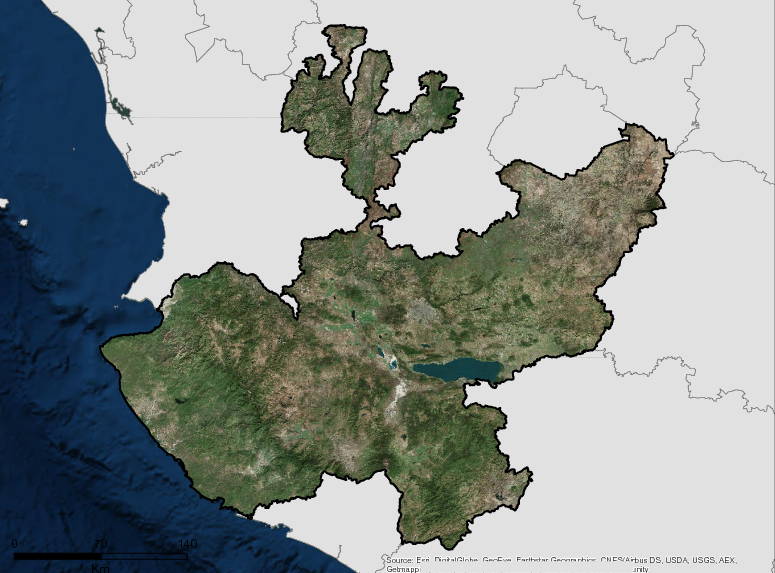
Description
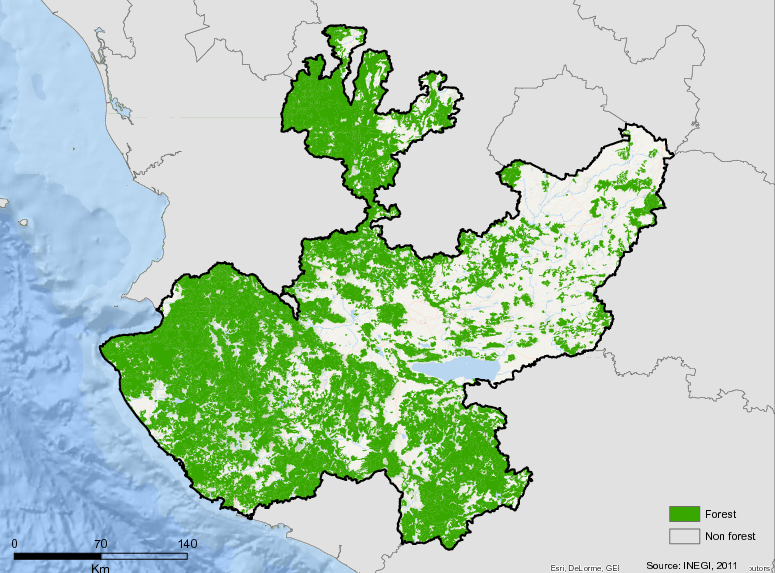
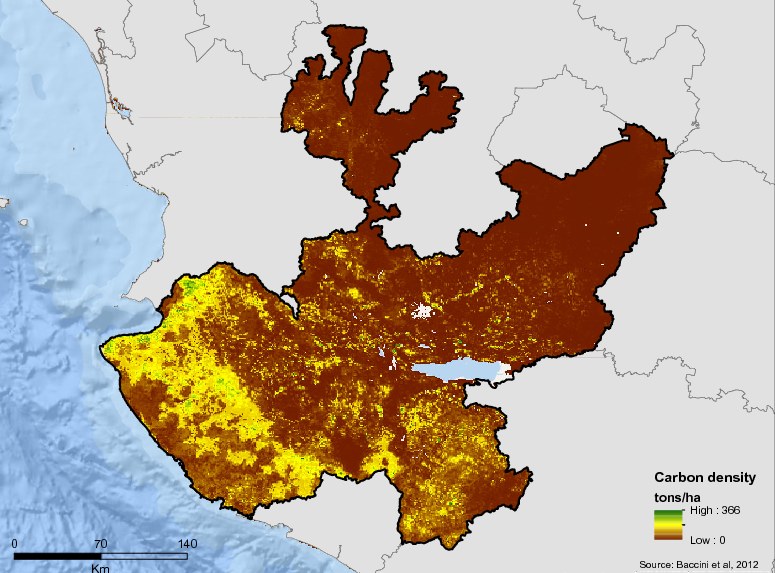
Jalisco has a population of 7,844,830 inhabitants and is one of the States with the largest population in Mexico, reaching 6.5% of the country’s total. The population growth in recent years, coupled with economic and urban growth, has put strong pressure on natural resources. Given this, the maintenance of forests in the State, which cover 53% of the surface and 4,155,948 hectares, is very important.
Therefore, for the purpose of establishing an integrated land management model, a model of local governance has been proposed in Jalisco that contributes to sustainable rural development for the implementation of the REDD + State Strategy, in order to reduce emissions by deforestation and degradation. This model of governance is that of the Intermunicipal Environment Boards (JIMA), which is based on the association of municipalities. The JIMA seeks to decentralize environmental policy and function as a public body to have a positive impact on the territory of the municipalities that comprise them.
Additional information can be found on the GCF Impact Platform.
Summary
Demographics
Urban vs. Rural Population
| Category | % | |
|---|---|---|
| Urban | 87.00 | |
| Rural | 13.00 |
Economy
GDP Breakdown
| Category | % | |
|---|---|---|
| Services | 24.58 | |
| Trade | 22.03 | |
| Manufacturing Industry | 21.89 | |
| Other | 15.04 | |
| Construction | 7.80 | |
| Agriculture, Forestry | 5.55 | |
| Government Activities | 3.04 |
Forest Status
Major Vegetation Types
| Category | km² | |
|---|---|---|
| Secondary Deciduous | 9,404 | |
| Primary Encino Forest | 8,206 | |
| Conifer Forest Primary | 7,105 | |
| Secondary Encino Forest | 5,925 | |
| Primary Deciduous | 5,216 | |
| Secondary Coniferous | 2,204 | |
| Secondary Sub-deciduous Jungle | 1,590 | |
| Secondary Sub-deciduous Forest | 1,283 | |
| Primary Mesophytic Forest | 346 | |
| Secondary Mesophytic Foresty | 76 |
Forest Management
| Category | km² | |
|---|---|---|
| Ejido | 16,482 | |
| Protected Area | 1,451 |
Drivers of Deforestation
There are two driving groups of deforestation in the State of Jalisco; indirect and direct drivers.
Direct drivers include extensive cattle raising with the use of induced cultivated pastures resulting in changes in land use due to livestock expansion, livestock productions systems that are not adapted to agro-ecological conditions, overgrazing, and increased food demand. Another direct driver is agricultural land conversion for economic income resulting in the conversion of crops from seasonal maize, low deciduous forest, and oak to agave cultivation and the establishment and expansion of avocado cultivation because of the high profitability. The final direct driver of deforestation is urban growth due to tourism development resulting in an increase in tourist development in coastal areas and the occupation of agricultural lands for tourism developments.
Indirect drivers include lack of employment and boost to the local economy, poorly planned growth infrastructure in urban areas, scarce surveillance in forest areas, inadequate follow-up to contrary public policies and programs, and dysfunctionality of governance mechanisms and lack of community organization.
Deforestation Rates
Notes
| a. | Due to different methodological approaches and base years, Forest Status data fields may differ slightly. Data sources for each field are listed below. |
Sources
| 1. | Mexico FREL link |
| 2. | México en Cifras. INEGI link |
| 3. | México en Cifras. INEGI link |
| 4. | INEGI. 2014. PIB Entidad Federativa Anual. link |
| 5. | CESJAL. 2014. Informe Socioeconómico del Estado de Jalisco 2014. link |
| 6. | UNDP. 2012. El Índice de Desarrollo Humano en México: cambios metodológicos e información para las entidades federativas. link |
| 7. | INEGI. 2015. Anuario Estadístico de Jalisco. link |
| 8. | CONAFOR 2014 |
| 9. | CONAFOR. 2016. Borrador de Iniciativa de Reducción de Emisiones. |
| 10. | https://www.forestcarbonpartnership.org/sites/fcp/files/2016/Oct/Anexo%202.%20Informaci%C3%B3n%20de%20las%20condiciones%20ambientales.pdf |
| 11. | |
| 12. | CONAFOR. 2016. Borrador de Iniciativa de Reducción de Emisiones. link |
Overview of Forest Monitoring and Measurement Systems
Currently, the National Forestry Monitoring System Management of the National Forestry Commission is in charge of the National Monitoring, Reporting and Verification System (MRV). In this way, the SNMRV is integrated with an important database and methods specific to the national context, but which are also the basis for the estimation of reference levels and for MRV at the state level.
Likewise, the government of the State of Jalisco has several public and private entities that have useful information, as well as infrastructure and technical capabilities to contribute to the estimation of emission factors and activity data in the jurisdiction. In this regard, the Institute of Statistical and Geographical Information (IIEG) and the Trust for the Administration of the Forest Development Program (FIPRODEFO) stand out, which can provide information and technical support to the Ministry of Environment and Territorial Development of the State of Jalisco for MRV and the development of reference levels for REDD +
Reference Levels and Targets
Deforestation Rates
Sources
| 1. | Rio Branco Declaration based on National FREL |
| 2. | CONAFOR. 2016. Borrador de Iniciativa de Reducción de Emisiones. |
Laws, Policies & Strategies
Strategies and Policies
State Program for Action on Climate Change – The State Climate Change Program was established in 2015 through Decree 25419. The program aims to adress the adverse effects of climate change that are currently occurring and prepare for future impacts, identify the studies needed to define mitigation goals and the needs of the State to build and foster adaptation and mitigation capacities, move towards a sustainable, competitive economy with low greenhouse gas emissions, and be an instrument to safeguard the health and safety of the population, the territory, productive activities and ecosystems.
FCPF Carbon Fund Investment Program – Through the Emissions Reduction Initiative (IRE) of Mexico implemented under the framework of the Alliance for Forest Carbon, Jalisco has developed four investment programs to reduce deforestation.
State Development Plan (PED 2013-2033) – This plan seeks to take advantage of, conserve and protect biodiversity and ecosystems through the use of its natural resources as well as reverse degradation, deforestation and loss of ecosystems and biodiversity and mitigating the effects of climate change.
Sectoral Environmental Program – this program has an objective to reverse the degradation of ecosystems and the loss of biodiversity, and it also aims to mitigate greenhouse gas emissions.
Sectorial Program for Sustainable Rural Development – Increase the level of income of rural producers, improve the levels of productivity of the agricultural sector and increase the commercialization of goods and services of the agricultural sector.
Special Transversal Program for Environmental Governance – Increase intergovernmental participation in the environment and improve the institutional framework for environmental governance.
REDD + State Strategy (EEREDD +) – Jalisco is in the process of finalizing its REDD + State Strategy in 2018, which is coordinated by the Working Group to Reduce Emissions from Deforestation and Forest Degradation (GT REDD +). It seeks to guarantee transparency and maximize environmental and social benefits.
Laws and Regulations
Decree no. 13596 06/06/1989 General Law of Ecological Equilibrium and Environmental Protection – Its purpose is to regulate the preservation and restoration of the ecological balance, as well as the protection of the environment and cultural heritage, within the competence of the state and federal governments and municipalities, in order to improve the environmental quality and the quality of life of the inhabitants and establish the sustainable use of natural resources.
Decree no. 21657 12/21/2006 Sustainable Rural Development Law – Provides guidelines for the planning, implementation and evaluation of sustainable rural development projects with a focus on agricultural and economic support measures for agriculture and training for farmers.
Decree no. 25419 8/27/2015 State Climate Action Law – Defines the strategy of addressing climate change in Jalisco and refers to actions to reduce deforestation and forest degradation in collaboration with the national government, improve the capacity and systems of data related to deforestation and identify priority areas for restoration.
Decree no. 205333 8/20/2004 Sustainable Forestry Development Law – Promotes the conservation, protection, restoration, production, cultivation, management and use of forest ecosystems in the State of Jalisco.
Decree no. 18674 12/19/2000 Planning Law for the State of Jalisco and its Municipalities – Establishes the norms for the planning of the activities of the state and municipal public administration to contribute in the integral and sustainable development, by promoting the participation of the society in the elaboration of plans and programs, as well as establishing the methodological elements to evaluate the performance of the state public policy.
Decree no. 24450 08/08/2013 Law on Transparency and Access to Public Information of the State of Jalisco and its municipalities – Makes transparent the exercise of public function, accountability and the decision-making process, and guarantees the right to access to information and protection of personal data.
Decree no. 25519 08/20/2015 Law on Beekeeping Promotion and Protection of Pollinating Agents of the State of Jalisco – Establishes the rules for the use and exploitation of honey bees for the benefit of state beekeepers. In addition, it declares beekeeping as a public interest and priority activity for the benefits it gives to the conservation of biodiversity and environmental services through the pollination of both natural vegetation and cultivated plants.
Decree no. 21746 11/01/2007 Law of the Rights and Development of Indigenous Peoples and Communities of the State of Jalisco – Recognizes, preserves and defends the rights of indigenous peoples and communities originating in the State of Jalisco and the people who make them up . It establishes the obligations of the state and municipal public administration to raise the standard of living of indigenous peoples and communities, by promoting their development through programs and specific items in the budgets of respective expenditures.
Decree no. 25654 12/17/2015 State Law to Promote Equality, Prevent and Eliminate Discrimination in the State of Jalisco – Promotes and guarantees equal treatment and opportunities, and establishes the principles and criteria that guide public policies to promote equality and the freedom of people.
Decree no. 23078 05/08/2010 State Law for Equality between Women and Men – Enforces the right to equal treatment and opportunities between women and men, regardless of their generational group and marital status, by eliminating any form of discrimination towards women, whatever their circumstance or condition in any of the areas of life, in both urban and rural areas. On the other hand, it establishes the obligation to promote women’s access to property or land tenure and agricultural credit, technical assistance, training and agricultural technology, for their proper exploitation.
Institutional Framework
Ministry of Environment and Territorial Development (SEMADET) – Designs policies, strategies, measures and actions to address climate change in the state.
Directorate of Public Policy and Environmental Governance of SEMADET – Coordinates the implementation of the strategy and REDD + through its REDD + Working Group, and the Inter-institutional Commission for Action on Climate Change in the State of Jalisco.
Rural Development Secretariat (SEDER) – Designs programs and policies related to agricultural development
REDD + Working Group (GT REDD +) – Design, implement and evaluate the Public Policy on REDD + in Jalisco.
Zoning & Spatial Planning
Jalisco has completed statewide ecological zoning, which was formalized through decree in 2001 and updated in 2006.
The state has also completed site-specific plans for the following municipalities:
Engagement & Participation with Indigenous Peoples and Local Communities
The EEREDD + Jalisco includes in its principles processes of consultation and implementation in local communities, with indigenous people, women and young people considering the egalitarian opinion of these sectors. Proof of this is the REDD + Technical Consultative Committee of Jalisco made up of 39 actors, with more than 50% of local actors that, having an inclusive approach, considers the participation of representatives of indigenous communities and women involved in conservation actions and sustainable management of State forest resources. In addition, Jalisco promotes the development and implementation of the Medium-Term Comprehensive Development Program (P-predial) as an instrument for planning the agricultural and forestry activities of timber and non-timber forest of men, women, young people and residents involved in integrated management and sustainable territory at the local level. Lastly, mention should be made of the recent collaboration between the State Government and the Rainforest Alliance Mexico-Alliance for Forests A.C. in charge of the Dedicated Mechanism for Indigenous Peoples and Local Communities in Mexico (MDE) financed by the Forest Investment Fund (FIP).
The State of Jalisco is part of the Emissions Reduction Initiative (IRE) whose main component is the Investment Programs. These programs are constructed through a participatory and inclusive process, and seek to meet local needs and conditions, based on planning instruments at the local level. In this context, during the process of preparing the Investment Programs in the area of intervention of the IRE, corresponding to the Intermunicipal Boards of the coastal basins of Jalisco, local communities participated through 17 workshops and 4 forums, where 320 participants were registered, of which 64 were women.
Finally, the jurisdiction collaborated in the development of capacities and proposals to integrate local communities (CL) and indigenous peoples (IP) to MRV through community monitoring of their forest resources in compliance with the social safeguards for the inclusion of these communities in a context of landscape sustainability.
Partnerships and Ongoing Initiatives
Adaptation in the tourism sector (AdapTur) in Puerto Vallarta
- Description
-
The private sector and the social sector carry out joint solutions for adaptation to climate change in the Mexican tourism sector in three pilot regions, one of which is Puerto Vallarta in Jalisco.
The objective of ADAPTUR is to support the tourism sector to adapt to climate change. The purpose is to reduce the risk to the business of tourism businesses, protect their natural assets (eg beaches, reefs, forests, biodiversity) and the services provided by ecosystems (eg water supply, hurricane protection, floods, landslides , etc.).
- Partners
- Financing of: BMU and IKI, Implemented by: GIZ, SECTUR, SEMARNAT, CONANP and INECC.
- Initiative Type
- Financial initiative
- Initiative Status
- Developing
Agreement for the Creation and Implementation of the Biocultural Corridor of the Western Center of Mexico
- Description
-
The agreement for the creation and implementation of the Biocultural Corridor of the Center West of Mexico signed on June 22 with the intention of combining efforts, capacities and resources to consolidate the conservation and management of protected natural areas and conservation modalities, as well as the conservation and sustainable use of its ecosystems and biodiversity present in the States of Aguascalientes, Guanajuato, San Luis Potosí, Queretaro, Zacatecas, Nayarit,Jalisco and Michoacán de Ocampo, with the support of the Federal Government, through the National Commission of Protected Natural Areas and the National Commission for the Knowledge and Use of Biodiversity.
The Biocultural Corridor of the Western Center of Mexico has a geographical unit characterized by its wide variety of plants, animals and ecosystems, whose structure and dynamics have been shaped to a greater or lesser extent by the history of land use, a directly associated factor to the diversity of cultural features of this region of the country. Among the objectives of this Corridor is to reconcile the conservation of natural resources with sustainable use.
- Partners
- State Governments and Federal entities
- Initiative Type
- Intergovernmental Initiative
- Initiative Status
- Agreement signed
Alliance with the Agricultural Sector
- Description
-
In 2016, the Ministry of Rural Development modified its operation rules to support the implementation of silvopastoral systems (sustainable livestock), aimed at livestock producers who have a current Agreement for Payment for Environmental Services (PSA) for the forest adjacent to their livestock activity. This year, the concept of support was extended to agroforestry systems and other conservation and/or forest management requirements are included, in addition to the PSA; such as the Sustainable Forest Management Plan, Environmental Management Unit and Voluntary Conservation Area. As part of this effort, the Secretariat signed an Agreement with each of the Inter-municipal Environmental Boards of coastal basins, which are part of the Emissions Reduction Initiative proposed by Mexico before the Cooperative Fund for Forest Carbon (FCPF), whose purpose is to provide technical assistance to people benefiting from the program. The alliance aims to promote sustainable production, increase the resilience of rural producers and capture carbon, as well as conserve carbon stocks.
- Partners
- Ministry of Rural Development and Intermunicipal Boards of Environment
- Funding Source
- Public Financing
- Funding Amount
- Phase 1 – $1.5 million Mexican pesos to support agricultural producers in Jalisco. Phase 2 – Additional support in excess of $1.5 million pesos for agricultural producers
- Initiative Type
- Public Private Partnership
- Initiative Status
- Phase 1 investments completed. Phase 2 under evaluation.
Alliance with the Social Sector
- Description
-
The Secretariats of Development and Social Integration, Environment and Territorial Development and the Intermunicipal Environment Boards of coastal basins of Jalisco signed agreements in 2016 and 2017 whose objective was to invest in 34 productive projects for the management and sustainable use of resources of women and young people living in areas of high and very high marginalization. The alliance with the social sector also seeks that these supported projects provide certain inputs for the silvopastoral-agroforestry systems promoted by the agricultural sector. In this sense, nurseries were supported by women who produce plants of interest to the community, as well as forage and timber species that can be sold to farmers. Support for young people was also promoted for the production of compost. The foregoing, without excluding other productive activities of women and young people that consider the management and sustainable use of local natural resources. As part of this initiative, the Ministry of Environment and Territorial Development will provide technical assistance to the projects of women and young people benefiting from these resources in each of the Inter-municipal Environmental Boards of coastal basins; which is the area of intervention of the Emissions Reduction Initiative proposed by Mexico before the Cooperative Fund for Forest Carbon (FCPF).
- Partners
- Secretariat for Development and Social Integration, Ministry of Environment and Territorial Development and Intermunicipal Boards
- Funding Source
- Government Funding
- Funding Amount
- Phase 1. $ 3.5 million Mexican pesos for productive projects of rural women and young people complementary to silvopastoral systems. Phase 2. $ 3 million Mexican pesos for productive projects of women and rural youths complementary to silvopastoral systems. Phase 3. $ 6 million Mexican pesos for productive projects of women
- Initiative Type
- Public Private Partnership
- Initiative Status
- Phase 1 and 2 investments completed, Phase 3 in development
Biodiversity and Sustainable Agrosilvopastoral Landscapes
- Description
-
The BioPaSOS project promotes the conservation of biodiversity through climate-smart agrosilvopastoral practices in landscapes dominated by livestock in Jalisco, Chiapas and Campeche. It also seeks to promote the restoration of degraded areas, increase productivity and ecosystem services and reduce vulnerability to climate change.
- Partners
- International Initiative on Climate Change of Germany (IKI), Tropical Agronomic Center for Research and Teaching (CATIE)
- Initiative Type
- Financial initiative
- Initiative Status
- Developing
Carbon Fund of the FCPF
- Description
-
The IRE seeks to provide positive incentives to reduce greenhouse gas (GHG) emissions, while protecting forests, conserving biodiversity and improving the livelihoods of indigenous populations and local communities dependent on forests.
For Jalisco four Investment Programs were prepared in coastal basins, which seek to promote coordination among the different government agencies that affect the territory, including activities from different sectors and promoting the development of Land Programs and Community Territorial Ordinances.
- Partners
- CONAFOR
- Initiative Type
- Financial initiative
- Initiative Status
- Developing
Collaboration Agreement To Promote Local Payment Mechanisms For Environmental Services
- Description
-
In April 2017, the National Forestry Commission and the Ministry of Environment and Territorial Development of the State Government agreed to provide financial resources under the scheme of concurrent funds to be allocated to the payment for environmental services of forest lands belonging to 38 men and women, encompassing a total area of 21,118.57 hectares. In addition to ensuring the provision of environmental services, support allocates about 7% of the total amount to be invested in technical assistance for the proper management of protected forest or forest.
- Partners
- National Forest Commission and Secretariat of Environment and Territorial Development
- Funding Source
- National Forest Commission and Secretariat of Environment and Territorial Development
- Funding Amount
- Phase 1. $ 11,326,774 Mexican pesos to conserve carbon sinks
- Initiative Type
- Public Investment Initiative
- Initiative Status
- $ 11,326,774 pesos invested
Construction of a digital tool housed in the geo-spatial platform of the Agrifood and Fisheries Information Service (SIAP) of the SAGARPA
- Description
-
Construction of a digital tool housed in the geo-spatial platform of the Agrifood and Fisheries Information Service (SIAP) of SAGARPA to record and monitor the activities to be implemented in the Climate Change and Agri-food Production Agenda (ACCPA) and the Strategy of Integration of Biodiversity in Mexican Agriculture (EIBA), as well as the conformation of the formal Network for its administration and use.
- Partners
- The Inter-American Institute for Cooperation on Agriculture (IICA), the Mexican-German Climate Change Alliance, the German Cooperation for Sustainable Development (GIZ), Food and Agrifood Information Services (SIAP)
- Initiative Type
- Financial initiative
- Initiative Status
- In action
Forest Investment Program Dedicated Donation Mechanisms for Indigenous Peoples and Local Communities
- Description
-
The objective of the project is to strengthen the capacities of the people who depend on the forests of certain selected regions, to participate in local, national and international processes related to REDD +, as well as to recognize and support their rights of land tenure, management roles forestry and traditional forest management systems.
- Partners
- Rainforest Alliance
- Funding Source
- Forest Investment Program
- Initiative Type
- Financial initiative
- Initiative Status
- In Development
Forest Investment Program Dedicated Grant Mechanisms for Indigenous Peoples and Local Communities
- Description
-
The objective of the project is to strengthen the capacities of the people who depend on the forests of certain selected regions, to participate in local, national and international processes related to REDD +, as well as to recognize and support their rights of land tenure, management roles forestry and traditional forest management systems.
- Partners
- Rainforest Alliance
- Initiative Type
- Financial initiative
- Initiative Status
- Developing
Monitoring of Tropical Forests "FOREST 2020"
- Description
-
The UK Space Agency, through the International Collaboration Program, initiated a project to improve the management and protection of forests worldwide on 300 million hectares of tropical forest “Forest 2020,” to help countries with high biological diversity improve the management and conservation of their forest ecosystems, through the monitoring of tropical forests. Ecometrica is the international consortium that brings together international experts for the monitoring of forests in the world, including: University of Edinburgh, University of Leicester and Edinburgh Carbomap. For Mexico, window areas were selected in two states, Jalisco (345,531.82 ha.) and Chiapas (500,015.61 ha.), signing collaboration agreements with local partners such as FIPRODEFO in Jalisco, PRONATURA-SUR, AMBIO and ECOSUR in Chiapas.
- Partners
- Ecometrica and FIPRODEFO
- Funding Source
- UK Space Agency
- Funding Amount
- $9,000,000.00 pesos to be invested through 2020, $1,630,000 pesos were invested from 2016-2017
- Initiative Type
- Technical Assistance Partnership
- Initiative Status
- $9,000,000.00 pesos to be invested through 2020, $1,630,000 pesos were invested from 2016-2017
Program for Action on Climate Change
- Description
-
The PEACC defines the strategic vision on how Jalisco will face climate change, lists the objectives, strategies, measures and actions that State agencies must carry out to build public policies that allow managing the risks of climate change and reduce emissions of Gases of Greenhouse Effect.
In addition, by virtue of Mexico’s commitments to the Paris Agreement, Jalisco will contribute through this Program, its respective contribution to the global effort to combat climate change.
- Partners
- Inter-institutional Commission for Action on Climate Change in Jalisco (CICC)
- Initiative Type
- Policy instrument
- Initiative Status
- Developing
Sensitization on the valuation and sustainable use of biodiversity and climate change in the agri-food sector
- Description
-
The Inter-American Institute for Cooperation on Agriculture (IICA), the Mexican-German Climate Change Alliance, and the German Cooperation for Sustainable Development (GIZ) in support of the development and implementation of a public policy to counteract the negative effects of climate change and develop a climatically friendly production promoted a technical cooperation process with 38 public, private and social strategic actors, who participated coelctively in the collective construction of the Agenda for Climate Change and Agrifood Production (Agenda CC and PA) that proposes public policies, strategic lines , lines of action and activities that increase the capacity of the agri-food sector to be climate-friendly and resilient, productive, competitive, sustainable and inclusive, guarantee respect for human rights and contribute to mitigate GyCEI emissions, adapt to climate change and take hold enibly natural resources through intra and inter-institutional coordination.
In order to advance in the development of capacities of the actors that play a fundamental role in the productive systems and in the actions to reduce the vulnerability of the sector, mitigate the emissions that this generates and adapt to climate change, this proposal is executed. awareness and training for the attention of climate change, the valorisation of biodiversity and the sustainable use of natural resources.
- Partners
- The Inter-American Institute for Cooperation on Agriculture (IICA), the Mexican-German Climate Change Alliance, and the German Cooperation for Sustainable Development (GIZ)
- Initiative Type
- Development of capabilities
- Initiative Status
- Completed
State Strategy REDD +
- Description
-
The objective of the REDD + State Strategy is to reduce greenhouse gas emissions from deforestation and degradation in the forest ecosystems of Jalisco, contributing to conserve and increase carbon reservoirs and sinks, biodiversity and the quality of life of communities, through forest management, productive activities and alignment of public policies for sustainable rural development.
- Partners
- Inter-institutional Commission for Action on Climate Change in Jalisco (CICC)
- Initiative Type
- Public policy instrument
- Initiative Status
- Developing
Sustainable Productive Territories (TPS) of the Global Environmental Facility (GEF)
- Description
-
The project promotes sustainable productive territories that promote the connectivity of forest landscapes for the conservation of biodiversity and ecosystem services in priority areas of Mexico, as well as increasing economic opportunities for rural producers in priority areas of Mexico.
Its priority is based on four inter-municipal governing bodies, forest management, the Ameca Biocultural Corridor and important biodiversity sites.
- Partners
- Ministry of Environment and Natural Resources (SEMARNAT)., Ministry of Agriculture, Livestock, Rural Development, Fisheries and Food (SAGARPA), National Commission for the Knowledge and Use of Biodiversity (CONABIO), National Forestry Commission (CONAFOR), National Commission of Natural Protected Areas (CONANP), National Institute of Ecology and Climate Change (INECC), Institutional Trusts in relation to Agriculture (FIRA)
- Initiative Type
- Financial initiative
- Initiative Status
- Duration 2018 – 2022