
Cross River State, Nigeria
Nigeria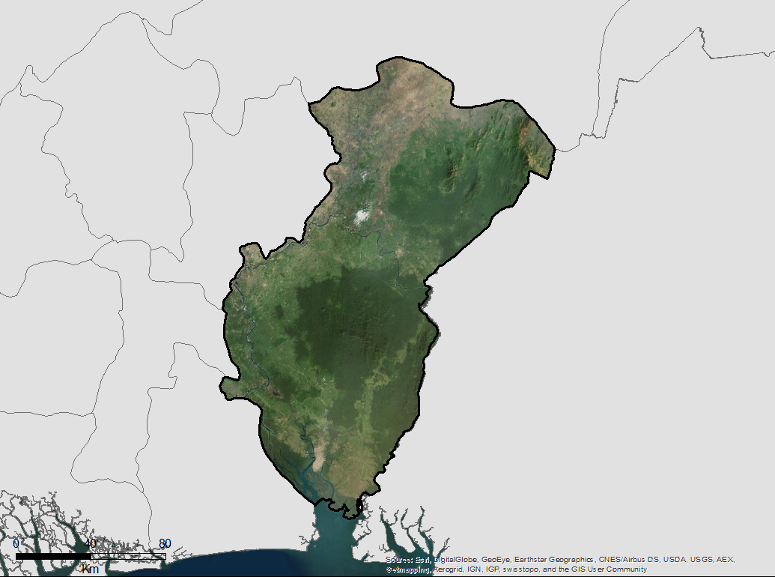
Description
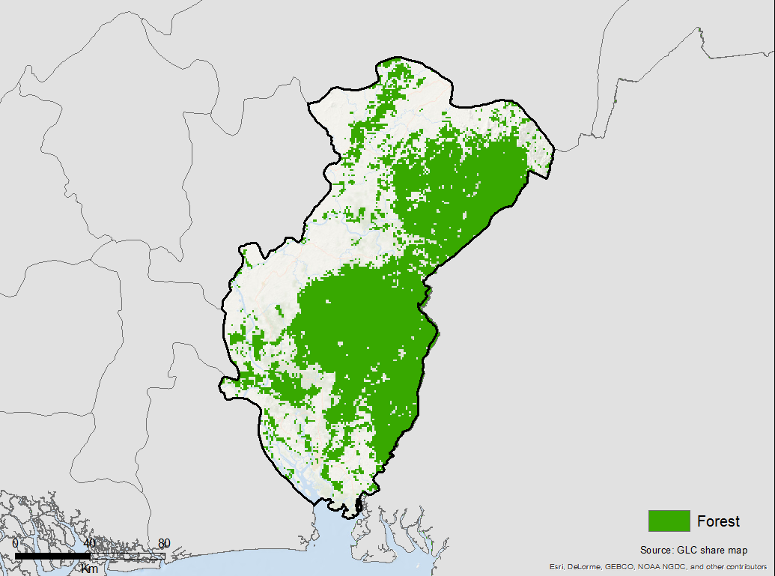
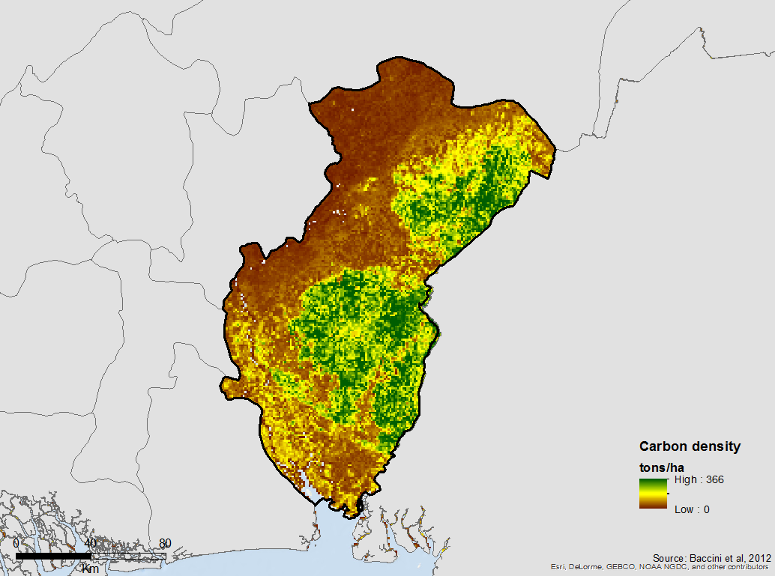
Over 90 per cent of Nigeria’s forests have already been cleared, and more than 50% of forested areas that remain in the country are found in Cross River State. Approximately 75% of Nigeria’s endangered tree species are only found in Cross River State. The State is considered one of the richest biodiversity reserves in all of Africa and is part of the “Gulf of Guinea” forests, a global biodiversity hotspot, with a rich diversity of primates, birds, butterflies, plants, reptiles, amphibians and other species.
Cross River’s forests support 22 primate species, including endemics like the Cross River Gorilla, Drill monkey, and Preuss’s Guenon monkey.
Cross River State has taken many steps to protect its forests, including the following:
- Holding a Stakeholders Summit on the Environment in June 2008;
- Enacting a two-year logging moratorium;
- Establishing and supporting an anti-logging task force to enforce the moratorium, with approximately USD$1 million committed to this cause;
- Implementing far-reaching reforms in the Cross River State Forestry Commission; and
- Committing to plant 5 million indigenous trees annually, with the development of nurseries in progress across the state.
Within 10 years, Cross River State plans to have 1 million hectares of forest lands managed for climate change-friendly activities, including carbon, non-timber forest products, sustainable tree crops and ecotourism. This could generate substantial economic value for the state.
Summary
Demographics
Urban vs. Rural Population
| Category | % | |
|---|---|---|
| Rural | 65.00 | |
| Urban | 35.00 |
Ethnic Groups
| Group | % | |
|---|---|---|
| Efik | 28.00 | |
| Ekoi | 16.00 | |
| Ejagham | 15.50 | |
| Bako | 13.70 | |
| Bete | 12.00 | |
| Boki | 7.00 | |
| Mbembe | 6.90 | |
| Other | 0.90 |
Economy
GDP Breakdown
| Category | % | |
|---|---|---|
| Services | 50.93 | |
| Agriculture | 48.50 | |
| Mining | 0.02 | |
| Industry | 0.00 |
Forest Status
Major Vegetation Types
| Category | km² | |
|---|---|---|
| Farmland | 5,934 | |
| Swamp | 3,128 | |
| Open Forest | 3,123 | |
| Tropical High Forest | 2,360 | |
| Derived Savannah | 2,234 | |
| Gmelina | 1,577 | |
| Montane Forest | 1,577 | |
| Oil palm, Rubber | 700 | |
| Settlement | 542 | |
| Mangrove | 492 | |
| Waterbody | 404 | |
| Grazing Field | 28 |
Drivers of Deforestation
Primary Direct drivers of deforestation in Cross River State: Commercial agriculture, subsistence agriculture, Logging/timber extraction Mining, Fuel wood extraction practices dominate the list of deforestation drivers.
Indirect causes of deforestation in Nigeria
The underlying causes of deforestation and forest degradation can be grouped under macro economic factors, governance factors and other factors (including demographic technological and cultural factors).
Macro economic factors
The higher profitability of agriculture is the main economic factor underlying the conversion of forests to other uses. Other macro economic factors include external debt; foreign exchange rate policy and trade policies governing the sector. For example, the ban on log and sawn timber export has contributed significantly to this inefficiency by keeping prices lower than their true competitive levels. This has continued to protect the inefficiency of the wood industry. According to a World Bank study’s analysis, four states (for which complete data are available) subsidized the forest industry to the tune of US $6.5 million in 2003 through a failure to adjust their fees to their real levels and a failure to capture revenues lost through illegal logging. This study estimated that between 2001 and 2003, the four states lost US $ 18.7 million from these sources.
Governance factors
Deforestation and degradation can result from the combined impact of poor forest tenure arrangements and weak forestry institutions, which in turn determine the set of incentives that leads to overexploitation.
Outdated forest laws
The legislative structure for forest management in Nigeria has remained largely unchanged since colonial times. Forest resources fall under three main categories: Forest Reserves, State and private tree plantations, and ‘free areas’. The colonial legislation set a number of precedents that are still evident today, including a policy thrust based upon the expansion of reserved areas and plantations, in which communities have very limited rights. The current National Forest Policy (1988), 11 continues this trend by focusing on achieving national self-sufficiency in wood production and a doubling of the reserved forest area. However, the status quo appears to have continued largely unchanged by this policy environment. The role of rural communities in forest management and the importance of forest resources to the rural poor have not been recognized so far.
No integration with other ministries:
Government agricultural programmes, and the potential expansion of the solid minerals sector, have a significant impact on forestry in Nigeria, with this largely being overlooked in national planning processes. Forestry and the environment in general, is not effectively integrated across national planning, despite the presence of mainstreaming mechanisms (such as the inactive biodiversity inter-ministerial committee).
Land tenure:
Land tenure laws fail to formally recognize community tenure of land removing an incentive for villages to manage their land resources more effectively. The rights of communities over the forest sector worsened following the Land Use Decree of 1978.
Weak capacity at Federal level:
The management of forest resources and the right to generate revenue from the forest estate are both vested in the State Governments at present. The 1978 Land Use Decree, which vests all land in the hands of the State Governors, strengthened this mandate. The role of the Federal Government appears somewhat limited, although the Federal Department of Forestry (FDF) holds the remit to advance national forest policy. The FDF is in a weak position, having suffered from a lack of capacity development over last fifteen years. The National Forest Development Committee (NFDC) is the forum that brings together all the State Forestry Directors and is chaired by the Director of the FDF. It provides an important institutional link between the Federal authority and the States. In recent times it has been involved in guiding forest policy and legislation development.
Weak capacity at state level:
This lack of capacity and funding situation is reflected at the state level, where the State Forestry Departments lack capacity to manage forests effectively. On the other hand, forestry plays a pivotal role in State finances for example, in Ekiti State, with 40 % of Internally Generated Revenue being raised from timber royalties and license fees in 2002. Nevertheless, the funding of government agencies remains weak and there is very limited civil society capacity to compensate for this deficiency.
Absence of forest management planning: An important cause for deforestation within the forest reserves can be linked to state forestry departments who have abandoned any form of forest management for natural forest since the 1970s. As a result, reserve forests are being treated as an infinite resource with no effective policies in place to regulate their harvesting. An example of this is the practice of allocating short-term concession of 1 to 3 years that encourage annual re-entries thereby totally degrading the forests. In many reserves management amounts to salvage logging for the last remaining trees.
High revenue targets and low timber fees:
The forest revenue system of the states has also contributed to the forests’ demise. The allocation of concessions is by discretion and annual timber removal is driven by the states’ revenue targets. These are set administratively without regard to what actually exists in the forest or what can be sustainable harvested. A World Bank Forestry Economic Study for Nigeria in year 2005 showed that low timber fees have had a direct impact on the efficiency of forest industry, costing the state significant losses in revenue as well as causing wastage of valuable timber resources. Other reasons for degradation in the forest reserves include inefficient wood-utilization by industry and, therefore, a higher demand for industrial grade timber, and illegal logging.
De-reservation by state governments:
In addition, forest estates are being de-reserved by some state Governments and the State Forest Departments who have been resist the spate of requests from corporate and influential individuals for excisions from the forest estate for the establishment of agricultural cropland. The unfortunate impression has thus been created that the forest estate exists as a land bank as the demands for de-reservation continue nationwide.
Ban on wood export:
In addition, the ban on log and sawn timber export has contributed significantly to this inefficiency by keeping prices lower than their true competitive levels. This has continued to protect the inefficiency of the wood industry. According to this World Bank study’s analysis, four states (for which complete data are available) subsidized the forest industry to the tune of US $6.5 million in 2003 through a failure to adjust their fees to their real levels and a failure to capture revenues lost through illegal logging. This study estimated that between 2001 and 2003, the four states lost US $ 18.7 million from these sources.
Demographic factors
A growing rural population and migration to the agricultural frontier increases the pressure on forests. An increasing population in urban and rural areas also raises the demand for food and other land-based commodities, thus, requiring more land to produce them.
Technological factors
Technological improvements can affect deforestation rates. The adoption of land extensive technologies inevitably results in the expansion of agriculture at the expense of forests.
Cultural factors
Sacred groves and forest areas are often protected from land conversion and degradation. However, other cultural factors exert pressure on forests. The majorities of forest communities with a few exceptions is unaware of any alternatives to unsustainable exploitation and are often divided amongst themselves as to how to best exploit the forests for their development. In a typical village individuals supported by logging interests are often pitted against hunters and NTFP collectors. Chiefs are often compromised by loggers and are unable to protect the forests for the good of the majority in the village who may depend on NTFPs and bush meat and other forest products to supplement farming income. Divided communities are often far more vulnerable to predatory logging interests and so within a few generations, their forests are cleared while the villages remain poor.
Deforestation Rates
Notes
| a. | Due to different methodological approaches and base years, Forest Status data fields may differ slightly. Data sources for each field are listed below. |
Sources
| 1. | Cross River State Government, 2006. About Cross River State About Cross River State |
| 2. | Otong et al., 2010. The Population Situation in Cross River State of Nigeria and Its Implication for Socio-Economic Development: Observations from the 1991 and 2006 Censuses About Cross River State |
| 3. | Cross River State Government, About Cross River State About Cross River State |
| 4. | Cross River State Government, Investment Promotion Bureau. Accessed on 24 June 2013, values for 2009 link |
| 5. | Calculated using values from: Cross River State Government, Investment Promotion Bureau. Accessed on 24 June 2013, values for 2009. Cross River State Government, Investment Promotion Bureau |
| 6. | Ayara, Ubi, Effiom, 2012. Adding Value to Service Sector Development in Nigeria: The Cross River State Experience, IJSST Vol. 1, No. 10 link |
| 7. | UNDP, 2013. Human Development Report. link |
| 8. | Macarthy Oyebo, Francis Bisong, and Tunde Morakinyo, A Preliminary Assessment of the Context for REDD in Nigeria, the Federal Ministry of Environment, the Cross River State’s Forestry Commission and the United Nations Development Program (Nov. 2010), A Preliminary Assessment of the Context for REDD in Nigeria |
| 9. | Oyebo, Bisong & Morakinyo 2010. A preliminary assessment of the context for REDD in Nigeria. A Preliminary Assessment of the Context for REDD in Nigeria, Own calculations |
| 10. | |
| 11. | SOURCE: NASRDA Report on Deforestation Study carried out in CRS in collaboration with FAO & CRS Forestry Commission |
Overview of Forest Monitoring and Measurement Systems
Nigeria has developed a National Forest Monitoring System (NFMS) Action Plan with institutional arrangements at both the national level, and at the state level in Cross River State. The roadmap defines the enabling legislations and laws for NFMS implementation to ensure the sustainability and transparency. In CRS, a robust forest monitoring system has been established with a functional GIS laboratory and facilities. These facilities have contributed to the capacity building stakeholders in the application of remote sensing and GIS capabilities to monitor forest changes, to generate, interpret Activity Data and to perform multiple benefits mapping. 80 sample plots have been established in about 62 local communities to estimate carbon stocks and Emission Factors, updated MRV database for CRS, including historic & real-time remote-sensing put in place. Forest Carbon Inventory (FCI) Standard Operation Manual has been prepared, produced and printed.
The construction of the FREL/FRL was initiated in 2016. Several consultations were held to discuss what the FREL will consist of including the scale and scope, as well as the estimation of historical emissions. In terms of scale, Nigeria opted for a nested REDD+ programme in which CRS was selected as pilot State. FREL is developed at CRS level as an interim measure. The scope is based on activities, pools and gases included. For activities, only deforestation has been included in the present FREL/FRL. In the pools, the above-ground biomass which constitutes the main component/largest pool is included in the FREL/FRL considering their magnitude and cost effectiveness.to monitor the pools. Finally, for the gasses, only CO2 emissions are included in the present FREL/FRL. Also, an acceptable national definition of forest is established.
Reference Levels and Targets
Deforestation Rates
Sources
| 1. | |
| 2. |
Laws, Policies & Strategies
Law 3 of 2010 – Forestry Commission Law
Establishes the Cross River State Forest Commission as a body corporate, defines its functions and powers, and clarifies its administration and operations. It also provides guidance on the management of forests, concessions, and community based forest, land use planning, afforestation, and enforcement through community enforcement officers in collaboration with government. However, the Forestry Law’s most significant provisions have not been implemented (and have no implementing regulations). This Law also defines the roles and responsibilities of all the potential stakeholders and beneficiaries of forest resources in the state. It provides all the procedures, processes and checks and balances necessary to ensure that all of the existing and potential benefits from the state’s forest resources contribute directly to the well–being of the people of CRS. It also enabled the government to allocate “carbon concessions” in the states forests [as well as biodiversity offsets, eco-tourism and watershed protection concessions.
Law No. 19 2007 – This Law establishes the Cross River State Investment Promotion Bureau as a body corporate, defines its functions and powers, and provides with respect to its administration and operations. The law also concerns registration of enterprises, investment policy and settlement of disputes between an investor and the Cross River State Government.
Law No. 17 of 2007 – This Law establishes the Cross River State Rural Development Agency as a body corporate, defines its functions and provides with respect to its administration and operation
Cross River State Strategy to Reduce Emissions from Deforestation and Forest Degradation (REDD+) This strategy was approved in 2017 and officially launched at COP 23 in Bonn. CRS developed their REDD+ strategy following the submission of Nigeria’s Intended Nationally Determined Contribution (INDC) to the UNFCCC in 2015. The CRS REDD+ Strategy is aligned to the Nationally Determined Contribution (NDC) of Nigeria, the National REDD+ Framework Strategy, and the State’s draft 30-Year Growth and Development Strategy. The REDD+ sectors in this Strategy include agriculture and energy. The geographic coverage of the strategy includes all agro-ecological zones (AEZs) of CRS – Rainforest, Montane forest, Savannah and Mangrove/swamp.
In addition, the Strategy is linked to the country’s approach to safeguards. As part of this, an analysis of the risks and benefits of a set of proposed policies and measures were considered as part of the REDD+ Strategy development by the National Safeguards Working Group.
As a pilot, Cross River State’s REDD+ Strategy is intended to inform the national strategy and serve as a model for other states – a platform for learning and structural planning for REDD+ preparedness and implementation in other parts of Nigeria. It was developed after extensive consultation from 2014- 2017.
Institutional Framework
Ministry of Environment – formulates and implements policies for the protection of the natural environment against pollution and degradation.
Ministry of Lands – responsible for establishing a land management and housing system that will provide a sustainable living environment for its citizen. Responsible for developing land registry for properties and issuing titles.
Ministry of Climate Change & Forestry CRS –Established with a mandate of initiating and driving Climate Change mitigation activities in Cross River State, the Ministry of Climate Change and Forestry works to ensure that government objectives of regenerating and protecting the forest and its natural resources are achieved. The institution charged with the implementation of the UN-REDD programme in CRS with support from the CRS forestry Commission and the Nigerian Federal ministry of Environment. The Ministry was created in November 2015 to articulate policies and strategies on climate change adaptation and mitigation by ensuring efficient utilization of the State forestry potentials. The Ministry also provides oversight on the operations of CRS Forestry Commission and the Department of Forestry, Biodiversity & Conservation. The Commission draws its powers from CRS Law No. 11 of 2011. Key activities involving adaptation include alternative means of livelihood, Clean Energy Programme, Renewable & Non-Renewable Energy and Green economy. For mitigation we have tree planting, nursery development, community-based forest monitoring and protection.
Vision statement: To be a key driver of activities in climate change adaptation, mitigation and resilience in line with global conventions.
Mission statement: To play a major role in the mitigation of climate change in the State using sustainable actions and regulatory frameworks.
Zoning & Spatial Planning
Cross River State does not have its own spatial or zoning plan. At the national level land use planning is guided by the Land Use Act of 1978. While there is no central spatial or land use plan for the entire country, there are 445 gazetted forest reserves covering 2.7 million ha, 7 national parks covering 2.509 million ha, and approximately 2.7 million ha of forest land that are ‘free’ or community forests (non gazzetted)
Engagement & Participation with Indigenous Peoples and Local Communities
The CBR+ programme in Cross River has funded 12 civil society organizations for 12 community-based projects. Several trainings were conducted to enable CSOs, including NGOs and Community Based Organizations to design and implement projects linked to the REDD+ readiness process and also build the capacity of forest dependent communities to address drivers and participate in the REDD+ process. Thus, the design of the various CBR+ projects provided a platform for community engagement and empowerment for active participation in the national REDD+ processes, particularly, in developing the REDD+ strategy for CRS. Together, the projects cover a range of issues, including i) Sustainable Forest Management/Biodiversity conservation; ii) Capacity Development to engage in climate change mitigation processes, including REDD+; iii) Sustainable Livelihoods to combat poverty; and iv) energy.
With support from the GCF, Cross River State has also conducted community trainings to involve local communities in the state MRV system.
Partnerships and Ongoing Initiatives
Centre of Excellence and Learning for REDD+
- Description
-
Cross River State plans to develop this centre of excellence to provide a knowledge platform and research hub to enable other States in Nigeria to learn from evidence-based experiences and innovations.
- Initiative Status
- In design
Clean Energy and Energy Efficiency Project
- Description
-
Clean cook stoves & biofuels, solar and energy efficient light bulbs for over 10,000 public and civil servants.
The aim of the project is to reduce emissions from carbon-intensive cooking fuels via encouraging the use of cleaner bio-fuel cook stoves, as well as to encourage the adoption of solar energy and energy efficient lighting for domestic energy requirements. The project has an estimated cost of $ 2,000,000.00, which would be financed by the private sector organization, Avila Technologies Ltd. and implementation to be handled in partnership with the Ministry of Climate Change and Forestry. The project is designed to target well-over 10,000 senior civil servants of Cross River State at the initial stage, and to be scaled-up progressively to capture the entire 18,000 civil service workforce. Beyond the civil servants, the project is intended to ultimately capture the entire State (both rural and urban dwellers).
- Partners
- MCCF Avila Tech Ltd.
- Initiative Type
- Energy Initiative
- Initiative Status
- Under discussion
Community-Based REDD+ (CBR+) Programme
- Description
-
Cross River State, which has more than 50 percent of Nigeria’s remaining tropical high forests, is host to a Community Based REDD+ Programme (CBR+) that promotes forest management and biodiversity conservation, rural livelihoods improvement with focus on climate smart approaches, capacity building for partici-pation in climate change programmes including REDD+, and sustainable energy alternatives. To date, more than 300 households across 21 communities have benefited from the Programme, which targets women, men and youth. The outcomes and experiences from the CBR+ Programme feed into Nigeria’s national REDD+ process. The programme provided a platform for community engagement and facilitated active participation in the national REDD+ processes, particularly in the development of the REDD+ strategy for CRS. Together, the projects cover a range of issues, including i) Sustainable Forest Management/Biodiversity conservation; ii) Capacity Development to engage in climate change mitigation processes, including REDD+; iii) Sustainable Livelihoods to combat poverty; and iv) energy.
Working with civil society groups, the Cross River State CBR+ Programme is aimed at redefining participatory and local-level forest management and conservation, while simultaneously improving rural livelihoods. Through this programme, villagers have improved sustainable management of their community forest and lands by developing management plans and doing reforestation and enrichment planting, including of indigenous timber species and non-timber forest products. One example is bush mango which can yield, by some estimations, up to USD 10,000/hectare annually from sales of mature fruits. Improved processing of cassava and sustainable cultivation of cocoa are also enhancing productivity and increasing household income by at least 10 percent in some of the target communities.
- Partners
- UN REDD Programme
- Funding Source
- UNDP, UNEP, FAO
Critical Ecosystems Partnership Fund (CEPF)
- Description
-
Collaborative funding initiative of the l’Agence Française de Développement (AFD), Conservation International (CI), the European Union (EU), the Global Environment Facility (GEF), the Government of Japan, the John D. and Catherine T. MacArthur Foundation, and the World Bank. Their shared interest and objective is the conservation of biodiversity hotspots – Earth’s most biologically rich yet threatened areas. Their current programme focuses on 11 countries in the Guinean Forests of West Africa Biodiversity Hotspot, including Nigeria with CRS identified as a priority site.
- Partners
- l’Agence Française de Développement (AFD), Conservation International (CI), the European Union (EU), the Global Environment Facility (GEF), the Government of Japan, the John D. and Catherine T. MacArthur Foundation, and the World Bank.
Forest Monitoring System
- Description
-
CRS established a robust forest monitoring system with a functional GIS laboratory and facilities to enable an evolutionary process towards a full, nationwide Measurement, Reporting and Verification (MRV) system. These facilities have contributed to building the capacity of stakeholders to apply remote sensing and GIS capabilities to monitor forest changes, to generate and interpret data and to perform multiple benefits mapping. 80 sample plots have been established in about 62 local communities to estimate carbon stocks and Emission Factors, and updated MRV database for CRS, including historic &real-time remote-sensing has been put in place. A Forest Carbon Inventory (FCI) Standard Operation Manual has been prepared, produced and printed.
The monitoring system applied a stepwise approach, both spatially and temporally to enable an evolutionary process towards a full, nationwide MRV system as well as a safeguard information system in Phase III, while also being useful in intermediate stages. The work accomplished towards forest monitoring in Cross-River State included, among others, capacity building, system development, technical studies reports and stakeholder engagement and activation. The Activity Data as interpreted, validated and disseminated in the state, will allow field validation for the national level, while the state-levelForest Inventory will provide data to the national REDD+ database, the format provider for the state level. Finally, for the GHG inventory completed with the determination of forest carbon stock change in CRS will allow the verification of the national GHG inventory. Like the MRV components, the data flow for SIS will be two-way, since the federal level will provide the format needed for the safeguards at state level.
The programme collected real-time data at the Cross River State level through a forest carbon inventory beginning in August 2015, which included complementary support through the Governors’ Climate and Forest Task Force (GCF). Preliminary land cover change data/Activity Data (AD) for the AFOLU sector and data for the estimation of Emission Factors (EFs) was developed through a state-level study on drivers of deforestation in 2014 and presented for stakeholder review and validation.
- Partners
- UN-REDD
- Funding Source
- UNDP, UNEP, FAO
Government Forest Legislative/Policy Framework
- Description
-
Reduce deforestation and plant 5 million trees yearly.
In 2008, the Government placed a total ban on the logging of woods in the State’s Forest Reserves. Since then,this moratorium has been in force, following the government’s institution of an Anti-deforestation Task Force that has been used to ensure compliance.On assumption of office, the Government of Cross River State, established a whole new Ministry of Climate Change and Forestry to properly deal with the issue of climate change mitigation and adaptation. The Ministry so established was given the mandate to plant five million trees yearly across the State. The Government also engaged 1,000 youths into the Green Sheriff Volunteer Scheme to aggressively combat deforestation. In 2016, the Carbon Emissions Board was established to monitor and regulate emissions within the State.
- Partners
- YESSO (World Bank)
- Initiative Type
- Public Investment
- Initiative Status
- Inmplementation
Safeguard Information System (SIS)
- Description
-
This system is currently in the process of being designed based on the Country Approach to Safeguards.
- Initiative Status
- In process of being designed
Social Housing Scheme
- Description
-
5000 residential housing units for resettlement of displaced people of Bakassi LGA of Cross River State.
The project seeks to restore the displaced Bakassi indigenes to their original habitat and occupation of fishing and tidal fish-farming. The project has an estimated cost of about $200,000,000.00 and is funded by the Africa Nations Development Programme, ANDP, in partnership with the Cross River State Government. The 5,000 housing units is being constructed in Ikpa Nkanya village, Akpabuyo Local Government Area of the State, and will benefit the Bakassi refugees who are predominantly fishermen by occupation, thus protecting their rights and livelihoods.
- Partners
- ANDP, CRSG
- Initiative Type
- Energy Initiative
- Initiative Status
- Implementation (Ground-breaking concluded Construction work in progress)
Sustainable Energy Management Project
- Description
-
Raise 36,000 hectre of fuelwood lot to enhance the sustainable provision of fuelwood across CR State.
The project has a total project value of $20,810,000. Geographically focused in the States of Cross River, Delta and Kaduna, Fuel Wood Management seeks to reduce GHG emissions from the use of fuelwood in the country’s domestic, institutional and industrial sectors through integrated and sustainable fuelwood production and utilisation, and promotion of sustainable biomass energy technologies using output-based and market-based approachesThe project is designed to comprehensively address one of the major causes of deforestation in Cross River which is unsustainable fuelwood harvesting and Delta states and land degradation and desertification in Kaduna State.The project is also designed to balance the supply and demand for fuelwood through a bottoms-up approach of leveraging private sector resources and provide inclusive financial incentives (start-up loans, matching rebate schemes) and market mechanisms for sustained market supply and demand for energy efficient stoves/kilns and certified fuelwood.
- Partners
- United Nations Development Programme (UNDP), Global Environment Facility (GEF)
- Initiative Type
- Energy Initiative
- Initiative Status
- Project Inception and Scoping