
Madre de Dios, Peru
Peru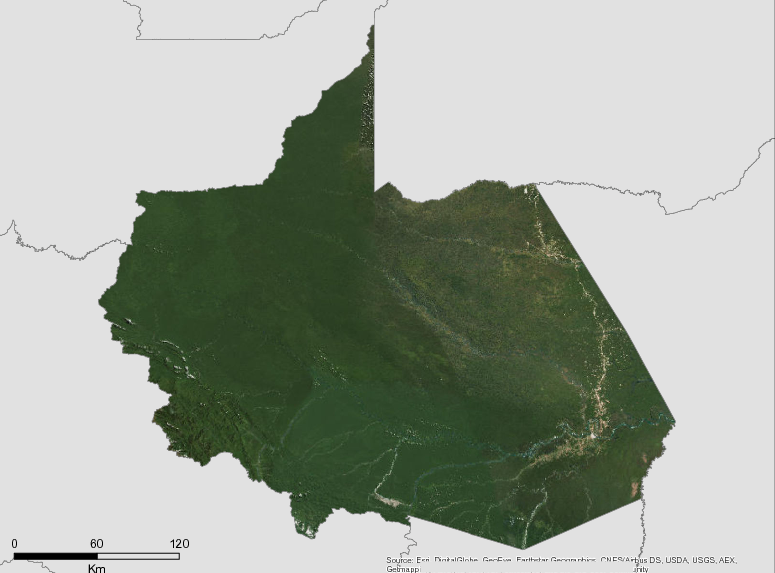
Description
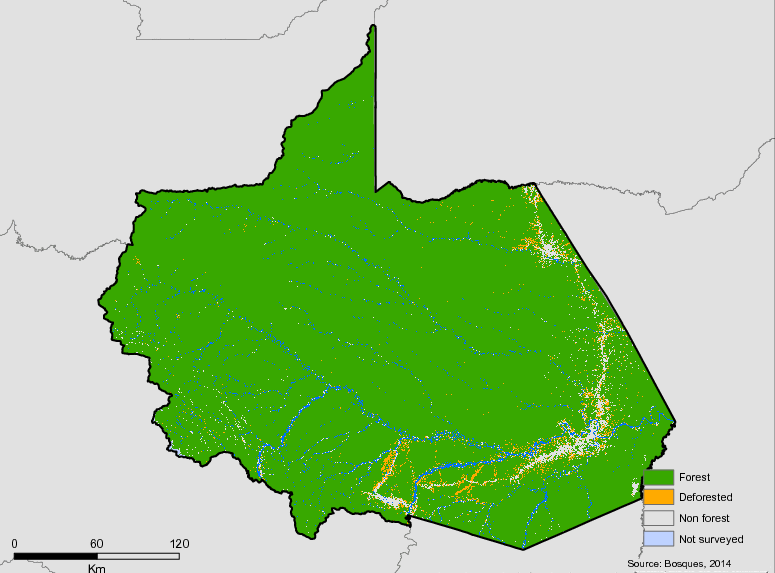
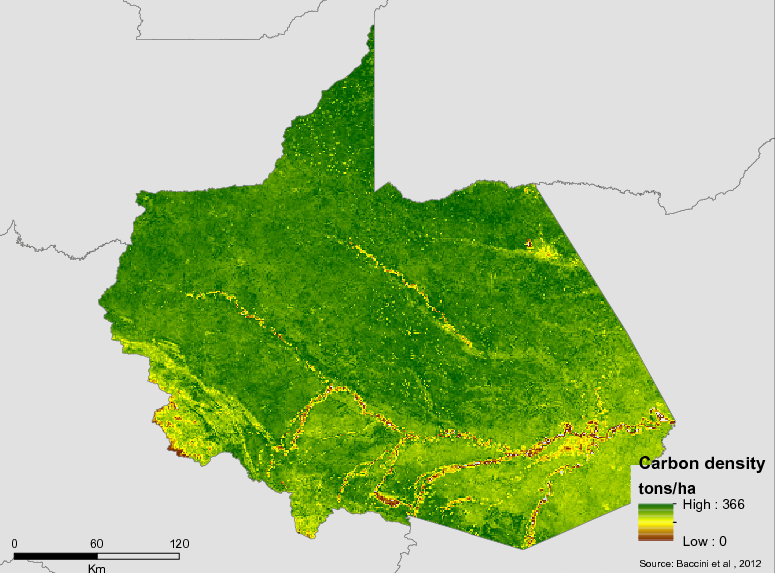
The Madre de Dios Region is located in the south-eastern Peru, bordered to the north by Ucayali and Brazil, to the west by Cusco, and to the south by Puno, and to the east by Bolivia and Brazil. The region spans 85,301 km2, representing 6.6% of the national territory and 15.3% of the forest.
Provinces in Madre de Dios include Tambopata (42.58% of the departmental area), Manu (32.54%) and Tahuamanu (24.88%). It is mainly covered by subtropical forests where various productive activities are carried out, including the extraction of gold, wood and chestnuts. Recently the region has invested in ecotourism.
Due to its remote location the regions has faced limited access to communication and transportation infrastructure, which has isolated it from the rest of the country and limited economic development.
The region is endowed with a great potential in natural resources, and is considered the “Peruvian capital of the biodiversity”. There are three important protected areas: the Manu National Park, the Bahuaja-Sonene National Park and the Tambopata National Reserve.
Additional information can be found on the GCF Impact Platform.
Summary
Demographics
Urban vs. Rural Population
| Category | % | |
|---|---|---|
| Urban | 76.00 | |
| Rural | 24.00 |
Ethnic Groups
| Group | % | |
|---|---|---|
| Amarakaeri | 1043 | |
| Matsiguenga | 705 | |
| Ese’ejja | 588 | |
| Piro | 507 | |
| Shipibo-Conibo | 301 | |
| Huachipaeri | 258 | |
| Pukirieri | 168 | |
| Kichwaruna | 116 | |
| Arazaeri | 87 | |
| Toyoeri-Amahuaca-Matsiguenga | 77 | |
| Toyoeri-Shipibo-Conibo-Ese’ejja-Arazaeri-Matsiguenga | 48 | |
| Kisamberi-Sapitieri-Amarakaeri | 47 | |
| Amahuaca | 40 | |
| Marinahua | 20 |
Economy
GDP Breakdown
| Category | % | |
|---|---|---|
| Oil and Mining | 46.53 | |
| Other sectors | 23.39 | |
| Other service sectors | 12.93 | |
| Commerce | 10.49 | |
| Building | 6.66 |
Forest Status
Major Vegetation Types
| Category | km² | |
|---|---|---|
| Mixed communities of bamboos, or mixed pacales, associated with scattered trees in hills | 24,565 | |
| Others | 23,152 | |
| Dense semi-deciduous forests in hills | 14,463 | |
| Dense semi-deciduous forests in plains | 13,143 | |
| Mixed communities of bamboos, or mixed pacales, associated with scattered trees in plains | 5,032 | |
| Arboreal swamp communities (renacales and palm groves) | 4,830 |
Forest Management
| Category | km² | |
|---|---|---|
| National Protected Areas | 39,874 | |
| Non-timber forest concessions | 10,576 | |
| Timber forest concessions | 8,840 | |
| Concessions for conservation | 1,907 | |
| Ecotourism concessions | 354 | |
| Concessions for Forestation and Reforestation | 123 | |
| Private Conservation Areas - ACP | 36 |
Drivers of Deforestation
Currently, in Madre de Dios there is no specialized study to develop and quantify the drivers of deforestation. However, according to the Biological Diversity Strategy 2021 of Madre de Dios, the causes of deforestation are “illegal logging, mining, land use change, urban growth, and hydrocarbon and infrastructure activities and invasions”.
Deforestation Rates
Notes
| a. | Due to different methodological approaches and base years, Forest Status data fields may differ slightly. Data sources for each field are listed below. |
Sources
| 1. | IIAP. La Región Madre de Dios link |
| 2. | INEI 1996, PERU: SUPERFICIE, POBLACION Y DENSIDAD POBLACIONAL DE LAS PROVINCIAS POR REGION, SEGUN DEPARTAMENTO link |
| 3. | Instituto Nacional de Estadística e Informática. |
| 4. | INEI, 2012. Distribución de la Población Rural y Urbana Proyectada |
| 5. | INEI – Informe Técnico Agosto 2010 |
| 6. | Perfiles jurisdiccionales de las regiones integrantes del Grupo de los Gobernadores por el Clima y los Bosques en el Perú |
| 7. | UNDP, 2013. Human Development Report. The Rise of the South: Human Progress in a Diverse World, New York |
| 8. | Principales Partidas Exportadas Según UBIGEO, Madre de Dios link |
| 9. | Plataforma Geobosques MINAM, área de bosque del año 2001 |
| 10. | Geobosques 2016 |
| 11. | GeoBosques |
| 12. | Fuente: Inforeme Forestal 2008. IDE Gobierno Regional Madre de Dios |
| 13. | Estrategia de Diversidad Biológica al 2021, 1era edición. Puerto Maldonado: 2015. |
| 14. | Biological Diversity Strategy 2021 of Madre de Dios |
Overview of Forest Monitoring and Measurement Systems
Currently, the Ministry of the Environment handles data on forest cover and deforestation through its Geobosques platform. In addition, the National Forestry and Wildlife Service issues deforestation alerts through its satellite monitoring unit.
Reference Levels and Targets
Deforestation Rates
Sources
| 1. | Rio Branco Declaration based on national FREL |
| 2. | GeoBosques |
Laws, Policies & Strategies
Strategies and Policies
Regional Development Plan 2014-2021– This plan is an instrument of strategic planning management adjusted to the Strategic Plan of National Concerted Development. It contains the vision of the future, a situational analysis of the province, the provincial policy guidelines, objectives, goals and strategic programs, as well as the indicators for the measurement of the progress and fulfillment of the objectives, within the framework of an open economy with a market vision, in order to raise the standard of living of its citizens, improve the income of local producers and generate conditions to attract investment that generates quality jobs.
Regional Strategy on Biological Diversity and its Action Plan 2014-2021 – The plan seek to improve management of biodiversity and benefit all inhabitants through its proper use. This document aims to strengthen the environmental governance of the Regional Government of Madre de Dios in the conservation of biodiversity, knowing that this term is synonymous with “sustainable use” and that it will benefit the population in general. Likewise, it serves as a guiding tool to face the various threats that are seriously affecting the region.
Laws and Regulations
Regional Ordinance 0026-2017-GRMDD / CR – Declares the Forest Zoning process of regional interest. Also, the norm instructs the Regional Directorate of Forestry and Wildlife to prepare a technical study and coordinate the process. Currently, with the support of the SERFOR-CAF project, the Forest Zoning Roadmap is being carried out and a technical committee is in charge of the subject.
Regional Ordinance 3/2017 – Declares of necessity and regional interest, the formalization of small-scale mining and artisanal mining in Madre de Dios, which enables mining operations to be carried out in compliance with environmental protection norms, using clean technologies and environmental remediation mechanisms, as well as recovery of deforested areas, contributing to the integrated development of the region, in accordance with Legislative Decree No. 1293 and other provisions issued at the national and regional levels that contribute to the implementation of this regional standard.
Regional Ordinance 2/2014 – Creates the Regional Environmental and Forest Authority (ARA MDD), as a decentralized body dependent on the Regional General Management.
Regional Executive Resolution 150/2014 – Approves the Organization and Functions Manual (MOF) is a normative, guiding and operational management instrument that aims to describe the specific functions, requirements, location and relationships at the level of position or position of work, developing them from the organizational structure , established in the Regulation of Organization and Functions, as well as on the basis of the requirements of positions considered in the Table for Personnel Allocation; in the Dependencies that make up the Regional Government of Madre de Dios. It defines the democratic, decentralized and deconcentrated organization of the Regional Government according to the Constitution and the Basic Law of Decentralization.
Regional Ordinance No. 013-2014-RMDD / CR- Approves the Regional Strategy of Biological Diversity of Madre de Dios 2021. According to the Regional Strategy on Biological Diversity, conservation objectives include maintaining the 2013 populations of species of flora and fauna used by humans as well as populations of endemic, threatened, land key species in Madre de Dios.
Regional Ordinance 021-2013-RMDD / CR – Creation of the Regulation of the Regional Conservation System of Madre de Dios, which was subsequently approved with Regional Decree N ° 001-2014-GOREMAD / PR. This was taken as part of the implementation measures of the Biological Diversity Strategy.
Regional Ordinance 17/2013 – Creates the Regional Environmental Information System Of Madre De Dios (SIAR-MDD), with the purpose of establishing and guaranteeing a fluid exchange of information among the public institutions of the Region and which is fully available in a useful and timely manner to the various users and agents with decision-making power.
Regional Ordinance 002-2012-GRMDD / CR–
Under the jurisdiction of President Jose Luis Aguirre Pastor, the internal regulations of the Regional Environmental Commission are approved and sent to the Regional Agrarian and Environmental Commission through the Official Letter No. 302-2011-GOREMAD-CR / CD.
Ministerial Resolution 301/2010- transfers functions of forest management for the regional government of Madre de Dios.
Regional Ordinance 011-2010-GRMDD / CR Creates the Regional Environmental Commission and establishes its functions which include the development of instruments, contribution to the development of systems, preparation of improvement proposals and the achievement of commitments related to Environmental Management. Later it is modified with the Regional Ordinance Nº 002-2012-RMDD / CRto incorporate the CAR to the Provincial Municipality of Manu
Regional Ordinance 032-2009-GRMDD / CR- The Ecological Economic Zoning of Madre de Dios is approved at the macro level with a 1: 250,000 scale with 270 pages and a map sheet. Likewise, it establishes its obligation for the entire department, through a dynamic and flexible process. The creation of the Regional Institute of Territorial Research is also ordered in order to be responsible for ensuring the proper monitoring of this process.
Regional Ordinance 23/2009 – approves the Economic Ecological Zoning Study of the Department of Madre de Dios, at a macro level at a scale of 1:250,000, as a basic instrument of territorial planning; for the implementation of development policies, programs, public and private investment projects, which aim to promote the sustainable development of the department.
Institutional Framework
Regional Directorate of Agriculture of the Regional Government of Madre de Dios (DRA) – is a third-level organizational line organ, hierarchically and administratively dependent on the Regional Management of Economic Development, is responsible for the organization, planning, management, coordination, evaluation, supervision , control and compliance with the functions in agrarian matters established in Article 51 of Law No. 27867 Organic Law of Regional Governments, as amended by Law No. 27902.
The Regional Directorate of Production of the Regional Government of Madre de Dios – is a third-level organizational line organ, hierarchically and administratively dependent on the Regional Management of Economic Development, is responsible for the organization, planning, conduction, coordination, evaluation, supervision, control and fulfillment of the functions in matters of fishery and industry established in Articles 52 and 54 of Law No. 27867 of the Regional Government, modified by Law No. 27902.
The Regional Directorate of Forestry and Wildlife (DRFFS) – is a body of line of third organizational level, hierarchically and administratively dependent on the Regional Management of Natural Resources and Environmental Management, is responsible for managing the rational and sustainable management and use of forest and wildlife heritage with the participation of the actors involved, control the application of the norms and strategies in accordance with the national policy and the conservation of the ecosystems to improve the quality of life of the population within the framework of the Law N ° 29763 Forestry and Wildlife Law.
The Regional Management of Natural Resources and Environmental Management – is a second level organizational organ of the Regional Government of Madre de Dios, is an executive body, hierarchically and administratively dependent of the Regional General Management, is responsible for planning, driving , coordination, evaluation, supervision and oversight of specific sectorial functions in the area of protected areas, the environment, and the administration of forest resources at the regional level.
The Regional Management of Planning, Budget and Territorial Conditioning – depends hierarchically and administratively on the Regional General Management, responsible for the management of the technical processes of the Administrative Systems of Strategic Planning, Public Investment Projects, Budget and Taxation, Territorial Conditioning, Institutional Development, Rationalization and Administrative Modernization.
The Regional Management of Natural Resources and Environmental Management is a second level organizational organ of the Regional Government of Madre de Dios, is an executive body, hierarchically and administratively dependent of the Regional General Management, is responsible for planning, driving , coordination, evaluation, supervision and oversight of specific sectorial functions in the area of protected areas, the environment, and the administration of forest resources at the regional level.
Zoning & Spatial Planning
Madre de Dios finalized its economic and ecological zoning in 2009 at a scale of 1: 250,000. The plan guides implementation of development policies, programs, public and private investment projects and was formalized through Regional Ordinance 23/2009. The ZEE is other territorial management instruments such as the Concerted Development Plan 2017-2021, Regional Environmental Policy and Regional Environmental Management System, Regional Strategy of Biological Diversity of Madre de Dios to 2021, Urban Development Plan Puerto Maldonado 2021 (Provincial Municipality of Tambopata).
Engagement & Participation with Indigenous Peoples and Local Communities
The Regional Government of Madre de Dios has an Agrarian Commission, Environment, Amazon and Native Communities. It is responsible for recommending pertinent decrees to ensure the protection of the rights and territories of the native communities. Also, the Sub-Management of Citizen Participation and Native Communities, which is overseen by the Regional Management of Social Development, is responsible for the dissemination of laws, decrees and ordinances that ensure the protection of native communities.
Partnerships and Ongoing Initiatives
Avoided deforestation for sustainable forest management in forest concessions for timber production with FSC certification (Maderacre and Maderyja)
- Description
-
The main objective is emission reductions validated by the Verified Carbon Standard (VCS) and certified by the Climate and Biodiversity Alliance Cammunity. The project has a concession until 2035 and is still under implementation.
- Partners
- AIDER
- Initiative Type
- REDD+ Project
- Initiative Status
- In Progress
Carbon, social and biodiversity baseline for the "Los Amigos" Conservation Concession
- Description
-
The concession in the river basin Los Amigos was created in July 2001. The project began in 2008 and currently continues operate actively. The goal is to design a Biological Station in Madre de Dios to train professionals and promote research on biological resources and their environment.
- Partners
- Partnership Conservation of the Amazon basin (ACCA)
- Funding Source
- Partnership Conservation of the Amazon basin (ACCA)
- Funding Amount
- $50M
- Initiative Type
- Technical Assistance Partnership
- Initiative Status
- In Progress
Execution of contract partial operations of management in the Tambopata National Reserve and Bahuaja-Sonene National Park
- Description
-
The management contract was issued by the Peruvian Government in 2007. AIDER assumes responsibility for operations since 2008 with a duration of 20 years. The project has already completed sale carbon credits to various national and international buyers.
- Partners
- AIDER
- Initiative Type
- REDD+ Project
- Initiative Status
- In Progress
Implementing Strategies for transition at regional level towards a low-emission rural development in Indonesia, Peru, Mexico, Colombia and Kenya
- Description
-
Development of policies and monitoring instruments for rural development plan for the Amazon.
This project seeks reduce emissions of greenhouse gases (GHG) emissions associated with deforestation and promote sustainable use of natural resources in the field of six regional governments in the Peruvian Amazon as contribution to mitigation and adaptation to climate change, biodiversity conservation, improved livelihoods of the local population and the development of practices regional, national and international policies and market mechanisms for rural development under emissions.The project will be implemented in two scales. At the interregional scalepolicies and monitoring instruments will be developed for rural development plans for the Amazon under a competitive, inclusive and low emission approach. The second scale is local and focuses on the basin of the Pachitea to develop a platform for low-emission rural development and strengthen capacities of local authorities and indigenous organizations. Work on the Pachitea is led by Instituto del Bien Comun – IBC.
The project is expected achieve as first product the development of an Interregional Plan for promotion of a low emission development involving all participating regions. The project will also develop a platform for performance monitoring territorial performance as well as models of competitive and inclusive governance and incentives to reduce deforestation.
- Partners
- Regional Governments, Forest Trends, IBC
- Initiative Type
- Technical Assistance Partnership
- Initiative Status
- Under Implementation
Phase 3 of the Forests, Farms and Finance Initiative
- Description
-
Phase 3 of the Forests, Farms and Finance Initiative “Building bridges between local policies, REDD + and initiatives for sustainable supply chains” will support the construction of jurisdictional low emissions rural development plans.
In Peru, the 3FI initiative is led by the Earth Innovation Institute and the Amazon Regional Council (CIAM, in Spanish) and is developing incentives for low-emission rural development under a production and protection approach. The activities of 3FI in the Peruvian Amazon are led by the regional governments and are open to the participation of any public or private institution that wishes to contribute. 3FI considers with special attention the participation of indigenous peoples and women in the activities to be carried out. The initiative is based on empowering the progress of each region to make the necessary incentives proposals by building tailored instruments for each jurisdiction. Output from the project include: (a) developing regional plans or roadmaps to promote a transition to low-emission rural development; (b) promoting a transparent dialogue process at the regional level which includes the perspectives of indigenous peoples and women; and (c) developing a business plan to attract private investment and promote low-emission rural development in the Peruvian Amazon.
- Partners
- Earth Innovation Institute, CIAM
- Initiative Type
- Technical Assistance Partnership
- Initiative Status
- Under Implementation
Public-Private Coalition of the Declaration of San Martin
- Description
-
This Coalition of 52 member organizations from government, private sector and civil society seeks to promote sustainable rural development and create synergies between regional governments, the private business sector, producer organizations, NGOs and organizations representing indigenous peoples. The coalition has established an agenda to promote development amazon focused on: i) ensuring land rights and forest native communities and agricultural and forestry producers; ii) optimizing the sustainable use of forest landscapes in the Amazon; iii) building the set of enabling conditions and generate the necessary changes for rural development low emission. Goals of the coalition include reducing deforestation associated with agriculture, creating roadmaps for public – private coordination by Amazon region, designing an architecture of financing, increasing the productivity of agricultural crops and increasing the value of forests and promote forest plantations. It is expected that these measures will open a pathway to build sustainable jurisdictions, especially in the value chains of the Amazon through a Production – Protection approach. A group of companies from the Pro Ucayali network, comprising the largest companies in the region, have joined the coalition.
- Partners
- GORE San Martin, GORE Ucayali, GORE Amazonas, GORE Madre de Dios, GORE Huanuco.
- Initiative Type
- Public Private Partnership
- Initiative Status
- Agreement Signed
REDD project in Brazil nut concessions in Madre de Dios
- Description
-
Reducing deforestation of 500,000 hectares in concessions on Brazil nuts
According the IBD the project is reevaluated and has an amount of USD 1,031,170 undisbursed. BAM works with producers CEPROCAM. It had sales with institutional buyers LAN, La Positiva. Total cost is US $ 4.5M.
- Partners
- Bosques Amazónicos
- Initiative Type
- REDD+ Project
- Initiative Status
- In Progress
Saweto Dedicated Grant Mechanism – Peru
- Description
-
Support Indigenous Peoples in the Peruvian Amazon in their efforts to establish the enabling conditions for sustainable forest management practices. Project Components:
Component 1 – Native Land Titling
Component 2 – Indigenous Forestry Management
Component 3 – Project Management, Monitoring and Evaluation
- Partners
- AIDESEP, CONAP, WWF
- Funding Amount
- US$5.5 million
- Initiative Type
- Iniciativa de Pueblas Indigenas
- Initiative Status
- Under implementation
Sustainable Forestry Development Program, inclusive and competitive – SERFOR – CAF
- Description
-
This project supports regions in strengthening their management capacity and monitoring in forestry, with their equipment offices and checkpoints. The project also has specific activities with regional governments and the management of protected areas, forest land, advancing the national forest inventory, implementation of spatial data infrastructures, implementation of anticorruption plan in the forestry sector, improved control and forest monitoring and promotion of forestry value chains. The project also has a grant fund for submitting public investment projects at regional level.
- Partners
- National forest and Wildlife Service, Andean Development Corporation, regional governments
- Funding Source
- National forest and Wildlife Service, Andean Development Corporation, regional governments
- Funding Amount
- $76M
- Initiative Type
- Technical Assistance Partnership, Public Investment
- Initiative Status
- Under Implementation