
Ucayali, Peru
Peru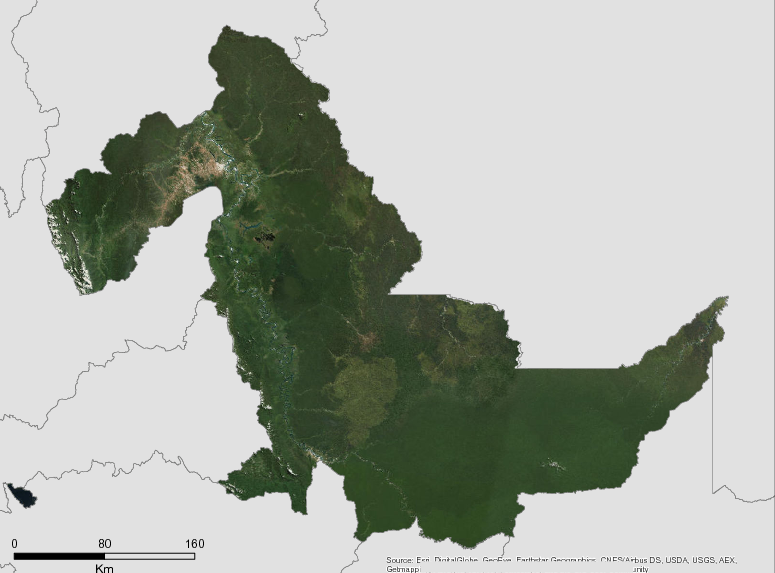
Description
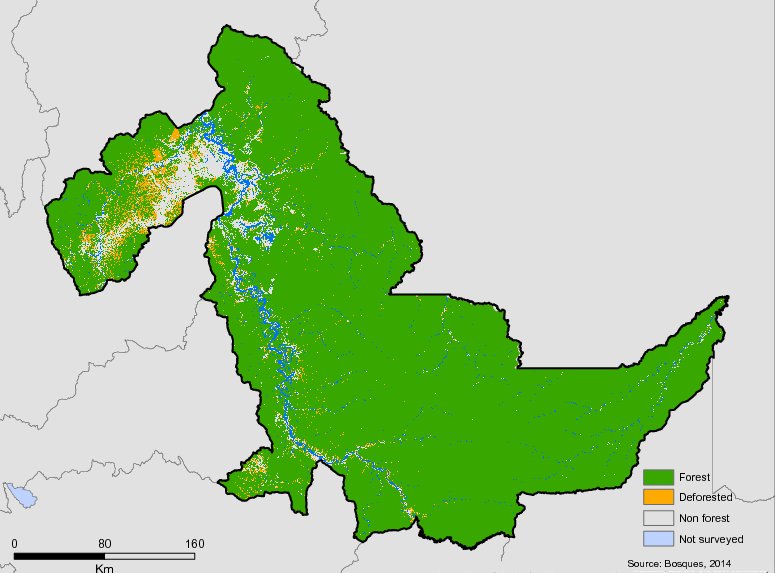
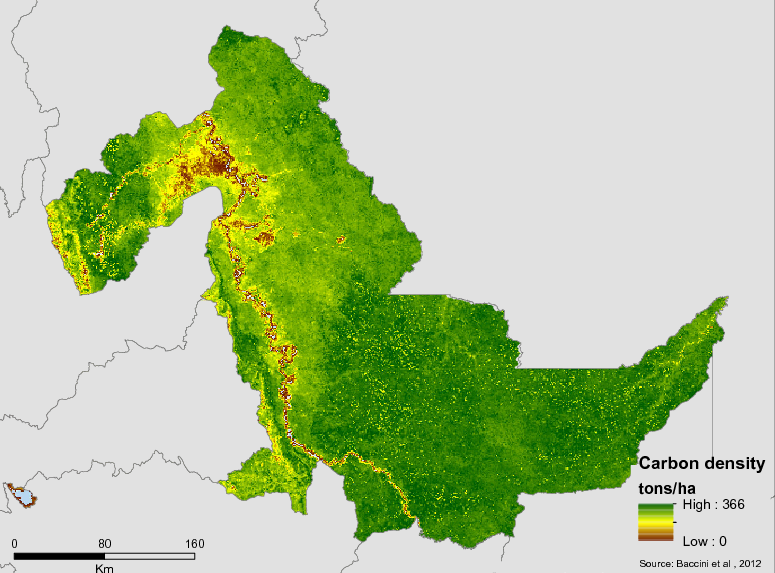
Located in the eastern part of Peru, the region of Ucyali is distinguished by three distinct ecosystem landscapes: lowland rainforests, transitional ‘brow’ rainforests, and highraignforests. It is bordered to the North with the department of Loreto, to the West with the departments of Huánuco, Pasco and Junín; to the South by the departments of Cuzco and Madre de Dios and to the East with the Republic of Brazil. The capital of the department of Ucayali is the city of Pucallpa, located at 154 meters above sea level.
The department is comprises of four provinces: Coronel Portillo, Atalaya, Padre Abad and Purús; and 17 districts. The region has a wealth of natural resources and a high availability of water resources, flora and wildlife that provide a basis for productive economic activities.
The productive base of Ucayali is diversified, with the agricultural sector contributing to 19 percent of the region’s economic output during the period 2001-2010. Although traditional crops such as banana, cassava, papaya, rice and corn continue to be important, there is a diversification towards higher value crops such as oil palm, cocoa, coffee and camu camu.
Ucayali is also characterized by having a very dynamic commercial activity because Pucallpa is the most important city in the central jungle of Peru. Manufacturing accounts for 15 percent of regional production and is largely supported by the development of the timber industry.
Summary
Demographics
Urban vs. Rural Population
| Category | % | |
|---|---|---|
| Urban | 73.60 | |
| Rural | 26.40 |
Ethnic Groups
| Group | % | |
|---|---|---|
| Asheninka | 17793 | |
| Shipibo-Conibo | 14633 | |
| Cashinahua | 2419 | |
| Piro | 1863 | |
| Cashibo-Cacataibo | 1380 | |
| Yaminahua | 600 | |
| Sharanahua-Marinahua | 486 | |
| Culina | 417 | |
| Cocama-Cocamilla | 378 | |
| Amahuaca | 261 | |
| Marinahua | 79 | |
| Matsiguenga | 60 | |
| Aguaruna (Aguajun) | 38 |
Economy
GDP Breakdown
| Category | % | |
|---|---|---|
| Other sectors | 36.50 | |
| Other service sectors | 22.15 | |
| Commerce | 17.56 | |
| Manufacturing | 15.11 | |
| Agriculture, Livestock, Hunting and Forestry | 8.69 | |
| Building | 8.33 |
Forest Status
Major Vegetation Types
| Category | km² | |
|---|---|---|
| Others | 53,823 | |
| Medium terrace | 13,682 | |
| High terrace | 10,862 | |
| Mountain forests | 7,047 | |
| Low terrace | 5,271 | |
| Riverside complex | 3,303 | |
| Middle Hill | 1,570 | |
| Aguajal / Palmeral | 255 |
Forest Management
| Category | km² | |
|---|---|---|
| National Protected Areas | 323 | |
| Native titled communities | 219 | |
| Indigenous Reserves | 158 | |
| Timber forest concessions | 118 | |
| Regional Conservation Areas | 14 | |
| Concessions for conservation | 8 | |
| Ecotourism concessions | 1 | |
| Concessions for Forestation and Reforestation | 0 |
Drivers of Deforestation
Ucayali does not have an official study identifying drivers of deforestation in the region. The National Strategy for Forests and Climate Change states that one of the main causes of deforestation in the whole of Amazonia is the cultivation of commercial coffee, cocoa, palm and livestock crops. Ucayali is one of the most productive regions in the Peruvian Amazon for these products.
Deforestation Rates
Notes
| a. | Due to different methodological approaches and base years, Forest Status data fields may differ slightly. Data sources for each field are listed below. |
Sources
| 1. | Según Informe “Situacion de limites político-administrativo del Departamento de Ucayali al año 2017, elaborado por la Direccion de Gestion del Territorio de la ARAU – GOREU |
| 2. | https://www.inei.gob.pe/estadisticas/indice-tematico/poblacion-y-vivienda/ |
| 3. | (Instituto Nacional de Estadística e Informática – INEI, 2014) link |
| 4. | Instituto Nacional de Estadística e Informática |
| 5. | Instituto Nacional de Estadística e Informática |
| 6. | (Programa de las Naciones Unidas para el Desarrollo – PNUD, 2013) link |
| 7. | |
| 8. | Geobosques, Forest Cover 2001 |
| 9. | Geobosques 2016 |
| 10. | |
| 11. | UN Environment, CDB Convention of Biological Diversity “https://www.cbd.int/doc/nbsap/sbsap/pe-sbsap-ucayali-es.pdf” |
Overview of Forest Monitoring and Measurement Systems
Ucayali uses the information provided by the Geobosques (Ministry of the Environment) platform for monitoring annual deforestation activity. For more timely forest monitoring, the region uses Deforestation Alert Reports based on information from the Geobosques Early Warning Module, issued by the Forestry and Wildlife Directorate.
Reference Levels and Targets
Deforestation Rates
Sources
| 1. | http://geobosques.minam.gob.pe/geobosque/view/index.php |
| 2. | Rio Branco Declaration based on national FREL |
| 3. |
Laws, Policies & Strategies
Strategies and Policies:
Regional Development Plan 2016-2021 – Short term development plan which focuses on focuses on to establish very clearly the six strategic objectives that are required for achieve the regional vision, as well as the strategic actions that allow implement these strategic decisions. One of the strategic objectives in environment and natural resource management.
Regional Climate Change Strategy –The Regional Climate Change Strategy of Ucayali is a tool to support decision-making which allows planning and the development of actions, programs and projects in a coordinated and articulated way with national policies that lead to adequate adaptation and mitigation of inevitable climate change. The Region of Ucayali, as an Amazonian region, is highly vulnerable to effects of climate change because it has a great biodiversity of flora and interrelated fauna in fragile ecosystems and settled indigenous populations on the banks of rivers and streams, which can be directly affected. This strategy highlights the need for action to adapt to changes in climate, giving priority to vulnerable areas and mitigating the effects of climate change, such as floods and damage to agricultural products. In addition, it gives priority to research, such as climate change and population health, study of the fragile ecosystems of the Ucayali Region, among others.
Regional Development Plan 2011-2021 – The plan outlines strategic medium-term economic development initiatives in Ucayali through 2021. It was formalized through Regional Ordinance 0924/2011. The plan was updated in 2016.
Laws and Regulations
Ordinance 15/2017– Ordinance finalizing the economic and ecological zoning (ZEE) for the region.
Ordinance 4/2017– Declares of Regional Interest the creation of Collective Mark “Marca Ucayali” Ordinance 01/2013, to distinguish the production of the Ucayali Region that is differentiated by: (i) being produced in the Amazon, (ii) coming (iii) their rejection of child labor, (iv) their rejection of coca cultivation, (v) promoting gender equity, and (vi) meeting international and competitive standards.
Ordinance 021-2016– In 2016 Ucayali declared the Forest Zoning process of interest through this ordinance which established a technical work team and entrusted its leadership to the Forestry and Wildlife Management Division. In 2017, SERFOR and Ucayali signed an agreement to establish a Serfor liaison office in the region.
Ordinance 006-2016 – approves Competitiveness Plan for Ucayali Palm Oil for the period 2016 – 2026
Ordinance 1/2014 – Regulation of Organization and Functions – Authority in 2014.Defines the structure and responsibility of the Regional Environment Authority. It highlights the authority of the ARA in the implementation of policies, strategies, programs and plans in the field of territorial planning, sustainable management of natural resources, conservation of biodiversity and protection of the public environment.
Ordinance 11/2014 – Officially adopts Ucayali’s Regional Strategy for Climate Change .
Ordinance 1/2013– Creates the Regional Environmental Authority of Uucayali (ARAU) as an institution dependent on the Regional General Management, in charge of consolidating, planning and exercise authority in environmental matters, territorial planning and management sustainable use of renewable natural resources within the regional scope, in charge of an official with the rank of regional manager, appointed by the Regional President.
Ministerial Resolution 019/2010 – Transfers forest management functions to the regional government of Ucayali.
Institutional Framework
Regional Environmental Authority (ARA) – Ucayali is delegated responsibility in forest management through Ministerial Resolution 019/2010 -MINAGRI. In 2013, the Regional Ordinance 001-2013 RU-CR established the Regional Environmental Authority and delegated its functions and structure. It is subdivided into 4 directorates: Forestry and Wildlife, Land Management, Conservation and Biological Diversity and Environmental Management. In 2016, the Regional Environmental Authority (Regional Ordinance 010-2016-GRU) updated the structure of functions of the Regional Government recognizing the ARA as a decentralized body.
Regional Management of Economic Development – works on issues related to agricultural, agroforestry and aquaculture value chains through the Regional Agrarian Directorate. Some initiatives to promote forestry activities are also promoted from this regional sector.
General Manager – The General Manager of Ucayali is involved in the monitoring and follow-up of some forest conservation projects such as the GEF-PNUD Sustainable Productive Landscapes. The General Manager has an active role in promoting the Low Emissions Development approach given his representation of Ucayali before the GCF Task Force.
Directorate of Agriculture – The Regional Directorate on Agriculture is the body responsible for directing, guiding, coordinating, executing, supervising, controlling and evaluating the various agrarian productive activities within its jurisdiction.
Zoning & Spatial Planning
Ucayali formally approved its ecological and economic zoning (ZEE) plan in August of 2017 through Regional Ordinance No 015-2017-GRU-CR. The zoning study is available for download, along with the zoning map, which is also available in GIS files.
Ucayali’s Strategic Plan for Concerted Development of Ucayali to 2021 establishes as a next step “to formulate and implement the Territorial Planning Plan to regulate the occupation and use of the territory, in articulated form with regional and local policies, plans and programs” .
Engagement & Participation with Indigenous Peoples and Local Communities
According to the Instituto de Bien Comun, in Ucayali there are 139 peasant communities, of which 37 are located in Atalaya, 97 in Coronel Portillo, 1 in Masisea, 2 in Padre Abad and 2 in Purus. According to the Directory of Native Communities of the Ministry of Culture (2012) there is an extension of 21874.68 km2 of the territory of native communities, which represents 20.82% of the total territory of Ucayali and of which 226 native communities are titled.
Regional Ordinance No. 013-2017-GRU-CRapproves and promotes Indigenous environmental monitoring and control as a mechanism for indigenous communities to denounce any activity that affects the ancestral territory of native communities. Responsibility was extended to the ARA to formulate the regulations of this ordinance.
Partnerships and Ongoing Initiatives
Activities to improve forest governance in Ucayali
- Description
-
Ucayali is implementing the following actions directed by the Regional Environmental Authority financed with internal resources and with the support of civil society partners:Complete the process of the Economic and Ecological Zoning meso level;Develop Expedited Procedure for Timber Forest Concessions by an estimated 800,000 Ha;Implementation Virtual Platform for Monitoring and Control of Forest by spatial data Infrastructure (IDER);Registration forest plantations of fast growing species:. 2424.757 hectares of a total of 441 Registration plantations; Design proposals for two regional conservation areas with 151,500 ha in size, Tamaya – Abujao and Laguna Encantada (Atalaya); Development a pilot Community Forest Management (322,857.193 ha with permission from timber logging and nontimber) and a pilot of Local Forests: ( Ha 7,500.00, 7,000.00 timber ha and 500.00 hanon timber).
- Partners
- TPIH, CEDIA, GIZ, Nature and Culture International
- Initiative Type
- Technical Assistance Partnership, Public Investment
- Initiative Status
- In Progress
Carbon Fund (proposed Program Document for Reducing emissions)
- Description
-
The Ministry of the Environment and the World Bank are designing a Program Document for the Reduction of Emissions (ERPD), which leads to payment for results as a result of the implementation of actions in the field and verification of the reduction of emissions that are estimated as a result of those actions. The Program is in the design stage. The scope is limited to the San Martín and Ucayali Regions.
- Partners
- Ministry of the Environment, Carbon Fund, world Bank
- Funding Amount
- Up to USD35,000,000 in potential purchases of reductions in the San Martin and Ucayali Regions. The final budget of the program will depend on the signing of the agreement for reducing emissions and obtaining them.
- Initiative Type
- Emission reduction program
- Initiative Status
- In ERPD design (emission reduction program document)
Forest Investment Program (FIP)
- Description
-
The overall objective of FIP is:
- support the efforts of developing countries in reducing emissions from deforestation and forest degradation;
- promoting sustainable forest management that lead to reduced emissions of greenhouse gases and preservation of carbon stocks.
In Ucayali the investment plan is under development for the province of Atalaya, and in San Martin for the Tarapoto – Turimaguas area.Both plans are expected to be finalized in 2017.Public investments will be used to support integrated forest landscape management, governance, legalization of lands, property titling and registration, environmental assets valuation.
- Partners
- Peruvian State Funds Investment Climate
- Funding Source
- Peruvian State Funds Investment Climate.
- Funding Amount
- $50M
- Initiative Type
- Public investment, Technical Assistance Partnership
- Initiative Status
- In Design
Implementing Strategies for transition at regional level towards a low-emission rural development in Indonesia, Peru, Mexico, Colombia and Kenya
- Description
-
Development of policies and monitoring instruments for rural development plan for the Amazon.
This project seeks reduce emissions of greenhouse gases (GHG) emissions associated with deforestation and promote sustainable use of natural resources in the field of six regional governments in the Peruvian Amazon as contribution to mitigation and adaptation to climate change, biodiversity conservation, improved livelihoods of the local population and the development of practices regional, national and international policies and market mechanisms for rural development under emissions.The project will be implemented in two scales. At the interregional scalepolicies and monitoring instruments will be developed for rural development plans for the Amazon under a competitive, inclusive and low emission approach. The second scale is local and focuses on the basin of the Pachitea to develop a platform for low-emission rural development and strengthen capacities of local authorities and indigenous organizations. Work on the Pachitea is led by Instituto del Bien Comun – IBC. The project is expected achieve as first product the development of an Interregional Plan for promotion of a low emission development involving all participating regions. The project will also develop a platform for performance monitoring territorial performance as well as models of competitive and inclusive governance and incentives to reduce deforestation.
- Partners
- Regional Governments, Forest Trends, IBC
- Initiative Type
- Technical Assistance Partnership
- Initiative Status
- Under Implementation
Improvement of technical capacities for the sustainable management of the bijao leaf in Ucayali farmhouses
- Description
-
The project focuses on the district of Padre Abad, Province of Padre Abad, Ucayali Region. It seeks to strengthen community associations for the sustainable management of Bijao and improve its associativity. It is estimated that the project benefits more than 250 people.
- Partners
- Municipality of Padre Abad, SERFOR
- Funding Amount
- S / 688, 241.10
- Initiative Type
- Project financed with a conglomerate of SERFOR-CAF projects and the executing agency’s own resources
- Initiative Status
- In implementation
Improvement of the environmental information service for the mapping of forest deforestation
- Description
-
The Project “Improvement of the environmental information service for the mapping of forest deforestation” is one of the four projects of the Forest Investment Program (FIP) approved for Peru. This Project seeks to strengthen the capacities of the Peruvian Government and key actors, such as indigenous peoples, to monitor deforestation. To this end, it proposes to articulate the georeferenced information systems, generate and distribute monitoring information, develop capacities to generate and distribute the information generated, the design of a community monitoring system as well as training and equipment for native communities. Specific activities for Ucayali will be defined in 2019.
- Partners
- Ministry of the Environment, Ministry of Economy and Finance, Inter-American Development Bank
- Funding Amount
- S / 39,930,000 for the entire Peruvian Amazon. Total for Ucayali not determined.
- Initiative Type
- Public investment project partially financed with resources from the CIF, operated by the IDB and deposited as a donation / loan to the Peruvian Government (60% donation / 40% loan in general for the entire program)
- Initiative Status
- At the start of execution (2018-2022)
Integrated Management of the Forest Landscape (Atalaya Ucayali) or FIP-Ucayali
- Description
-
The Project “Integrated Forest Landscape Management (Atalaya Ucayali)” is one of the four Forest Investment Program (FIP) projects approved for Peru. The project has two components: component 1. Appropriate institutional capacity for forest landscape conservation (considers allocation of land use rights and land-use planning at the community level and the construction of instruments for forest governance), and component 2. Strengthening the management and sustainable use of forest landscapes (considering promoting investment in forest landscapes and strengthening technical and business capacities for local communities and businesses for better forest management).
- Partners
- Ministry of the Environment, Ministry of Economy and Finance, world Bank
- Funding Amount
- USD 12,200,000
- Initiative Type
- Project financed with donation resources of the CIF operated by the World Bank, as a donation / loan Govt. Peruvian (60% donation / 40% loan in general for the entire program)
- Initiative Status
- At the start of execution (2018-2022)
Joint Declaration of Intent between the Governments of Peru, Norway and Germany (DCI) "Cooperation for the reduction of emissions of greenhouse gases from deforestation and forest degradation (REDD +) and to promote sustainable development in Peru"
- Description
-
The Joint Declaration of Intent (DCI) is a voluntary cooperation agreement signed by the Governments of Peru, Norway and Germany to achieve the reduction of greenhouse gas emissions produced by deforestation and forest degradation in Peru. It was signed in September 2014 with a validity until 2020 and considers actions for the conservation of forests in the Peruvian Amazon. The JIU is based on a scheme of financial incentives on the progress and / or fulfillment of deliverables or goals divided into three phases: preparatory phase, transformation phase and payment by results phase. The phases of the JIU are directly related to the strategic actions of the National Strategy on Forests and Climate Change (ENBCC) and different planning instruments for development in Peru, such as: a) the Bicentennial Plan: Peru by 2021, b) The National Environmental Action Plan (PLANAA), c) the Agreed Regional Development Plans of the Amazonian regions in Peru, d) the National Strategy on Climate Change, e) National Strategy on Biological Diversity and its Plan of Action, f ) the National Forestry and Wildlife Policy, among other instruments.
The Phase II Implementation Plan defines in more detail what activities will be carried out in the Ucayali Region. This document can be hired at: http://www.minam.gob.pe/cambioclimatico/wp-content/uploads/sites/127/2018/06/Plan-de-Implementación-Fase-II-DCI.pdf
- Partners
- Government of Peru, Government of the Kingdom of Norway Government of the Federal Republic of Germany
- Funding Amount
- Investment made so far at the national level USD6.5 M. Potential for cooperation: Up to USD240 million subject to progress in the goals of each phase and payment for results for reduction of GHG emissions linked to USCUSS
- Initiative Type
- Trilateral agreement between governments at the national level.
- Initiative Status
- In execution (Phase I and II)
Joint Declaration of Intent between the Governments of Peru, Norway and Germany (DCI) "Cooperation for the reduction of emissions of greenhouse gases from deforestation and forest degradation (REDD +) and to promote sustainable development in Peru"
- Description
-
The Joint Declaration of Intent (DCI) is a voluntary cooperation agreement signed by the Governments of Peru, Norway and Germany to achieve the reduction of greenhouse gas emissions produced by deforestation and forest degradation in Peru. It was signed in September 2014 with a validity until 2020 and considers actions for the conservation of forests in the Peruvian Amazon.
The JIU is based on a scheme of financial incentives on the progress and / or fulfillment of deliverables or goals divided into three phases: preparatory phase, transformation phase and payment by results phase. The phases of the JIU are directly related to the strategic actions of the National Strategy on Forests and Climate Change (ENBCC) and different planning instruments for development in Peru, such as: a) the Bicentennial Plan: Peru by 2021, b) The National Environmental Action Plan (PLANAA), c) the Agreed Regional Development Plans of the Amazonian regions in Peru, d) the National Strategy on Climate Change, e) National Strategy on Biological Diversity and its Plan of Action, f ) the National Forestry and Wildlife Policy, among other instruments.
The Phase II Implementation Plan defines in more detail what activities will be carried out in the Amazon Region. This document can be hired at: http://www.minam.gob.pe/cambioclimatico/wp-content/uploads/sites/127/2018/06/Plan-de-Implementación-Fase-II-DCI.pdf
- Partners
- Government of Peru, Government of the Kingdom of Norway Government of the Federal Republic of Germany
- Funding Amount
- Investment made so far at the national level USD6.5 M. Potential for cooperation: Up to USD240 million subject to progress in the goals of each phase and payment for results.
- Initiative Type
- Trilateral agreement between governments at the national level.
- Initiative Status
- In execution (Phase I and II)
National Program of Agrarian Innovation (PNIA)
- Description
-
The PNIA is a national incentive program of the Ministry of Agriculture and Irrigation (MINAGRI) that seeks to contribute to the establishment and consolidation of a modern national system of science, technology and innovation for the development of the Peruvian agrarian sector, decentralized, plural, oriented by the demand, in association with the private sector; with the purpose of increasing profitability and improving the competitiveness of the sector, through the generation and adoption of sustainable and environmentally safe technologies. This Program is conducted by MINAGRI and allows the implementation of projects oriented to innovation and technology development, which are financed by competitions. In Ucayali, 6 projects have been financed: 4 for extension services, 1 for applied research and 1 for strategic research. In San Martin, at least 23 projects have been financed: 4 for adaptive research, 1 for competency-based training, 1 for seed companies, 3 for strategic research and 14 for extension. In Huánuco, 8 projects have been financed: 5 on extension services and 3 on seed companies. In Amazonas, 26 projects have been financed: 6 for strategic research, 3 for adaptive research, 11 for extension services, 11 for competency-based training, 2 seed companies, 1 for applied research and 1 for technology transfer. In Piura, 43 projects have been financed: 3 for strategic research, 6 for adaptive research, 30 for extension services, 1 for skills training, 1 for seed companies, and 2 for technology transfer. In Loreto, 6 projects have been financed: 1 for basic research, 3 for applied research and 2 for technology transfer.
- Partners
- Ministry of Agriculture and Irrigation, National Institute of Agrarian Innovation
- Funding Amount
- Not determined for individual jurisdictions
- Initiative Type
- Incentive program for agrarian innovation at the national level
- Initiative Status
- Under implementation
National UN-REDD Peru Program
- Description
-
The UN-REDD National Program seeks to strengthen the strategic framework necessary for the implementation of REDD + and the ENBCC. Thus, it is expected to improve regional governance for the implementation of the ENBCC, NDC and REDD +, provide national or regional public institutions with instruments that facilitate the implementation of ENBCC, REDD + and NDC, develop public and private investment projects for the implementation of the policy, programs and measures prioritized in the framework of the ENBCC, to elaborate a proposal of reference level of forest emissions that integrate emissions data due to forest degradation, in addition to achieving that the indigenous approach is integrated in the module of forest cover and other SNIFFS modules in Peru, as appropriate. Specific activities for Ucayali will be defined in 2019.
- Partners
- Ministry of the Environment, UNDP, UNEP, FAO
- Funding Amount
- USD 4,065,779
- Initiative Type
- Project implemented through the national implementation modality (component under UNDP) and direct implementation (UNEP and FAO components)
- Initiative Status
- At the start of execution. Period December 2017-May 2020
Phase 3 of the Forests, Farms and Finance Initiative
- Description
-
Phase 3 of the Forests, Farms and Finance Initiative “Building bridges between local policies, REDD + and initiatives for sustainable supply chains” will support the construction of jurisdictional low emissions rural development plans.
In Peru, the 3FI initiative is led by the Earth Innovation Institute and the Amazon Regional Council (CIAM, in Spanish) and is developing incentives for low-emission rural development under a production and protection approach. The activities of 3FI in the Peruvian Amazon are led by the regional governments and are open to the participation of any public or private institution that wishes to contribute. 3FI considers with special attention the participation of indigenous peoples and women in the activities to be carried out. The initiative is based on empowering the progress of each region to make the necessary incentives proposals by building tailored instruments for each jurisdiction. Output from the project include: (a) developing regional plans or roadmaps to promote a transition to low-emission rural development; (b) promoting a transparent dialogue process at the regional level which includes the perspectives of indigenous peoples and women; and (c) developing a business plan to attract private investment and promote low-emission rural development in the Peruvian Amazon.
- Partners
- Earth Innovation Institute, CIAM
- Initiative Type
- Technical Assistance Partnership
- Initiative Status
- Under Implementation
Phase II of the Support to the Implementation of the National Strategy for the Reduction of Emissions for Avoided Deforestation and Forest Degradation in Peru "(RPP-2)
- Description
-
The RRP-2 Project 1.1. seeks to create the necessary conditions for the preparation and implementation stage of REDD + in Peru. This Project will consider strengthening spaces for citizen participation, such as the REDD + Indigenous Tables, the design of a grievance mechanism, implementing the PPIA, strengthening regional governments to implement the NDC and the ENBCC, and conducting studies for the effectiveness of strategies and land use planning instruments, contribute to the implementation of the national REDD registry, design benefit sharing mechanisms, improve the forest monitoring platform, update the forest reference level, design early response protocols to the monitoring reports of forests and implement a pilot of the Safeguards Information System. Specific activities for Amazonas will be defined in 2019.
- Partners
- Ministry of the Environment, FCPF, Ministry of Economy and Finance, Inter-American Development Bank
- Funding Amount
- USD 5,000,000.00 for all of Peru. Total for Amazonas not determined.
- Initiative Type
- Project that enters as a donation from the FCPF to the Peruvian Government through the IDB. Executed by MINAM (PNCB Executing Unit)
- Initiative Status
- At the start of execution
Preparing the way for the implementation of the Transformation Phase of the Joint Statement of Intent signed by the Governments of the Republic of Peru, the Kingdom of Norway and the Federal Republic of Germany
- Description
-
This project is considered as the first disbursement by the Norwegian Government to the Peruvian Government associated with the DCI. It considers four components or results: 1) the Government of Peru has planned the implementation of Phase II of the JIU and has begun its execution efficiently, 2) the zoning and forest management in the San Martin and Ucayali regions has increased, 3 ) value of the increased forest in order to be more competitive against the activities that cause deforestation and forest degradation, and 4) control of illegal activities that cause deforestation and forest degradation has increased. The activities of this Project in Ucayali included the participation of the Regional Government of Ucayali and Indigenous Peoples in the design of the Implementation Plan for Phase II of the JIU, the titling of native communities, strengthening the forest zoning process, promoting the formation of the regional control and forest monitoring table, in addition to increasing the coverage of conditional direct transfers for forest conservation in favor of native communities.
- Partners
- Ministry of the Environment, UNDP
- Funding Amount
- USD 6,135,722. Total executed in Ucayali not specified.
- Initiative Type
- Project executed through UNDP under the modality of national implementation
- Initiative Status
- In execution Period: June 2016-August 2018
ProAmbiente
- Description
-
Support to advance national and regional targets selected related to sustainable use of ecosystems, conservation of biodiversity, and capacity to mitigate and adapt to climate change.Key components include (1) sustainable forest management, (2) management and environmental policy, (3) environmental and climate finance, and (4) innovation in biodiversity. In the case of Ucayali, the Project has focused on promoting the development of the value chain sustainable timber production.
- Partners
- GIZ
- Initiative Type
- Technical Assistance Partnership
- Initiative Status
- Under Implementation
Production-Protection Approach in the Value Chains of the Peruvian Amazon
- Description
-
The aim is to increase the productivity and the conservation of the forests in small producers of value chains of cocoa and coffee.
Activities that are likely to be implemented include:
- Evaluation of the current value chain
- Interventions to add value to supply chain (production and postproduction centered on coffee and cocoa)
- Development of multi-stakeholder platforms to improve supply chain sustainability
- Improving production capacity at the farm level, and
- Development of business models and enabling policies
- Partners
- Norway Institute for Bioeconomy Research, Instituto de Cultivos Tropicales, Mecanismos de Desarrollo Alternos
- Funding Amount
- $3.2 M four-year project
- Initiative Type
- Technical Assistance Partnership
- Initiative Status
- In Design
Productive Landscapes in the Peruvian Amazon (Ucayali and Huánuco)
- Description
-
The Project seeks to promote the management of sustainable landscapes in the Huánuco and Ucayali regions. It considers eleven results: 1) policies and planning for land use strengthened and aligned including the approach of sustainable landscapes, resilience and inclusion, 2) landscape governance strengthened for the development of public policies, land use and participatory processes of decisions, 3) monitoring and capacity building to enforce the law, 4) increased public finance flow for effective territorial governance, 5) green commodity value chains provide incentives to farmers for sustainable production, 6) activities sustainable economic in the landscapes promoted and articulated to markets, 7) sustainable and inclusive production models scale at the landscape level, 8) farmers and communities prepared to implement sustainable practices, 9) ecological restoration and conservation programs with public and private participation, and 10) effective management of knowledge in support of management or of productive landscapes in the Peruvian Amazon. Specific activities for Ucayali will be defined in 2019.
- Partners
- Ministry of the Environment, UNDP
- Funding Amount
- USD18,346,927. Total for Ucayali not determined.
- Initiative Type
- Project in direct execution UNDP with financing from the GEF
- Initiative Status
- In execution Period 2018-2023
Public-Private Coalition of the Declaration of San Martin
- Description
-
This Coalition of 52 member organizations from government, private sector and civil society seeks to promote sustainable rural development and create synergies between regional governments, the private business sector, producer organizations, NGOs and organizations representing indigenous peoples. The coalition has established an agenda to promote development amazon focused on: i) ensuring land rights and forest native communities and agricultural and forestry producers; ii) optimizing the sustainable use of forest landscapes in the Amazon; iii) building the set of enabling conditions and generate the necessary changes for rural development low emission. Goals of the coalition include reducing deforestation associated with agriculture, creating roadmaps for public – private coordination by Amazon region, designing an architecture of financing, increasing the productivity of agricultural crops and increasing the value of forests and promote forest plantations. It is expected that these measures will open a pathway to build sustainable jurisdictions, especially in the value chains of the Amazon through a Production – Protection approach. A group of companies from the Pro Ucayali network, comprising the largest companies in the region, have joined the coalition.
- Partners
- GORE San Martin, GORE Ucayali, GORE Amazonas, GORE Madre de Dios, GORE Huanuco.
- Initiative Type
- Public Private Partnership
- Initiative Status
- Agreement Signed
Recovery of the riparian forest of the native communities of the Sheshea River in Ucayali
- Description
-
The Project focuses on the district of Iparia, Province of Coronel Portillo, Department of Ucayali. It seeks to recover 201 hectares of riparian forests from the Sheshea River basin and conserve communal forests while increasing local awareness of forest conservation and strengthening local communities to manage their territories comprehensively. It is estimated that the project benefits more than 395 people.
- Partners
- Regional Government of Ucayali, SERFOR
- Initiative Type
- Project financed with a conglomerate of SERFOR-CAF projects and the executing agency’s own resources
- Initiative Status
- In implementation
Regional Development Fund (FONDESAM)
- Description
-
Financing Regional Public Investment Projects and Supply Chains under the Production – Protection Approach.
The FONDESAM Ucayali (Amazon Development Fund) will finance and co-finance the design and execution of regional public investment projects, including the facilitation of access to credit for smallholders producers (OR 599-2014). This fund is administered by COFIDE as trust of the Regional Government of Ucayali. In 2017, the Government of Ucayali began using these resources to guarantee the credit of small agricultural producers. A pilot began in July 2017 with the issuance of a letter of guarantee for US$ 200 000 to the Cooperative Collpa de Loros.
- Partners
- COFIDE; Cooperative Collpa de Loros.
- Funding Source
- FONDESAM Ucayali (Amazon Development Fund)
- Funding Amount
- Initial guarantee US $200 000
- Initiative Type
- Public Investment
- Initiative Status
- Under Implementation
Saweto Dedicated Grant Mechanism – Peru
- Description
-
Support Indigenous Peoples in the Peruvian Amazon in their efforts to establish the enabling conditions for sustainable forest management practices. Project Components:
Component 1 – Native Land Titling
Component 2 – Indigenous Forestry Management
Component 3 – Project Management, Monitoring and Evaluation
- Partners
- AIDESEP, CONAP, WWF
- Funding Amount
- US$5.5 million
- Initiative Type
- Iniciativa de Pueblas Indigenas
- Initiative Status
- Under implementation
Support for the implementation of the Joint Declaration of Intent on REDD + between Peru, Norway and Germany (WWF-DCI)
- Description
-
The WWF-DCI Project was executed during the 2015-2016 period and sought to contribute to the early implementation of the DCI. The Project considered five components or expected results: a) result 1. the Government of Peru, civil society and indigenous peoples increase their commitment to the implementation of Phase 2 of the JIU, 2) result 2. agrarian policies and instruments of regional development are improved and incorporate the approach of low carbon agriculture and production, protection and inclusion in San Martin and Ucayali, 3) result 3. Deforestation in two regions of the Peruvian Amazon (San Martin and Ucayali is monitored, 4) result 4. land tenure of improved native communities, and 5) result 5. improvement of forest protection in territorial reserves. Activities for the Amazon Region included the participation of the Regional Government of Amazonas in the design of the Implementation Plan for Phase II of the JIU.
- Partners
- Ministry of the Environment, Regional Government of Loreto, WWF, AIDESEP, CONAP, Forest Trends, Earth Innovation Institute, Alternate Development Mechanisms
- Funding Amount
- NOK 47,500,000. Total executed in Amazonas not specified.
- Initiative Type
- Project executed through WWF under the leadership of MINAM, MINCU, GORELO, WWF, Forest Trends, Earth Innovation Institute, Alternate Development Mechanisms
- Initiative Status
- Completed Period: 2015-2016
Support the implementation of the DCI-UNDP
- Description
-
In the case of Ucayali and San Martin this project seeks implement forest zoning by providing technical personnel, equipment and funding processes for zoning and titling in coordination with the Regional Environmental Authority and the Regional Agrarian Authority. To date, it has been advancing on Module I of the Forest Zoning. The project also supports the titling of areas of native communities (seeking recognition, titling and expansion of 53 native communities). The project will conclude in November 2017.
- Partners
- United Nations Development Program; MINAGRI – Dirección General de Asuntos Ambientales Agrarios Gobierno; Reional Governments of San Martin and Ucayali
- Funding Source
- UNDP
- Funding Amount
- $6M
- Initiative Type
- Technical Assistance Partnership, Indigenous Peoples Initiative
- Initiative Status
- Under Implementation
Sustainable Forestry Development Program, inclusive and competitive – SERFOR – CAF
- Description
-
This project supports regions in strengthening their management capacity and monitoring in forestry, with their equipment offices and checkpoints. The project also has specific activities with regional governments and the management of protected areas, forest land, advancing the national forest inventory, implementation of spatial data infrastructures, implementation of anticorruption plan in the forestry sector, improved control and forest monitoring and promotion of forestry value chains. The project also has a grant fund for submitting public investment projects at regional level.
- Partners
- National forest and Wildlife Service, Andean Development Corporation, regional governments
- Funding Amount
- $76M
- Initiative Type
- Technical Assistance Partnership, Public Investment
- Initiative Status
- Under Implementation
Sustainable Productive Landscapes
- Description
-
The project aims create favorable policies, regulations and land planning instruments to reduce pressures on the Amazon forests, taking into account the needs of developing and implementing sustainable production systems.The initiative will transform production practices of principal deforestation drivers (coffee, oil palm and cocoa) towards more sustainable techniques. The project is implemented in the province of Padre Abad in Ucayali.
- Partners
- UNDP, Ministry of Environment, Ministry of Agriculture
- Funding Source
- UNDP
- Funding Amount
- $18M
- Initiative Type
- Technical Assistance Partnership
- Initiative Status
- Pending Approval
USAID / USF Program for Forest Supervision and Resource Strengthening – Forest
- Description
-
This cooperation program seeks to strengthen forestry authorities (national and regional) through specialized assistance for the development of forest standards, improve transparency, availability and use of forest information, develop a training program for authorities, regents and communities natives, contribute to the strategic planning of SERFOR, training on the management of forest fires, classification of forest products and support to the EIA of SENACE. Specific activities for Ucayali will be defined in 2019.
- Partners
- USFS, SERFOR, Ministry of Agriculture and Irrigation, Ministry of the Environment
- Funding Amount
- To be defined by 2019
- Initiative Type
- USFS cooperation program financed with USAID / USFS resources to the Peruvian Government administered by PROFONANPE
- Initiative Status
- In implementation